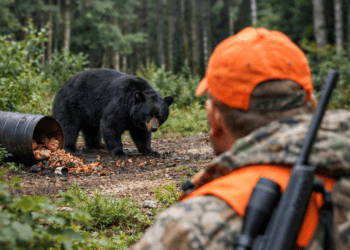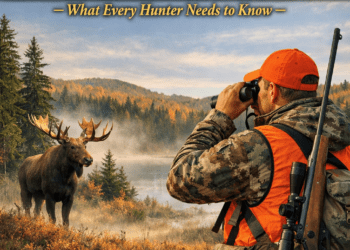

Planning your hunting season in Ontario requires staying current with the 2026 Ontario Hunting Regulations. These guidelines cover everything from licensing requirements to season dates, ensuring you hunt legally and ethically while contributing to wildlife conservation.
Whether you’re pursuing deer, moose, black bear, or waterfowl, understanding the latest updates helps you make the most of your time in Ontario’s diverse hunting terrain.
![A hunter in camouflage and orange vest standing in an autumn forest with rifle]
The official 2026 Ontario Hunting Regulations Summary provides complete details on season changes, tag allocations, and reporting requirements. These updates reflect the Ministry of Natural Resources and Forestry’s ongoing commitment to maintaining healthy wildlife populations and safe hunting practices.
This comprehensive guide breaks down the key regulation changes, big game hunting information, and answers to common questions for Ontario hunters in 2026.
What’s New for 2026 Ontario Hunting Season
Key Changes from 2025
The 2026 hunting season brings several important updates that hunters need to know:
Migratory Bird Hunting Changes
- Canada Goose daily bag limit returns to 5 geese per day for the regular season (previously restricted in some areas)
- The restriction on “farmland only” hunting during spring conservation seasons has been reinstated
- Youth migratory game bird permits now available free of charge through the online system
Enhanced Digital Reporting
- Streamlined online harvest reporting system makes mandatory reporting faster and more accurate
- Mobile-friendly interface allows hunters to report from the field
Population Updates
- Deer populations show stable to increasing trends in core Wildlife Management Units
- Northeastern Region WMUs 41, 43B, 44, and 47 seeing population increases
- Moose tag allocations adjusted based on 2025-2026 population surveys
Essential 2026 Hunting License Requirements
Outdoors Card and License Fundamentals
Every Ontario hunter must hold a valid Outdoors Card before purchasing any hunting licenses. This card serves as your permanent identification for all hunting and fishing activities in the province.
You can obtain or renew your Outdoors Card through:
- ServiceOntario online portal
- Authorized license issuers across Ontario
- In-person at ServiceOntario locations
Each game species requires a specific license and validation tag:
- Deer – Requires deer license and appropriate WMU tag
- Moose – Points-based allocation system with bull, cow/calf, and calf tags
- Black Bear – Annual bear license (spring and fall seasons)
- Wild Turkey – Spring and fall hunt licenses
- Small Game – Covers rabbits, grouse, and other small game species
First-Time Hunters: You must complete the Ontario Hunter Education Program before applying for your first license. This mandatory course covers firearm safety, wildlife identification, ethics, and regulations under the Fish and Wildlife Conservation Act.
Learn more about requirements at the Ontario Hunter Education Course and official licensing page.
License Fees and Tag Costs (2026)
| License Type | Resident | Non-Resident |
|---|---|---|
| Outdoors Card (3-year) | $35 | N/A |
| Small Game | $37.78 | $185.19 |
| Deer License | $47.25 | $229.50 |
| Moose Tag | $97.67 | $516.75 |
| Black Bear | $47.25 | $237.64 |
| Wild Turkey | $47.25 | $185.19 |
Fees subject to change; verify current rates when purchasing
Mandatory Hunter Reporting for 2026
Critical Compliance Requirement: Mandatory reporting remains essential for wildlife management in 2026. The MNRF uses this data to track harvest numbers, monitor population trends, and make informed management decisions.
What You Must Report
You’re required to report for these species:
- All moose harvests (successful or unsuccessful)
- All deer hunts in most WMUs
- Wild turkey harvests
- Elk harvests (where applicable)
How to Submit Your Report
- Visit Hunt and Fish Ontario
- Log in with your Outdoors Card number
- Complete the online form with harvest details
- Submit before the deadline for your species
Important: Even if you didn’t hunt or harvest, you must file a “no activity” report. Missing this requirement can result in:
- Fines up to $25,000
- Suspension of hunting privileges
- Ineligibility for future tag draws
Conservation officers may request to see your licenses, tags, or harvested game at any time. For reporting violations, contact the MNRF TIPS line at 1-877-847-7667.
General Hunting Regulations and Safety Rules
Core Safety Requirements
Ontario’s hunting regulations prioritize hunter and public safety:
Hunter Orange Requirements:
- Mandatory during all firearm big game seasons
- Must wear solid hunter orange vest or jacket
- Orange hat also required
- Minimum 400 square inches of hunter orange visible from all sides
Firearm and Road Safety:
- Never shoot from, along, or across public roads
- Firearms must be unloaded in vehicles
- Locked containers required for transport
- Night hunting prohibited (half hour before sunrise to half hour after sunset only)
Ethical Hunting Practices:
- Respect private property boundaries
- Obtain written permission before hunting private land
- Practice clean, humane kills
- Properly field dress and care for harvested game
- Report any suspected poaching to authorities
Species-Specific Possession Limits (2026)
| Species | Daily Bag Limit | Possession Limit |
|---|---|---|
| White-tailed Deer | 1 per tag | Varies by WMU |
| Moose | 1 per tag | As per tag type |
| Black Bear | 1 per season | 1 |
| Wild Turkey | 1 per license period | 2 per year |
| Ruffed/Spruce Grouse | 5 | 10 |
| Snowshoe Hare | 3 | 6 |
| Ducks | 6 (species specific) | 18 |
| Canada Geese | 5 | 15 |
Always check the complete regulations summary for your specific WMU and species restrictions.
Wildlife Management Units and Season Planning
Understanding WMUs
Ontario is divided into 95 Wildlife Management Units (WMUs), each with distinct regulations, season dates, and tag quotas. Your hunting success depends on understanding your WMU’s specific rules.
Regional Variations Include:
- Different season start and end dates
- Weapon restrictions (archery, muzzleloader, rifle, shotgun)
- Species quotas and tag allocations
- Sunday hunting permissions (varies by municipality)
Key WMU Considerations for 2026
Northern Ontario WMUs (1-45):
- Prime moose hunting territory
- Longer seasons for big game
- Remote access areas require careful planning
- Higher moose tag quotas in select units
Central Ontario WMUs (46-59):
- Balanced deer and bear populations
- Mix of public and private land
- Controlled hunt opportunities
- Moderate hunting pressure
Southern Ontario WMUs (60-95):
- High deer densities in agricultural areas
- More restricted firearms seasons
- Strong waterfowl migration corridors
- Sunday hunting permitted in many municipalities
Use the WMU map finder to locate your hunting area and verify specific regulations.
Controlled Hunt System
Many prime hunting areas require entry through the controlled hunt draw system:
- Application Period: Check specific dates for each species (typically spring/summer)
- Draw Results: Announced several weeks before season
- Tag Validation: Successful applicants receive location-specific tags
- Restrictions: Tags valid only for assigned WMU and dates
Big Game Hunting in Ontario 2026
Moose Hunting Updates
Ontario’s points-based moose tag allocation continues for 2026 with refined population management:
Tag Types Available:
- Bull tags (antlered moose only)
- Cow/calf tags (adult female or calf)
- Calf tags (calf moose only)
Allocation Process:
- Primary Draw: April 30 deadline – Apply for preferred WMU using accumulated points
- Second Chance: July 7 deadline – Apply for remaining tags
- Party Applications: Hunt with up to 3 other hunters
- Family Transfers: Limited tag transfers permitted
2026 Season Highlights:
- Most gun seasons run October through mid-November
- Archery seasons start in mid-September
- WMU-specific dates vary significantly
- Check your specific WMU for exact dates
Tag quotas are adjusted annually based on aerial surveys and population modelling. Review the official regulations for your target WMU’s allocation and season dates.
White-tailed Deer Hunting
Deer hunting remains one of Ontario’s most popular hunting opportunities, with both open and controlled seasons:
Season Structure:
- Archery Season: Typically September through December
- Firearms Season: November (varies by WMU)
- Muzzle loader Season: Select WMUs offer dedicated seasons
- Controlled Hunts: Draw-based opportunities in select areas
Tag Requirements:
- Deer license required for all hunters
- Seal/tag system for harvest validation
- Additional antler-less tags available through draws
- Some WMUs offer multiple tags
Sunday Hunting: Ontario allows Sunday gun hunting in many southern municipalities, but restrictions apply. Before hunting on Sunday, verify your local regulations as some areas prohibit Sunday firearms discharge.
Management Focus: The MNRF continues managing deer populations through:
- Targeted antler-less harvests in high-density areas
- Conservative tag allocations in recovering populations
- Chronic Wasting Disease monitoring
- Habitat enhancement programs
Black Bear Hunting Seasons
Black bear hunting offers both spring and fall opportunities:
Spring Season 2026:
- Opens mid-April in most WMUs
- Runs approximately 8 weeks
- Baiting permitted with proper registration
- No hunting cubs or females with cubs
Fall Season 2026:
- September 1 start in most units
- Continues through late October/early November
- Coincides with archery and firearms deer seasons
- Trail camera regulations apply
Understanding the 2026 Ontario Hunting Regulations
Bear Hunting Methods:
- Over bait (spring and fall)
- Spot and stalk
- Still hunting
- Hound hunting (restricted areas)
Safety and Ethics:
- Proper bear identification critical
- Minimum calibre requirements
- Mandatory reporting within 15 days
- Bear parts must remain with hide until registration
Licensed bear operators must follow additional regulations. Check your WMU for specific seasons and weapon restrictions.
Migratory Bird Hunting: 2026 Updates
Federal Permit Requirements
All migratory bird hunting requires federal documentation separate from provincial licenses:
- Migratory Game Bird Hunting (MGBH) Permit – $17.00
- Canadian Wildlife Habitat Conservation Stamp – Included with permit
Purchase your electronic permit at the federal permit portal. You can carry it on your phone or printed.
2026 Waterfowl Season Changes
Major Update: Canada Goose Bag Limits
Following the updated Atlantic Population Canada Goose Harvest Strategy, the 2026 season returns to liberal hunting frameworks:
- Daily bag limit: 5 Canada Geese throughout the regular season
- Special conservation season: Farmland-only restriction reinstated for spring harvest
- Possession limit: 15 Canada Geese
Youth Hunter Benefits:
- Free youth MGBH permits for all hunters under 18
- Valid through June 30 following issue date
- Independent bag and possession limits
- Adult mentor must hold valid permit
Season Dates by District
Ontario’s four waterfowl districts have distinct seasons:
Northern District (WMUs 1-45):
- Ducks: September 1 – December 15
- Canada Geese: September 1 – December 15
- Extended late season: January 1-15
Central District (WMUs 42-59):
- Ducks: September (varies by species)
- Canada Geese: September through December
- Species-specific bag limits apply
Southern District (WMUs 60-95):
- Split seasons for resident and migrant populations
- September through late December
- Sunday hunting varies by municipality
Lake St. Clair/Western Lake Erie:
- Special early season for resident geese
- September through January opportunities
- High duck and goose numbers
Non-Toxic Shot Requirements
Critical Regulation: Non-toxic shot is mandatory for all migratory bird hunting except woodcock.
Approved Non-Toxic Shot:
- Steel
- Bismuth
- Tungsten-bronze
- Tungsten-iron
- Tungsten-polymer
Lead shot remains banned in National Wildlife Areas and most waterfowl zones. Violations carry serious penalties including fines and equipment seizure.
Equipment and Firearms Requirements
Firearms Regulations for 2026
All hunters must comply with the Canadian Firearms Act and provincial requirements:
Legal Firearms by Species:
- Deer/Moose: Rifles (where permitted), shotguns with slugs, muzzle loaders
- Bear: Rifles, shotguns, muzzle loaders (minimum calibre requirements)
- Waterfowl: Shotguns only (plugged to 3 shells)
- Small Game: Shotguns, .22 rim fire rifles (check WMU restrictions)
Minimum Calibers:
- Deer/bear rifles: .23 calibre minimum
- Centre fire cartridges only for big game
- Shotgun slugs: 20-gauge minimum
Prohibited Equipment:
- Fully automatic firearms
- Suppressors/silencers
- Night vision or thermal optics for big game
- Electronic calls for migratory birds (except snow geese in conservation season)
Archery and Crossbow Hunting
Bow Requirements:
- Minimum 39.7 lbs (18 kg) draw weight for big game
- Broad heads must be at least 7/8 inch (22mm) wide
- Compound, re-curve, or longbow permitted
Crossbow Regulations:
- Permitted for big game in most WMUs
- Some restrictions during archery-only seasons
- Minimum draw weight: 100 lbs
- Broad head requirements same as vertical bows
Archery Safety:
- Practice shots required before hunting
- Know your maximum effective range
- Broad heads must be sharp and properly designed
- Mechanical broad heads must be in good working order
Transport and Storage Rules
In Vehicle:
- Firearms must be unloaded
- Cases must be locked or trigger-locked
- Ammunition stored separately
- Visible firearms attract unwanted attention
At Home:
- Secure storage required by law
- Trigger locks or locked cabinets
- Ammunition stored separately
- Restricted firearms require additional security
For comprehensive firearms information, visit the RCMP Canadian Firearms Program.
Frequently Asked Questions – 2026 Ontario Hunting
When do 2026 Ontario hunting seasons open?
Season dates vary by Wildlife Management Unit and species. Most big game archery seasons begin in September, with firearms seasons starting in October-November. Waterfowl seasons typically run September through December with split dates. Check the official 2026 regulations summary for your specific WMU dates.
Have bag limits changed for deer hunting in 2026?
Deer bag limits remain consistent with 2025 for most WMUs, with one deer per tag. Antler-less deer tag availability varies by unit based on population management goals. Some WMUs offer additional antler-less tags through supplementary draws to manage herd density in agricultural areas.
What are the new rules for Canada Goose hunting in 2026?
The daily bag limit returns to 5 Canada Geese throughout the regular season, removing previous early-season restrictions. This change reflects the updated Atlantic Population Canada Goose Harvest Strategy. The spring special conservation season maintains the “farmland only” restriction for hunting.
Are youth hunters still required to pay for migratory bird permits?
No. Youth migratory game bird hunting permits are now free for all hunters under 18. The permit remains valid until June 30 following the issue date, even if the holder turns 18. Youth hunters receive independent bag and possession limits while hunting with a licensed adult mentor.
How has online reporting changed for 2026?
The MNRF has streamlined the digital reporting system to make it faster and more mobile-friendly. Hunters can now report harvests directly from the field using smartphones. The mandatory reporting requirements remain the same, but the improved interface reduces reporting time and errors.
What WMUs are seeing increased deer populations in 2026?
Based on the 2025-2026 hunting forecast, deer populations are increasing in Northeastern Region WMUs 41, 43B, 44, and 47. WMUs 36, 37, 39, 42, and 43A show stable populations. Northwestern Region core deer areas remain below historical peak levels but are slowly recovering.
Is Sunday hunting permitted throughout Ontario in 2026?
Sunday gun hunting is not permitted province-wide. South of the French and Mattawa rivers, Sunday hunting is allowed in many municipalities but not all. Check your local municipal bylaws before hunting on Sunday. Archery hunting on Sunday faces fewer restrictions but still varies by area.
What happens if I don’t submit my mandatory harvest report?
Failure to submit required reports can result in:
- Fines up to $25,000
- Loss of hunting privileges for the following season
- Ineligibility for controlled hunt draws
- Inability to purchase licenses the next year
Even unsuccessful hunters must file “no activity” reports where required. Set reminders for reporting deadlines to avoid penalties.
Can I use lead shot for any hunting in Ontario?
Lead shot is only permitted for woodcock hunting. All other migratory bird hunting requires non-toxic shot including steel, bismuth, or tungsten. Big game hunters can use lead bullets in rifles, but lead shot is prohibited in shotgun shells when hunting waterfowl or upland game birds (except woodcock).
How do I apply for moose and deer controlled hunts?
Applications for controlled hunts are submitted through the Hunt and Fish Ontario portal:
- Moose: Primary draw deadline April 30, second chance July 7
- Deer (antler-less): Deadline June 30
- Controlled deer: Deadline July 31
Points accumulate for unsuccessful applicants. Successful draw participants receive location and date-specific tags. Party applications allow hunting with up to 3 other hunters.
Planning Your 2026 Ontario Hunt
Essential Pre-Season Checklist
8-12 Weeks Before Season:
- Renew Outdoors Card if expired
- Apply for controlled hunt draws
- Purchase licenses and tags
- Scout hunting areas
- Sight in firearms
4-6 Weeks Before:
- Confirm draw results
- Arrange accommodations if needed
- Prepare equipment and gear
- Review WMU- specific regulations
- Obtain landowner permissions
1 Week Before:
- Check weather forecasts
- Verify season dates
- Pack essential safety gear
- Download offline maps
- Inform someone of your plans
Where to Find More Information
Official Resources:
- Ontario Hunting Regulations Summary
- Hunt and Fish Ontario Portal
- MNRF Hunter Reporting
- Migratory Bird Regulations
Contact Information:
- MNRF TIPS Line: 1-877-847-7667
- General Inquiries: 1-800-667-1940
- Report violations: Report Resource Abuse
Hunter Safety and Ethics
Remember that hunting is a privilege that comes with responsibilities:
- Practice firearm safety at all times
- Respect wildlife and harvest limits
- Leave no trace in hunting areas
- Support wildlife conservation efforts
- Mentor new hunters
- Report violations when observed
The regulations exist to ensure sustainable hunting for future generations. Stay informed, hunt ethically, and enjoy Ontario’s incredible hunting opportunities responsibly.
Last Updated: February 2026
For the most current information, always refer to the official Ontario Ministry of Natural Resources and Forestry regulations summary. Regulations can change, and it’s every hunter’s responsibility to verify current rules before heading into the field.
Good luck and safe hunting in 2026!