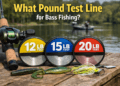
The Complete 2025 Guide for Every Technique, Cover & Season

What pound test line for bass fishing is the single most common rigging question asked by anglers at every level — from first-timers tying on a spinner bait to tournament pros dialing in their finesse setups. And the honest answer is: it depends. The right pound test isn’t a single number. It’s a system — one that changes based on your technique, the cover you’re fishing, the line type you choose, and even the time of year.
Get it right and you’ll land more fish, get cleaner casts, and lose fewer lures. Get it wrong and you’ll be retying after every snag, losing fish at the boat, and leaving presentations that just don’t perform the way they should.
In this complete guide we break down exactly what pound test line to use for bass fishing across every major technique, line type, water condition, and season — plus a quick-reference master table you can screenshot before your next trip.
| KEY TAKEAWAY: The short answer: 6–8 lb monofilament or fluorocarbon for finesse; 12–17 lb for general casting; 40–65 lb braid for heavy cover and flipping. But technique and cover always override a single number. |
| Table of Contents |
| 1. Why Pound Test Matters More Than Most Anglers Think |
| 2. The Three Bass Fishing Line Types Explained |
| 3. What Pound Test Line for Bass: By Technique |
| 4. What Pound Test Line for Bass: By Cover and Water Clarity |
| 5. What Pound Test Line for Bass Fishing: By Season |
| 6. Monofilament vs. Fluorocarbon vs. Braid — Head-to-Head |
| 7. The Master Quick-Reference Table |
| 8. Common Pound Test Mistakes Bass Anglers Make |
| 9. FAQ — Your Pound Test Questions Answered |
| 10. Final Verdict |
1. Why Pound Test Matters More Than Most Anglers Think
Ask ten anglers what pound test line to use for bass fishing and you’ll get ten different answers. That’s because pound test isn’t just a breaking strength — it’s a variable that affects everything from how your lure behaves in the water column to whether bass can see your line and refuse it entirely.
Here’s what pound test actually controls in your presentation:
- Action: Lighter line has less resistance and lets finesse baits shimmy and dart naturally. Heavy line kills the action of small soft plastics.
- Castability: Lighter line loads rod blanks more efficiently and adds distance on long casts. Heavier line produces more wind resistance and backlash potential.
- Sensitivity: Fluorocarbon transmits vibration directly to your hand. Monofilament stretches and absorbs feel. Braid gives zero stretch hyper-sensitivity.
- Stealth: In clear water, high-visibility line is a bite killer. Low-visibility fluorocarbon disappears underwater. Braid needs a fluorocarbon leader in clear conditions.
- Strength in cover: Too light and bass run into weeds and snap you off. Too heavy in open water and you sacrifice strikes from line-shy fish.
The bottom line: answering the question “what pound test line for bass fishing” correctly requires understanding all of these variables — not just picking a number you heard from a buddy at the ramp.
2. The Three Bass Fishing Line Types Explained
Before we get into specific pound tests, you need to understand the three main line types — because the same pound test behaves very differently depending on whether it’s mono, fluoro, or braid.
Monofilament
Best for: topwater lures, crankbaits, spinnerbaits, beginners, float rigs
Monofilament is the original bass line and it’s still excellent for a wide range of applications. It floats, which is ideal for topwater presentations. It has stretch, which actually helps treble-hook fish stay pinned on crankbaits. It’s forgiving on hooksets and the most affordable option per yard.
The downsides: it’s visible in clear water, it has memory (causing coil issues on spinning reels), and it degrades faster than fluoro in UV sunlight.
- Typical bass pound test range: 8–17 lb
- Best spool type: baitcaster or spincast for heavier weights; spinning for 6–10 lb
Fluorocaarbon
Best for: drop shot, wacky rig, Ned rig, finesse jigs, clear water presentations, bottom-contact baits
Fluorocarbon is the finesse angler’s choice. Its refractive index is almost identical to water, making it nearly invisible underwater — a critical edge in clear, pressured lakes. It sinks, keeping your lure in the strike zone longer on bottom presentations. It has low stretch compared to mono, improving sensitivity and hookset efficiency.
The downside: it’s stiffer than mono, especially in cold water, and it costs more. In heavier pound tests it can develop memory on spinning reels.
- Typical bass pound test range: 6–20 lb
- Best spool type: spinning reels at 6–10 lb; baitcasters at 12–20 lb
Braided Line
Best for: flipping and pitching, frog fishing, punching vegetation, any heavy cover situation, topwater walking baits
Braid is pure strength in a thin diameter. A 50 lb braid has roughly the same diameter as 15 lb monofilament, allowing you to pack more line on your spool while delivering crushing strength in thick cover. Zero stretch means immediate hooksets — critical when fishing a bass buried in a mat of hydrilla.
The downside: braid is highly visible and requires a fluorocarbon leader in any situation with clear water or line-shy fish. It’s also more expensive upfront, though it lasts significantly longer than mono.
- Typical bass pound test range: 30–80 lb
- Best spool type: baitcaster almost exclusively for heavy cover
3. What Pound Test Line for Bass: By Technique
This is the most important section for answering what pound test line for bass fishing you should spool up. Technique is the single biggest driver of line selection — more than cover, more than season, more than personal preference.
Finesse Techniques — Drop Shot, Wacky Rig, Ned Rig
Finesse fishing is the art of making bass bite when they’re reluctant. Small baits, light hooks, natural presentations. This requires the lightest, most invisible line in your arsenal.
| Technique | Pound Test (Fluorocarbon) | Spinning Setup Notes |
| Drop Shot | 6–8 lb fluorocarbon | Spinning rod; invisibility critical |
| Wacky Rig | 6–8 lb fluorocarbon | Light wire hook; don’t overpower |
| Ned Rig | 6–8 lb fluorocarbon | Smallest bait in bass fishing |
| Shaky Head (light) | 8–10 lb fluorocarbon | Can go up in heavy rock |
| Finesse Jig | 10 lb fluorocarbon | Slightly heavier for lift-and-drop |
For finesse fishing, the answer to what pound test line for bass fishing is almost always 6–8 lb fluorocarbon on a 6.5–7 ft medium light spinning rod. This is your lightest practical line weight for bass. Going below 6 lb increases break-offs significantly without meaningful gains in bites.
| PRO TIP: Use 6 lb fluorocarbon main line on your drop shot with a 4–6 lb drop shot leader below the hook. This creates a natural break point at the sinker if you snag — saving your hook rig. |
Power Finesse and Mid-Range Techniques
This is the sweet spot for most bass anglers — medium-action setups targeting fish around moderate structure and cover without going full heavy.
| Technique | Pound Test | Notes |
| Texas Rig (light) | 12 lb fluorocarbon | Open water, clear conditions |
| Texas Rig (heavy) | 17–20 lb fluorocarbon | Thicker cover, wood, brush |
| Swim Jig | 15–17 lb fluorocarbon | Through grass and laydowns |
| Football Jig | 15–17 lb fluorocarbon | Deep rocky structure |
| Swimbait (hard) | 15–17 lb fluorocarbon | Or 30 lb braid + fluoro leader |
| Chatterbait | 15–17 lb fluorocarbon | Fast retrieve; strength matters |
Crankbaits, Spinnerbaits & Moving Baits
Moving baits cover water fast and contact a lot of structure. Line selection here balances castability, action, and forgiveness on hooksets.
| Lure Type | Pound Test | Line Type & Reason |
| Lipless Crankbait | 12–14 lb monofilament | Mono stretch = fewer pulled hooks |
| Squarebill Crankbait | 12–14 lb monofilament | Same — bounces off wood naturally |
| Deep Diver Crankbait | 10–12 lb monofilament | Lighter line = greater depth |
| Spinnerbait | 14–17 lb monofilament | Vibration + mono stretch = solid |
| Chatterbait | 15 lb fluorocarbon or mono | Fluoro for clear water |
| Swimbait (soft) | 15–20 lb fluorocarbon | Heavier for weighted hooks |
Monofilament’s stretch is actually an asset on crankbaits — it acts as a shock absorber, keeping fish pinned on treble hooks. This is one technique where monofilament beats fluorocarbon for most anglers.
Topwater Lures
| Lure Type | Pound Test | Notes | |
| Popper | 12–15 lb monofilament | Mono floats = bait rides up correctly | |
| Walking Bait (Zara Spook) | 15–17 lb monofilament | Same floating advantage | |
| Prop Bait | 12–15 lb monofilament | Buoyancy helps surface action | |
| Frog (hollow body) | 50–65 lb braid | No leader; thick matted vegetation | |
| Buzz Bait | 15–17 lb monofilament | Or 30 lb braid, no leader needed | |
| PRO TIP: For hollow body frogs over thick matted vegetation, never go below 50 lb braid. Bass explode on frogs and bury instantly in the mat — anything lighter will either break on the hookset or fail to pull the fish clear of the vegetation. | |||
Heavy Cover — Flipping, Pitching, Punching
This is the big line territory. When you’re punching baits through thick vegetation mats or flipping jigs into laydowns and dock pilings, the answer to what pound test line for bass fishing is always at the upper end of your range.
| Technique | Pound Test (Braid) | Notes |
| Flipping Jig | 50–65 lb braid | Standard flip setup |
| Texas Rig Flip | 40–65 lb braid | Heavy tungsten; punch through cover |
| Punching (mat fishing) | 65–80 lb braid | Heaviest application in bass fishing |
| Dock Pitching | 17–20 lb fluorocarbon | When cover is moderate, clear water |
| Pitching to Wood | 40–50 lb braid | Laydowns, stumps, brush piles |
4. What Pound Test Line for Bass: By Cover and Water Clarity
Technique isn’t the only variable. The environment you’re fishing in significantly affects which pound test gives you the best chance of success.
Water Clarity
| Water Clarity | Recommended Line | Reasoning |
| Gin clear (5+ ft visibility) | 6–10 lb fluorocarbon | Invisibility is everything |
| Lightly stained (2–4 ft) | 10–15 lb fluorocarbon | Slight edge for fluoro still |
| Stained (1–2 ft) | 12–17 lb fluoro or mono | Color and action matter more |
| Muddy / dark (<1 ft) | 15–20 lb mono or braid | Visibility not a factor; go heavy |
Cover Type
| Cover Type | Line & Pound Test | Why |
| Open water / no cover | 6–12 lb fluorocarbon | Light and invisible |
| Sparse grass / pads | 15–17 lb fluorocarbon | Some pulling power needed |
| Thick grass / mats | 50–65 lb braid | Punch through and pull clear |
| Timber / wood | 17–20 lb fluoro or 40 lb braid | Abrasion resistance critical |
| Rock / gravel | 15–17 lb fluorocarbon | Fluoro’s abrasion resistance wins |
| Docks / pilings | 17–20 lb fluoro or 30 lb braid | Bass run for structure fast | |
| Deep structure (20+ ft) | 10–12 lb fluorocarbon | Sinks; sensitivity to bottom | |
| IMPORTANT: Fluorocarbon’s abrasion resistance beats monofilament in any situation involving rock, gravel, wood, or dock pilings. If you’re running mono in heavy structure, you’re leaving yourself vulnerable to break-offs on the initial run. | |||
5. What Pound Test Line for Bass Fishing: By Season
One more variable that changes the answer to what pound test line for bass fishing: the time of year. Bass behaviour, location, and feeding patterns change dramatically across seasons — and your line selection should change with them.
Spring — Pre-Spawn and Spawn
Pre-spawn bass are moving from deep to shallow, aggressive, and building energy reserves for the spawn. They’ll hit moving baits hard. Spawning bass in the shallows are often line-shy but territorial.
- Pre-spawn: 15–17 lb fluorocarbon for swim-baits, jigs, and Texas rigs along transition areas
- Spawn (flats/beds): Drop to 10–12 lb clear fluorocarbon — bedding bass can be extremely line shy in shallow, clear water
- Cover consideration: Go heavier (17–20 lb) if spawning areas have thick vegetation or lay-downs
Summer — Post-Spawn and Deep Summer
Summer bass often go deep during peak heat, moving to suspended structure and deep main lake points. Deep techniques dominate, and your line selection shifts accordingly.
- Deep finesse: 8–10 lb fluorocarbon for drop shot and Ned rig on deep structure
- Deep crankbait: 10 lb monofilament — lighter line allows your diver to reach maximum depth
- Topwater early morning: 15 lb monofilament for walking baits and poppers during low-light feeding windows
- Frog season: 50–65 lb braid when surface vegetation is at its thickest in late summer
Fall — Feeding Frenzy
Fall is arguably the best time of year for bass fishing. Bass are aggressively chasing shad along flats and points before winter. This is moving bait season.
- Spinnerbaits and vibrating jigs: 15–17 lb monofilament or fluorocarbon
- Lipless crankbaits: 12–14 lb monofilament — great shad imitation in fall
- Topwater during shad kills: 15 lb monofilament
Winter — Cold Water Slowdown
Cold water makes bass lethargic. They feed less and respond best to slow, subtle presentations. Fluorocarbon is the dominant choice in winter because it maintains its properties better in cold water than mono.
- Finesse drop shot and Ned rig: 6–8 lb fluorocarbon — the #1 winter setup
- Blade baits and jigging spoons: 10–12 lb fluorocarbon for vertical presentations
- Note: Avoid braid in very cold water — it gets stiff and loses some casting performance in near-freezing temps
| KEY TAKEAWAY: In winter, go lighter and slower. 6–8 lb fluorocarbon on a spinning rod is the most consistent cold-water bass setup across nearly every region of North America. |
6. Monofilament vs. Fluorocarbon vs. Braid — Head-to-Head
Still unsure which line type to pair with your chosen pound test? This head-to-head comparison breaks down every relevant property.
| Property | Monofilament | Fluorocarbon | Braided Line |
| Visibility in water | Low | Nearly invisible | High (needs leader) |
| Stretch | High (20–30%) | Low (5–7%) | Near zero |
| Sensitivity | Low | High | Highest |
| Sinks or floats | Floats | Sinks | Neutral/sinks |
| Abrasion resistance | Medium | High | Medium (braided) |
| Memory / coil | Medium | Medium-high | Very low |
| Price | $ | $$$ | $$ |
| Durability | 1 season | 1–2 seasons | 3–5 seasons |
| Best applications | Topwater, cranks | Finesse, clear water | Flipping, heavy cover |
7. The Master Quick-Reference Table — What Pound Test Line for Bass Fishing
Screenshot this. This is the complete answer to what pound test line for bass fishing across every major application, all in one place.
| Application | Line Type | Pound Test | Reel Type | Season |
| Drop Shot | Fluorocarbon | 6–8 lb | Spinning | All year |
| Wacky Rig | Fluorocarbon | 6–8 lb | Spinning | Spring/Summer |
| Ned Rig | Fluorocarbon | 6–8 lb | Spinning | All year |
| Finesse Jig | Fluorocarbon | 8–10 lb | Spinning | Fall/Winter |
| Shaky Head | Fluorocarbon | 10 lb | Spinning | All year |
| Texas Rig (open) | Fluorocarbon | 12 lb | Baitcaster | Spring/Fall |
| Texas Rig (cover) | Fluorocarbon | 17–20 lb | Baitcaster | Summer |
| Football Jig | Fluorocarbon | 15–17 lb | Baitcaster | Summer |
| Swim Jig | Fluorocarbon | 15–17 lb | Baitcaster | Spring/Fall |
| Chatterbait | Fluoro/Mono | 15–17 lb | Baitcaster | Spring/Fall |
| Squarebill Crank | Monofilament | 12–14 lb | Baitcaster | Spring/Fall |
| Deep Crank | Monofilament | 10–12 lb | Baitcaster | Summer |
| Lipless Crank | Monofilament | 12–14 lb | Baitcaster | Fall/Winter |
| Spinnerbait | Monofilament | 14–17 lb | Baitcaster | All year |
| Popper/Topwater | Monofilament | 12–15 lb | Baitcaster | Summer/Fall |
| Walking Bait | Monofilament | 15–17 lb | Baitcaster | All year |
| Hollow Body Frog | Braid | 50–65 lb | Baitcaster | Summer |
| Buzz Bait | Mono/Braid | 15–30 lb | Baitcaster | Summer/Fall |
| Flipping Jig | Braid | 50–65 lb | Baitcaster | All year |
| Punch Rig | Braid | 65–80 lb | Baitcaster | Summer |
8. Common Pound Test Mistakes Bass Anglers Make
- Using one rod for everything: The most common mistake. Running 17 lb mono on a finesse rod ruins your drop shot presentation. Dedicated setups by technique are standard for a reason — keep at least 3 rods rigged on any serious trip.
- Going too heavy in clear water: In lakes with visibility beyond 4 feet, running 20 lb fluorocarbon main line will cost you bites from educated fish. Drop to 8–10 lb and watch your catch rate climb.
- Running naked braid without a leader: Braid is highly visible. In any water with more than 1 foot of clarity, run a 15–20 lb fluorocarbon leader on your braid setup via an FG or Alberto knot. The extra 5 minutes of rigging pays off.
- Using monofilament for drop shot: Mono’s stretch kills sensitivity on finesse bottom presentations. You’ll miss subtle bites and lose feel of the bottom structure. Fluorocarbon only for drop shot.
- Not changing line regularly: Monofilament breaks down significantly after one full season of sun exposure. Fluorocarbon lasts longer but develops memory and stress fractures at knots. Inspect and re-spool at minimum every season, more often if you fish heavy cover frequently.
- Mismatching line to reel: Heavy braid (65 lb+) on a light spinning reel will damage guides and degrade reel performance. Match your line weight to your reel’s line rating — it’s printed on the spool for a reason.
| PRO TIP: Carry a hook eye cleaner and change your terminal 12 inches of line every few outings if you’re fishing around wood, rock, or dock pilings. This stretch of line takes the most abuse and is where most break-offs happen. |
9. FAQ — What Pound Test Line for Bass Fishing?
[ Add this section as a Rank Math FAQ Block in WordPress to activate FAQ Schema and win People Also Ask boxes ]
| Q: What is the best pound test line for bass fishing in general? |
| A: There is no single best pound test for all bass fishing. As a general starting point: 6–8 lb fluorocarbon for finesse techniques on spinning gear, 12–17 lb fluorocarbon for most bait-casting presentations, and 50–65 lb braid for heavy cover flipping and frogging. Matching your pound test to your specific technique and cover is always more important than picking one universal number. |
| Q: What pound test line should a beginner use for bass fishing? |
| A: Beginners should start with 12–14 lb monofilament on a bait-casting or spinning setup. Mono is forgiving, affordable, and handles a wide range of bass techniques adequately. Once you’re comfortable with casting and basic presentations, transition to fluorocarbon for finesse applications and braid for heavy cover work. |
| Q: Is 20 lb fluorocarbon too heavy for bass fishing? |
| A: Not necessarily — it depends entirely on your technique and cover. 20 lb fluorocarbon is completely appropriate for flipping jigs into heavy timber, pitching around docks, or any situation where bass will immediately run for cover. In open water finesse fishing, 20 lb fluorocarbon is overkill and will reduce bites significantly. Use 6–10 lb for finesse, 12–17 lb for general casting, 17–20 lb for heavy structure. |
| Q: Should I use braid or fluorocarbon for bass fishing? |
| A: Both — on different rods for different techniques. Braid excels in heavy cover (50–65 lb), top-water frogging (50–65 lb), and any situation where you need maximum strength in a thin diameter. Fluorocarbon is the choice for finesse presentations, clear water, and any bottom-contact technique. Many experienced anglers run braid as a main line with a 15–20 lb fluorocarbon leader in situations where they need the strength of braid but the invisibility of fluoro. |
| Q: Does pound test affect how far I can cast? |
| A: Yes, significantly. Lighter pound test casts further because it has smaller diameter, less air resistance, and loads the rod blank more efficiently. This is especially noticeable on spinning gear — going from 10 lb to 6 lb fluorocarbon on the same rod and lure can add 15–20% more distance. This matters on finesse presentations where you’re targeting spooked or pressured fish at distance. |
| Q: What pound test line for bass fishing from a kayak? |
| A: The same principles apply from a kayak as from a boat, with one consideration: on a kayak you’re lower to the water and closer to cover, so you may need slightly heavier line in heavy cover situations to overpower fish before they wrap you in vegetation. In open water finesse situations from a kayak, stick with 6–8 lb fluorocarbon. For flipping cover from a kayak, go 50–65 lb braid — you have less leverage than a boat angler to control a running fish. |
10. Final Verdict: What Pound Test Line for Bass Fishing Should You Use?
If you only remember three things from this guide, remember these: 6–8 lb fluorocarbon for finesse presentations, 12–17 lb fluorocarbon for general casting, and 50–65 lb braid for heavy cover. Those three setups cover roughly 95% of bass fishing situations you’ll ever encounter.
The question “what pound test line for bass fishing” doesn’t have one right answer — it has a system. Learn that system, match your line to your technique and environment, and you’ll immediately fish more effectively. Bass don’t know your name, but they do know when your presentation looks wrong. The right pound test is part of making it look right.
Now go rig up. The bass aren’t going to catch themselves.