BC HUNTINGSYNOPSIS 2026
Big Game Seasons & Bag Limits
Small Game & Waterfowl
Licence Requirements
Pre-Hunt Checklist
Introduction: Why the BC Hunting Synopsis 2026 Matters
Every year, hunters across British Columbia rely on the BC Hunting Synopsis to navigate the rules, regulations, and opportunities that define their hunting season. For 2026, understanding the current regulations is more important than ever, with ongoing public consultation for the next regulation cycle and several mid-season updates that affect how and where you can hunt.
The current 2024-2026 Hunting & Trapping Regulations Synopsis remains in effect through June 30, 2026, but recent amendments and the upcoming 2026-2028 regulation cycle mean hunters need to stay informed about both existing rules and proposed changes. This comprehensive guide breaks down everything you need to know for successful, legal hunting in BC during 2026.
What Is the BC Hunting Synopsis 2026?
The BC Hunting Synopsis serves as the province’s official rule book for all hunting and trapping activities. Published by the BC Ministry of Water, Land and Resource Stewardship, this document provides:
- Season dates for big game, upland birds, and waterfowl
- Bag limits and quota allocations
- Management Unit (MU) specific regulations
- Limited Entry Hunt (LEH) requirements and deadlines
- Licensing requirements for residents and non-residents
- Conservation measures protecting wildlife populations
- Special restrictions and motor vehicle prohibitions
The synopsis is reviewed and updated every two years through extensive consultation with First Nations, hunters, conservation organizations, and wildlife managers. The current regulations cover July 1, 2024, through June 30, 2026, with corrections and updates published online as needed.
Key Updates for BC Hunting Synopsis 2026
1. Compulsory Inspection Changes (Effective September 29, 2025)
Major Update: As of September 29, 2025, several species no longer require compulsory inspection after harvest. This simplifies reporting requirements for hunters while maintaining population monitoring through mandatory harvest reporting.
Important Exception: Moose harvested in Management Units 6-1 to 6-11, 6-15, 6-17 to 6-30, and the portion of 7-52 accessed through Region 6 still require compulsory inspection within 30 days of the kill. Check Map H31 in the official synopsis for exact boundaries.
2. Aboriginal Title Land on Nootka Island
A significant legal development affects hunters in Management Unit 1-12. The BC Supreme Court has declared that the Nuthatch First Nation holds Aboriginal title to a portion of Nootka Island on Vancouver Island.
What This Means for Hunters:
- Anyone wishing to hunt, trap, or fish in the declared title area must seek permission from the Nuthatch Chief and Council
- This affects a small portion of MU 1-12
- Review the official boundary map before planning hunts in this area
- Respect Indigenous rights and obtain proper authorization
3. 2026-2028 Regulation Proposals (Public Input Until February 13, 2026) -BC hunting
The Province has opened public engagement for proposed hunting and trapping regulations that will take effect July 1, 2026, through June 30, 2028. Approximately 60 proposed regulatory changes are under consideration.
Key Proposed Changes Include:
- Lead shot restrictions for migratory bird hunting
- Adjustments to season dates in various Management Units
- Changes to bag limits based on population assessments
- New motor vehicle restrictions or removal of existing prohibitions
- Updates to LEH allocations
How to Participate: Hunters can review proposed changes and submit feedback through the Angling, Hunting and Trapping Engagement (AHTE) website until February 13, 2026, at 4:30 PM Pacific. A BCeID Basic account is required to submit comments.
4. 2026 LEH Draws and Deadlines – BC hunting
Early Skeena Mountain Sheep and Haida Gwaii Black Bear LEH Draw: The 2026 early draw for these highly sought-after hunts has closed. Results will be announced soon through the BC Hunting License System (HLS).
Standard LEH Application Deadline:
- June 12, 2025 – Regular LEH applications close
- February 5, 2026 – Late application deadline (where applicable)
- Report Deadline: January 15th following your hunt
5. Mandatory Harvest Reporting
All licensed hunters must submit harvest reports, even if they did not hunt or were unsuccessful. This requirement helps wildlife managers:
- Track hunter effort and success rates
- Monitor population trends
- Make informed management decisions
- Adjust quotas and seasons based on data
Reporting Requirements:
- Submit within 24 hours of harvest (for some species)
- Online reporting available through the WILD system
- Phone reporting option: Check synopsis for regional numbers
- Failure to report can result in fines and loss of hunting privileges
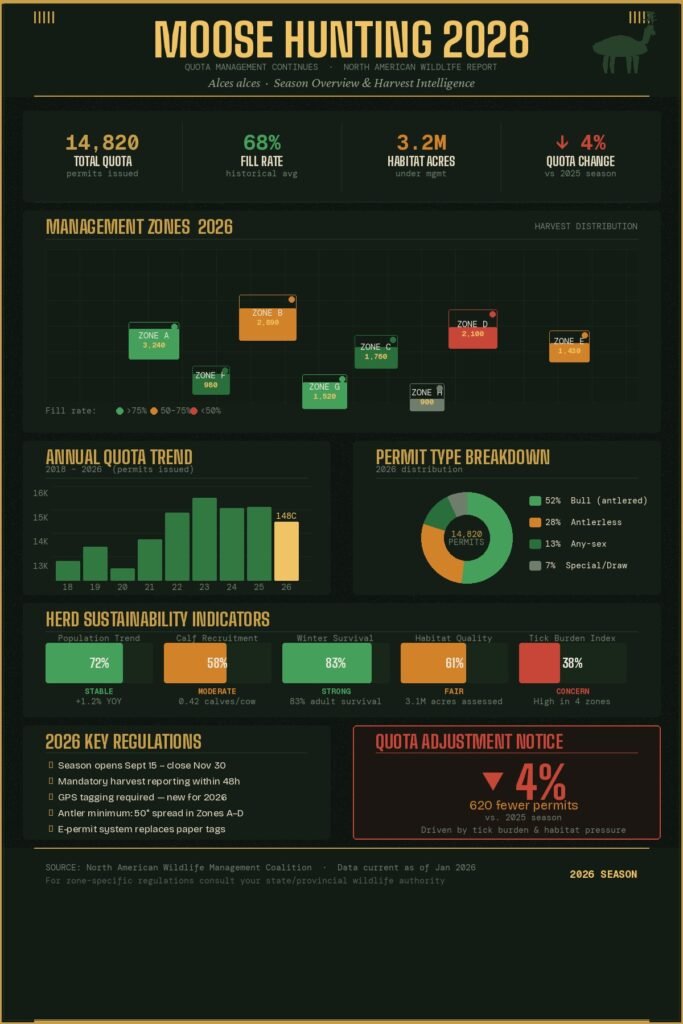
Moose Hunting in 2026: Quota Management Continues
British Columbia maintains a quota-based moose management system with Limited Entry Hunts (LEH) required in most Management Units. Moose populations face varying pressures across the province, requiring careful management.
2026 Moose Season Highlights:
Region 5 (Caribou):
- Stable moose populations in some areas
- Continued LEH requirements
- Archery-only opportunities September 1-October 14 in select units
- Check specific MU regulations for bull vs. cow/calf hunts
Region 6 (Skeena):
- Compulsory inspection still required for most units
- Population recovery efforts ongoing
- Limited allocations in some northern units
Region 7 (Omineca/Peace):
- Highly competitive LEH draws
- Declining calf recruitment in some areas (particularly 7A)
- Reduced tag allocations to support population recovery
- Consider alternative regions to improve draw odds
Hunter Tips for Moose:
- Apply early for LEH draws to maximize chances
- Consider less popular Management Units
- Build preference points by applying consistently
- If harvesting a cow, select one without calves when possible
- Understand compulsory inspection requirements for your MU
Elk Hunting Updates for 2026 – BC hunting
Elk populations in BC offer excellent hunting opportunities, particularly in the Kootenay region, though most hunts require LEH authorization.
Key Elk Regulations:
- One elk per year limit
- Antler restrictions in specific zones
- Staggered season dates in high-pressure areas
- Private land considerations (Indian Reserves require permission)
- LEH authorizations do not guarantee elk presence
Kootenay Region (Region 4) Updates:
- Elk seasons continue with staggered dates to distribute hunter pressure
- Apply through LEH system well in advance
- Archery opportunities available in select units
- Check for any new motor vehicle restrictions
Black Bear – BC Hunting in 2026
Black bear hunting remains popular throughout BC with generous opportunities in both spring and fall seasons.
Season Structure:
- Spring season: Generally April-June (varies by MU)
- Fall season: September-November (varies by MU)
- Two bears per year limit
- Report all harvested bears within 10 days
Baiting Regulations:
- Spring bear baiting permitted with restrictions
- Check specific MU regulations for baiting rules
- Distance requirements from roads and residences apply
- Registration may be required in some areas
Conservation Focus:
- Never harvest sows with cubs
- Proper identification crucial
- Mandatory reporting supports population monitoring
- Bear parts must remain with hide until registration
Deer BC Hunting: Mule Deer and Black tail Opportunities
Black tail Deer (Vancouver Island – Region 1):
- Strong populations continue
- General Open Seasons in most areas
- Bucks only in many units
- 2-3 deer limit depending on specific MU regulations
Mule Deer (Interior Regions):
- Region 3 (Thompson): Adjusted seasons for conservation
- Region 8 (Okanagan): Strong populations, good opportunities
- Antler restrictions in specific zones
- Check for any road closure areas affecting access
BC Hunting – Waterfowl and Migratory Bird Hunting
Migratory bird hunting in BC is regulated by federal regulations (August 2025 to July 2026) in addition to provincial rules.
Federal Requirements:
- Migratory Game Bird Hunting (MGBH) Permit required
- Canadian Wildlife Habitat Conservation Stamp
- Both documents must be carried while hunting
2026 Season Highlights:
- Generous daily bag limits for ducks and geese continue
- White-fronted goose limits may be reduced in certain flyways
- Non-toxic shot required (lead shot prohibited except for Band-tailed Pigeons, Eurasian Collared Doves, and Mourning Doves)
- Season dates vary by Provincial Management Unit (PMU)
Key PMUs for Waterfowl:
- PMUs 1-1 to 1-15 (Vancouver Island)
- PMUs 2-2 to 2-19 (Lower Mainland)
- PMUs 5-1 to 5-15 (Caribou)
- PMUs 7-2 to 7-58 (Peace Region)
Licensing and Tags for 2026 – BC Hunting
To hunt legally in British Columbia, you must obtain appropriate licenses and species-specific tags.
Basic Requirements:
BC Residents:
- BC Resident Hunting License
- Species-specific tags (purchased separately)
- LEH authorization (where required)
- Valid Possession and Acquisition License (PAL) for firearms
Non-Residents:
- Non-Resident Hunting License
- Must hunt with a licensed BC guide OR a resident sponsor
- Species-specific tags
- LEH authorization (where applicable)
Youth Hunters (Under 18):
- Expanded mentorship opportunities
- Reduced license fees in select regions
- Must be accompanied by licensed adult
- Qualify if 18th birthday falls on or after August 1, 2025
Where to Purchase:
- Online through the WILD system (most convenient)
- ServiceBC locations
- Participating vendors throughout the province
LEH Application Tips:
- Apply early – popular hunts fill quickly
- Group applications (up to 4 hunters) available for most species
- Preference points accumulate for unsuccessful applicants
- Consider multiple MUs to increase odds
- Review draw statistics from previous years
Region-by-Region Guide for 2026 -BC Hunting
BC’s nine hunting regions each offer unique opportunities and challenges. Here’s what you need to know:
Region 1 (Vancouver Island)
- Top Species: Black tail deer, Roosevelt elk, black bear
- Season Notes: Elk hunting LEH only; strong deer populations
- Access: Good road network; some areas require boat or ATV
- Special Considerations: Nootka Island Aboriginal title area in MU 1-12
Region 2 (Lower Mainland)
- Top Species: Waterfowl, black bear, grouse
- Season Notes: Limited big game; excellent bird hunting
- Access: Urban interface; many private lands
- Special Considerations: Check for motor vehicle restrictions
Region 3 (Thompson-Nicola)
- Top Species: Mule deer, bighorn sheep, mountain goat
- Season Notes: Conservation-adjusted deer seasons
- Access: Varies from easy to remote alpine
- Special Considerations: Fire-affected areas may have restrictions
Region 4 (Kootenay)
- Top Species: Elk, mule deer, whitetail deer, bighorn sheep
- Season Notes: Staggered elk dates; strong deer populations
- Access: Mountain terrain; 4×4 recommended
- Special Considerations: Heavy recreational use in some areas
Region 5 (Caribou)
- Top Species: Moose, mule deer, black bear, grouse
- Season Notes: Moose quotas reduced in some areas
- Access: Extensive FSR network
- Special Considerations: Aboriginal Title Lands (Tsilhqot’in) – no hunting without consent
Region 6 (Skeena)
- Top Species: Mountain goat, moose, black bear, grizzly
- Season Notes: Compulsory moose inspection continues
- Access: Remote; often requires boat or aircraft
- Special Considerations: Haida Gwaii special regulations
Region 7 (Omineca/Peace)
- Top Species: Moose, elk, mule deer, black bear
- Season Notes: Highly competitive moose LEH
- Access: Mix of accessible and remote areas
- Special Considerations: Significant agricultural interface
Region 8 (Okanagan)
- Top Species: Mule deer, whitetail deer, bighorn sheep, black bear
- Season Notes: Strong deer populations
- Access: Good road access; private land common
- Special Considerations: Urban interface; obtain landowner permission
Region 9 (Northern Rockies)
- Top Species: Stone’s sheep, mountain goat, moose, caribou
- Season Notes: Trophy-class remote hunts
- Access: Primarily by aircraft; guide required for non-residents
- Special Considerations: Wilderness skills essential
Bag Limits and Quotas by Species -BC Hunting
Understanding bag limits ensures legal, ethical hunting and supports conservation efforts.
Big Game:
- Moose: 1 per year (LEH)
- Elk: 1 per year (LEH in most areas)
- Deer: 2-3 per year (varies by MU and species)
- Black Bear: 2 per year
- Grizzly Bear: No open season (closed province-wide)
- Mountain Goat: 1 per year (LEH)
- Bighorn Sheep: 1 per year (LEH)
- Caribou: Special regulations (LEH)
- Ruffed Grouse: 5 per day
- Blue Grouse: 5 per day
- Spruce Grouse: 5 per day
- Ptarmigan: 5 per day
- Wild Turkey: 1 per season (spring); 1 per season (fall) where open
Waterfowl: Daily limits vary by species and PMU. Consult federal migratory bird regulations for specific limits. Generally:
- Ducks: 8 per day (species-specific sub-limits apply)
- Canada Geese: 5 per day
- Snow Geese: 5 per day
- White-fronted Geese: Reduced limits in some areas
Penalties for Non-Compliance – BC hunting
BC takes wildlife violations seriously. Penalties are designed to deter illegal hunting and protect wildlife populations.
Potential Consequences:
- Fines: Up to $50,000 for serious violations
- Imprisonment: Up to 2 years for major offences
- License Suspension: Loss of hunting privileges for 1-5 years or permanently
- Equipment Forfeiture: Firearms, vehicles, and gear can be seized
- LEH Ineligibility: Banned from future LEH applications
- Criminal Record: For serious violations
Common Violations:
- Hunting without proper license or tags
- Exceeding bag limits
- Hunting outside legal hours
- Hunting in closed areas or seasons
- Failing to submit harvest reports
- Wasting edible meat
- Hunting on private land without permission
Stay Legal:
- Carry all required licenses and tags
- Know the regulations for your specific MU
- Verify season dates and hours
- Report all harvests promptly
- Respect private property
- Practice ethical hunting
Conservation Focus in 2026 – BC Hunting
BC’s hunting regulations prioritize sustainable wildlife management through science-based decision making and Indigenous knowledge.
Key Conservation Initiatives:
Moose Population Recovery: BC Hunting
- Reduced quotas in declining areas
- Habitat restoration projects
- Predator-prey research
- Calf survival monitoring
Habitat Protection: BC Hunting
- Motor vehicle restrictions in sensitive areas
- Critical winter range closures
- Riparian area protection
- Old-growth forest considerations
Wildlife Health Monitoring: BC Hunting
- Chronic Wasting Disease (CWD) surveillance
- Submit samples from harvested deer, elk, and moose
- Testing locations throughout the province
- Report sick or abnormal-looking animals
Funding Conservation: BC Hunting
- Hunting license fees support wildlife programs
- Habitat Conservation Trust Foundation projects
- Research and population surveys
- Enforcement and education programs
Hunter Contributions: BC Hunting
- Mandatory harvest reporting provides crucial data
- Voluntary sample submission for disease testing
- Ethical hunting practices protect populations
- Mentoring new hunters ensures tradition continues
Tips for Successful BC Hunting in 2026
Pre-Season Preparation:
- Download the 2024-2026 Hunting & Trapping Regulations Synopsis to your device for offline access
- Apply early for LEH draws in multiple MUs to increase odds
- Scout your hunting area before season opens
- Check for recent regulation updates online
- Verify motor vehicle restrictions for your hunting area
- Obtain written permission for any private land access
During the Season: BC Hunting
- Carry your synopsis, licenses, and tags at all times
- Know your exact location (MU, zone if applicable)
- Follow all firearm safety rules
- Practice fair chase principles
- Be prepared for changing weather
- Leave no trace – pack out all garbage
After the Hunt: BC Hunting
- Report your harvest promptly (within 24 hours for some species)
- Submit samples for CWD testing where required
- Complete compulsory inspection if required
- Respect other hunters and recreational users
- Share your success (or lessons learned) with the hunting community
Technology Tools: BC Hunting
- BC HuntSafe app – regulations, maps, GPS
- WILD system – licensing and applications
- Weather apps – forecast planning
- OnX Hunt or similar – property boundaries
- First aid apps – back country emergencies
Public Engagement: Have Your Say in BC Hunting
The Province values hunter input in the regulation-setting process. Public engagement for the 2026-2028 regulations is currently open.
How to Participate:
- Visit the AHTE Website: Access the Angling, Hunting and Trapping Engagement portal
- Review Proposals: Approximately 60 proposed changes are under consideration
- Create BCeID Basic Account: Required to submit feedback
- Submit Comments: Deadline is February 13, 2026, at 4:30 PM Pacific
- Be Specific: Provide clear, constructive feedback on specific proposals
Key Proposals to Review:
- Lead shot elimination for migratory bird hunting
- Season date adjustments
- Bag limit changes
- New or removed motor vehicle restrictions
- LEH allocation adjustments
Why Your Voice Matters: Hunter input helps ensure regulations: BC hunting
- Balance conservation with opportunity
- Reflect on-the-ground conditions
- Consider local knowledge
- Support sustainable wildlife management
- Respect diverse perspectives
Frequently Asked Questions (FAQ) – BC Hunting Synopsis 2026
Q: Is the 2024-2026 synopsis still valid for 2026? A: Yes. The current BC Hunting synopsis remains in effect through June 30, 2026. However, check online for any mid-season updates or corrections.
Q: Do I still need to report if I didn’t hunt this year? A: Yes. All licensed hunters must submit harvest reports, even with zero harvest. This data helps wildlife managers track hunter participation in the BC hunting region.
Q: Can non-residents hunt in BC without a guide? A: Non-residents may hunt without a guide only if accompanied by a resident sponsor who holds the same species license. Some species always require a guide when BC Hunting.
Q: What’s changed with moose inspection requirements? A: As of September 29, 2025, most moose no longer require compulsory inspection. However, moose in MUs 6-1 to 6-11, 6-15, 6-17 to 6-30, and part of 7-52 still require inspection within 30 days when BC Hunting.
Q: How do I hunt on the Nootka Island Aboriginal title area? A: You must seek permission from the Nuchatlaht First Nation Chief and Council before hunting, trapping, or fishing in the declared title area within MU 1-12.
Q: When will the 2026-2028 regulations be finalized? A: The new regulations will be published and take effect July 1, 2026. Public engagement closes February 13, 2026.
Q: What happens if I’m caught hunting illegally? A: Penalties can include fines up to $50,000, imprisonment, loss of hunting privileges, equipment forfeiture, and criminal charges.
Q: Where can I get CWD testing for my deer? A: CWD testing is available at designated collection sites throughout the province. Check the BC government website for current testing locations.
Q: How do LEH preference points work? A: Unsuccessful LEH applicants receive preference points that increase their odds in future draws for that species. Points accumulate over time.
Q: Can I hunt in Provincial Parks? A: Some provincial parks allow hunting while others prohibit it. Check BC Parks’ fishing and hunting guide and the specific park’s webpage before planning your hunt.
Conclusion: Hunt Responsibly, Conserve for Tomorrow – BC Hunting Synopsis 2026
The BC Hunting Synopsis 2026 provides the framework for legal, ethical, and sustainable hunting across British Columbia’s diverse landscapes. By understanding and following these regulations, hunters contribute to wildlife conservation while enjoying world-class outdoor opportunities.
As we move through 2026 and toward the next regulation cycle, staying informed remains crucial. The current 2024-2026 synopsis guides us through June 30, 2026, but proposed changes for 2026-2028 will shape the future of hunting in BC. Your participation in the public engagement process ensures hunter perspectives inform these decisions.
Remember that hunting is a privilege that carries responsibilities:
- Know and follow all regulations
- Report your harvests promptly
- Practice ethical hunting
- Respect Indigenous rights and private property
- Support conservation through participation and compliance
- Mentor new hunters to ensure tradition continues
Next Steps:
- Download the Synopsis: Get the 2024-2026 Hunting & Trapping Regulations Synopsis (PDF, 12MB)
- Check for Updates: Visit the corrections and updates page regularly
- Apply for LEH: Submit applications early through the WILD system
- Provide Feedback: Participate in public engagement until February 13, 2026
- Plan Your Season: Scout areas, check access, prepare equipment
- Hunt Safely: Follow all safety protocols and regulations
British Columbia offers some of North America’s most spectacular hunting opportunities. From coastal rainforests to Rocky Mountain peaks, from Vancouver Island’s Roosevelt elk to the Peace Region’s moose, BC’s wildlife and wild places inspire hunters to return year after year.
By hunting responsibly and supporting science-based management, we ensure these opportunities remain for future generations. Good luck in the field, hunt ethically, and enjoy your 2026 season!
Important Resources:
- BC Hunting Regulations: https://www2.gov.bc.ca/gov/content/sports-culture/recreation/fishing-hunting/hunting/regulations-synopsis
- WILD Licensing System: https://www.env.gov.bc.ca/fw/wildlife/licences/
- Public Engagement (until Feb 13, 2026): https://www2.gov.bc.ca/gov/content/sports-culture/recreation/fishing-hunting/ahte/hunting-trapping
- Report Poaching: 1-877-952-RAPP (7277)
- BC Wildlife Federation: https://bcwf.bc.ca/
- Chronic Wasting Disease Info: https://news.gov.bc.ca (search CWD)
Last Updated: February 2026 Always verify current regulations before hunting as rules can change mid-season.