
Last Updated: February 16, 2026 | Reading Time: 8 minutes
🎣 Quick Answer
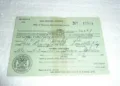
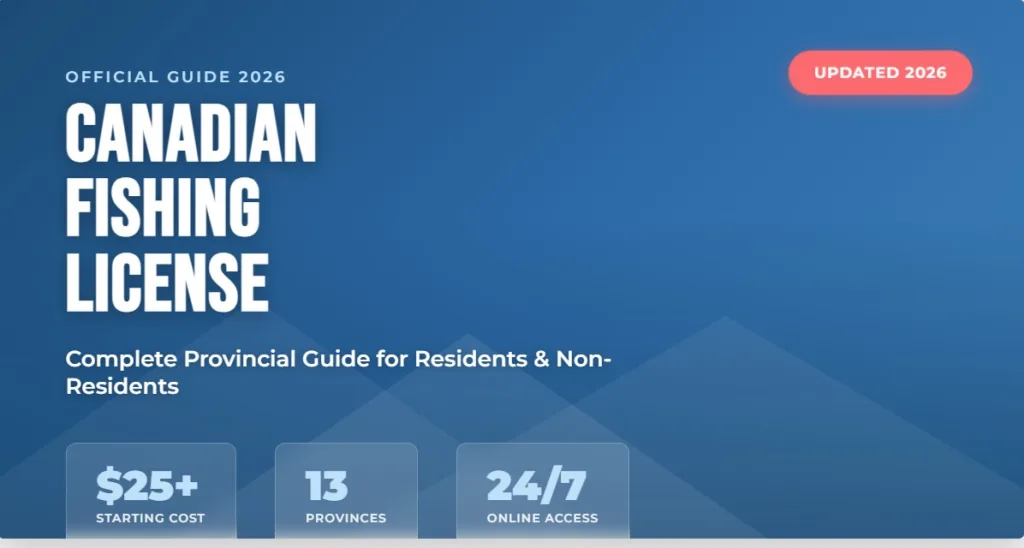
Do you need a fishing license in Canada? Yes, anyone 18+ needs a valid fishing license to fish in Canadian waters.
- Cost: $25-$250 CAD depending on province and residency status
- How to get: Online, authorized retailers, or government offices
- Processing time: Instant digital license; physical card in 2-3 weeks
- Valid: Varies by province (1 day to 3 years)
Planning to fish in Canada’s world-class waters in 2026? You’ll need a valid Canadian Fishing License 2026 before you cast your first line. Whether you’re a Canadian resident, visitor from another province, or international angler, this comprehensive guide covers everything you need to know about securing your Canadian fishing license in 2026.
Table of Contents
- 2026 License Costs by Province (Quick Comparison)
- Who Needs a Fishing License in Canada?
- Types of Fishing Licenses in Canada
- Ontario Fishing License 2026 (Detailed Guide)
- BC Fishing License 2026
- Other Provinces & Territories
- How to Buy Your License (Step-by-Step)
- Complete Guide for Non-Residents
- Information for American Anglers
- Important Fishing Rules & Regulations
- Free Fishing Days 2026
- Frequently Asked Questions
2026 Canadian Fishing License Costs by Province
License fees vary significantly by province and residency status. Here’s a comprehensive comparison table to help you plan your 2026 fishing budget:
| Province | Resident (1-Year Sport) | Canadian Non-Resident (1-Year Sport) | International Non-Resident (1-Year Sport) | Purchase Link |
|---|---|---|---|---|
| Ontario | $26.57* | $55.81* | $83.19* | Buy Ontario License |
| British Columbia | $36 | $80 | $80 | Buy BC License |
| Alberta | $26 | $82 | $82 | Buy Alberta License |
| Quebec | $23 | $49 | $103 | Buy Quebec License |
| Saskatchewan | $35 | $55 | $55 | Buy SK License |
| Manitoba | $29 | $49 | $49 | Buy MB License |
*Ontario prices do NOT include HST (add 13%). Ontario also requires an Outdoors Card ($8.57 + HST) for licenses longer than 1 day.
💡 Money-Saving Tip: If you plan to fish multiple times in 2026, consider 3-year licenses. Ontario’s 3-year non-resident sport license is $249.57 (saves $0.00 compared to buying annual licenses).
Who Needs a Fishing License in Canada in 2026?
Understanding licensing requirements helps you stay compliant and avoid fines up to $25,000. Here’s the complete breakdown:
✅ People Who NEED a Fishing License
- All residents ages 18-64 (age varies by province)
- Non-residents age 18+ from other Canadian provinces
- International visitors age 18+ (including Americans)
- Anyone fishing in public waters with intent to catch fish
❌ Exemptions: Who Doesn’t Need a License
- Youth under 18 (under 16 in some provinces) – must fish with licensed adult
- Ontario residents 65+
- Persons with disabilities (varies by province, proof required)
- Indigenous peoples with treaty rights fishing in traditional territories
- Anyone fishing on Free Fishing Days (see section below)
⚠️ Important: Youth fishing without a license must be supervised by a licensed adult, and any fish caught count toward the adult’s catch limit. The adult is legally responsible for ensuring all regulations are followed.
What Qualifies as a “Non-Resident”?
Canadian fishing regulations define non-residents in two categories:
- Canadian Non-Residents: Canadian citizens or permanent residents whose primary residence is in a different province than where they’re fishing. Must have lived in their home province for 6+ consecutive months in the past year.
- Non-Canadian Residents: Anyone who doesn’t maintain a primary residence in Canada, including:
- International tourists (Americans, Europeans, etc.)
- Temporary workers or students
- Seasonal property owners who reside in Canada less than 6 months yearly
- Anyone without Canadian citizenship or permanent resident status
Types of Canadian Fishing Licenses (2026)
Canadian provinces offer different license types to accommodate various fishing styles and durations. Understanding the differences helps you choose the right option and save money.
1. Sport Fishing License
- Best for: Anglers who want to keep their catch
- Catch limits: Standard provincial limits (highest allowed)
- Ideal duration: If fishing 3+ days per year
- Cost range: $26-$250 depending on province and duration
2. Conservation Fishing License
- Best for: Catch-and-release anglers or occasional fishing
- Catch limits: Reduced (typically 50% of sport license limits)
- Savings: 30-40% cheaper than sport licenses
- Philosophy: Supports sustainable fishing practices
3. Short-Term Options for Visitors
| License Type | Duration | Outdoors Card Required? | Best For |
|---|---|---|---|
| 1-Day Sport | 24 hours | ❌ No | Weekend warriors, first-time anglers |
| 8-Day Sport | 8 consecutive days | ✅ Yes (Ontario) | Vacation fishing trips |
| 1-Year | Calendar year (Jan-Dec) | ✅ Yes | Regular anglers |
| 3-Year | 3 calendar years | ✅ Yes | Dedicated anglers (best value) |
🎯 License Selection Guide
Choose Conservation License if:
- You practice catch-and-release
- You fish for sport, not food
- You want to support conservation efforts
- You’re on a budget
Choose Sport License if:
- You keep your catch for meals
- You fish frequently and want full limits
- You’re targeting trophy fish
- You want maximum flexibility
Ontario Fishing License 2026: Complete Guide
Ontario is Canada’s most popular fishing destination, with 250,000+ lakes and 20 distinct Fisheries Management Zones. Here’s everything you need to know about getting licensed in Ontario in 2026.
Ontario Fishing License Fees 2026 (Updated)
Important: All prices below are in CAD and do NOT include 13% HST (Harmonized Sales Tax)
Non-Canadian Residents (Americans & International Visitors)
| License Type | Base Price | + HST (13%) | Total Cost |
|---|---|---|---|
| Outdoors Card (required, 3-year validity) | $8.57 | $1.11 | $9.68 |
| 1-Day Sport (no Outdoors Card needed) | $24.86 | $3.23 | $28.09 |
| 8-Day Sport | $54.38 | $7.07 | $61.45 |
| 8-Day Conservation | $31.52 | $4.10 | $35.62 |
| 1-Year Sport | $83.19 | $10.81 | $94.00 |
| 1-Year Conservation | $52.71 | $6.85 | $59.56 |
| 3-Year Sport (best value) | $249.57 | $32.44 | $282.01 |
| 3-Year Conservation | $158.13 | $20.56 | $178.69 |
Canadian Residents (from other provinces)
| License Type | Base Price + HST |
|---|---|
| Outdoors Card | $9.68 |
| 1-Day Sport | $17.19 |
| 1-Year Sport | $63.07 |
| 1-Year Conservation | $37.78 |
| 3-Year Sport | $189.20 |
| 3-Year Conservation | $113.33 |
What is the Outdoors Card?
The Outdoors Card is Ontario’s fishing/hunting ID card, similar to a driver’s license but for outdoor activities. Here’s what you need to know:
- Validity: 3 calendar years from issue date
- Format: Plastic card with your photo, name, and unique ID number
- Cost: $8.57 + HST ($9.68 total) – one-time fee every 3 years
- Required for: All multi-day fishing licenses in Ontario
- NOT required for: 1-day sport fishing licenses only
- Delivery: 15-20 business days by mail
- Temporary use: You’ll receive a License Summary document immediately that allows you to fish while waiting for your card
Ontario’s 20 Fisheries Management Zones (FMZs)
Ontario divides its waters into 20 distinct zones, each with specific regulations for:
- Catch limits by species
- Size restrictions (slot limits)
- Open and closed seasons
- Bait restrictions
- Gear limitations
Key zones for popular fishing destinations:
- Zone 5: Northwestern Ontario (Lake of the Woods, Rainy Lake)
- Zone 10: Muskoka and Parry Sound
- Zone 15: Kawartha Lakes
- Zone 17: Greater Toronto Area
- Zone 20: Lake Ontario and St. Lawrence River
📖 Required Reading: Download the Ontario Fishing Regulations Summary 2026 (PDF) and bring it with you. Conservation officers can fine you for violations even if you didn’t know the rules.
Special Ontario Rules for Non-Residents Camping on Crown Land
If you’re a non-resident planning to camp on Crown land in Northwestern Ontario (Zones 2, 4, 5, or parts of 6), special restrictions apply:
- Conservation limits apply – Even if you purchased a sport license, you’re restricted to conservation catch limits while camping on Crown land
- Crown Land Camping Permit required – Separate from your fishing license
- Maximum stay: 21 consecutive days per location
- Penalties: Up to $5,000 fine for violations
British Columbia Fishing License 2026
BC offers some of Canada’s most diverse fishing, from Pacific salmon to freshwater trout. In 2026, BC is transitioning to a new licensing system called WILD (Wildlife Licensing Database).
Important Change for 2026: New WILD System
🆕 NEW FOR 2026-27: Freshwater fishing licenses now purchase through the WILD system starting April 1, 2026. You’ll need to register for a Fish and Wildlife ID (FWID) number first.
Register now: Visit the BC government website to create your FWID before purchasing licenses.
BC License Types & Costs
Freshwater Fishing (lakes, rivers, streams):
- BC Resident: $36/year
- Non-Resident (Canadian): $80/year
- Non-Resident (International): $80/year
- 1-Day License: $10-20 (varies)
- 8-Day License: Available for non-residents
Saltwater Fishing (tidal waters): Requires separate BC Tidal Waters Sport Fishing License
- Canadian Resident: $22.50/year
- Non-Resident: $106.60/year
- 1-Day: $7.50-$10.90
- 5-Day: $20.75 (non-residents)
Where to Buy BC Fishing Licenses
- Online: BC E-Licensing System (transitioning to WILD in 2026)
- In Person: Front Counter BC locations, Service BC offices
- Authorized Vendors: Sporting goods stores, tackle shops
BC Classified Waters
Some premium BC waters require additional fees or access through designated guides:
- Special regulations apply to Classified Waters
- Non-residents may have different access requirements
- Always check if your destination is a Classified Water
Other Canadian Provinces & Territories (2026 Guide)
Alberta Fishing License 2026
- Resident: $26 (annual)
- Non-Resident: $82 (annual)
- Youth (under 16): FREE
- Buy online: MyWild Alberta
- Note: Some waters require Conservation Licenses or special permits
Quebec Fishing License 2026
- Resident: $23.30 (sport fishing)
- Canadian Non-Resident: $48.85
- International Non-Resident: $103.35
- Special zones: Some areas require ZEC permits (additional cost)
- Buy online: Quebec government site
Saskatchewan Fishing License 2026
- Resident: $35 (annual)
- Non-Resident: $55 (3-day) to $90 (annual)
- Buy online: Through authorized vendors
Manitoba Fishing License 2026
- Resident: $29 (annual)
- Non-Resident: $49-80 depending on duration
- Conservation License: Available at reduced cost
Atlantic Provinces (New Brunswick, Nova Scotia, PEI, Newfoundland & Labrador)
Salmon Licenses (Newfoundland & Labrador example):
- Resident: $23
- Non-Resident: $80
- Note: Atlantic salmon fishing requires special licenses in most Atlantic provinces
Northern Territories (Yukon, Northwest Territories, Nunavut)
- Different licensing systems
- Often include fish from traditional food fisheries
- Remote area fishing may require special permits or fly-in operator arrangements
- Contact territory-specific wildlife offices for current regulations
How to Buy Your Canadian Fishing License: Step-by-Step Guide
Getting your 2026 Canadian fishing license is straightforward. Most provinces now offer instant digital licenses you can use immediately.
Method 1: Online Purchase (Recommended) ⭐
Step-by-Step: Ontario Example
- Visit the licensing website
Ontario: Fish and Wildlife Licensing Service
Create an account or log in - Verify your residency status
Select: Ontario Resident / Canadian Resident / Non-Canadian Resident
⚠️ Selecting wrong category can invalidate your license - Purchase Outdoors Card (if required)
First-time buyers must get an Outdoors Card before buying multi-day licenses
Have a digital photo ready (for card) - Select your fishing license type
Choose: Sport or Conservation
Choose duration: 1-day / 8-day / 1-year / 3-year - Provide required information
• Full legal name (as shown on government ID)
• Date of birth
• Current residential address
• Email address and phone number
• Height and eye colour
• Photo (for Outdoors Card) - Review and pay
Accepted: Visa, MasterCard, American Express
Note: All prices + HST (13% in Ontario) - Receive License Summary immediately
• PDF download available instantly
• Email confirmation sent
• Print or save to mobile device
• You can fish IMMEDIATELY with this document - Physical Outdoors Card arrives by mail
• Delivery: 15-20 business days
• Carry both card and license when fishing
✅ Pro Tips for Online Purchase:
- Buy 2-4 weeks before your trip (allows time for Outdoors Card delivery)
- Use your legal name exactly as it appears on passport/driver’s license
- Keep a digital copy on your phone (screenshot or PDF in fishing app)
- Print a waterproof copy for your tackle box
- Set a calendar reminder 1 month before expiration
Method 2: In-Person Purchase
ServiceOntario / Government Offices:
- Find locations: ServiceOntario Location Finder
- Bring: Government-issued photo ID (passport, driver’s license)
- Payment: Cash, debit, or credit card
- Processing: Immediate License Summary; Outdoors Card mailed
- Hours: Monday-Friday, 8:30 AM – 5:00 PM (varies by location)
Authorized Retailers:
- Sporting goods stores: Canadian Tire, Bass Pro Shops, Cabela’s
- Bait shops and tackle stores: Most carry licenses
- Some gas stations in fishing areas
- Outfitter lodges often sell licenses
⚠️ Vendor Processing Fees: Some retailers charge $2-5 service fee on top of license cost.
Method 3: Phone Purchase (Ontario)
- Number: 1-800-288-1155 (toll-free)
- Available: 3-year Sport and Conservation licenses only
- Hours: When renewing existing Outdoors Card
Required Information for All Purchase Methods
| Information | Required For |
|---|---|
| Full legal name | All licenses |
| Date of birth | All licenses |
| Current address | All licenses |
| Email & phone | All licenses |
| Height & eye colour | Outdoors Card (Ontario) |
| Digital photo | Outdoors Card (first-time) |
| Government ID | In-person purchases, border crossing |
Complete Guide for Non-Residents Fishing in Canada (2026)
Non-residents face slightly different rules and higher fees, but Canada welcomes anglers from around the world. Here’s everything you need to know to fish legally as a visitor.
Non-Resident Categories Explained
- Canadian Residents (from other provinces)
Example: You live in Alberta but want to fish in Ontario
Cost tier: Middle
Proof needed: Address on driver’s license or utility bill - Non-Canadian Residents (International visitors)
Example: Americans, Europeans, Asians visiting Canada
Cost tier: Highest
Proof needed: Passport or foreign driver’s license
Non-Resident Advantages
- ✅ Access to same waters as residents (with few exceptions)
- ✅ Same catch quality and species variety
- ✅ License fees fund conservation (you’re supporting Canadian fisheries)
- ✅ Many provinces offer short-term licenses perfect for vacations
Non-Resident Restrictions
- ❌ Higher license fees (typically 2-3x resident cost)
- ❌ Reduced catch limits in some provinces
- ❌ Classified Waters in BC may require guide services
- ❌ Crown land camping restrictions (Ontario Northwestern zones)
- ❌ Some trophy management zones closed to non-residents
Documents You Must Carry While Fishing (Non-Residents)
⚠️ MANDATORY – Carry These at ALL Times:
- Valid Fishing License (digital or printed)
- Outdoors Card (if required by province)
- Government-issued Photo ID – passport, driver’s license, or national ID card
- Provincial Regulations Summary (recommended – shows you know the rules)
What happens if you don’t have these?
- Fines: $200-$25,000 depending on violation
- Gear confiscation
- Court appearance required for serious violations
- Potential denial of future licenses
License Summary Document
When you purchase online, you receive a License Summary PDF. This document:
- ✅ Is legally valid for fishing (don’t need physical card immediately)
- ✅ Shows your license type, duration, and client ID
- ✅ Can be shown on phone or printed
- ✅ Allows you to fish while waiting for Outdoors Card to arrive
🎯 Best Practice: Keep a printed copy in your tackle box AND a digital copy on your phone. Cell service can be spotty in remote Canadian fishing areas.
Canadian Fishing License for American Anglers (2026)
Americans make up the largest group of non-resident anglers in Canada. Here’s everything U.S. citizens need to know about fishing in Canada in 2026.
Can Americans Get a Canadian Fishing License?
Yes! Americans are welcome to purchase non-resident fishing licenses in all Canadian provinces. The process is simple and licenses are available immediately online.
Special Considerations for Americans
1. Border Crossing with Fishing Gear
- Passport required: Even for day trips
- Declare all fishing gear: Rods, reels, tackle, bait
- Live bait restrictions: Many provinces prohibit importing live bait (especially Ontario)
- Fish importation: Bringing fish back to the U.S. requires proper documentation
- Firearms: Special permits required for handguns; long guns need declaration
🚫 PROHIBITED:
- Importing live bait fish into Ontario (buy locally)
- Bringing more fish than possession limits allow
- Transporting fish across provincial borders without proper packaging
- Using certain bait types (check provincial regulations)
2. Popular American Destinations in Canada
For American Anglers:
| U.S. Border State | Nearest Canadian Fishing | Target Species | Drive Time |
|---|---|---|---|
| Minnesota/North Dakota | Ontario (Rainy Lake, Lake of the Woods) | Walleye, Northern Pike, Small mouth Bass | 2-4 hours |
| Michigan | Ontario (Great Lakes, interior lakes) | Salmon, Trout, Walleye | 1-3 hours |
| New York | Ontario (St. Lawrence River, Thousand Islands) | Muskie, Bass, Pike | 1-2 hours |
| Washington | British Columbia | Pacific Salmon, Steel head | 1-3 hours |
| Montana | Alberta/British Columbia | Trout, Bull Trout, Grayling | 2-4 hours |
3. Cost Comparison: Canadian vs American Licenses
Americans often wonder: Is a Canadian license more expensive?
| Jurisdiction | Non-Resident 1-Year | U.S. Dollar Equivalent (approx) |
|---|---|---|
| Ontario, Canada | $94.00 CAD | ~$69 USD |
| Minnesota, USA | $51.00 USD | $51 USD |
| Wisconsin, USA | $50.00 USD | $50 USD |
| British Columbia, Canada | $80.00 CAD | ~$59 USD |
Exchange rates fluctuate. Canadian prices convert to roughly 25-30% less in USD as of February 2026.
4. Reciprocal Agreements
Do U.S. and Canadian fishing licenses work across borders?
❌ No. There are NO reciprocal agreements. You must purchase a separate Canadian license even if you hold a valid U.S. fishing license.
Exception: Some border waters have special agreements, but you still need appropriate licenses from both countries.
5. Bringing Fish Back to the United States
U.S. Customs regulations for importing fish from Canada:
- ✅ Allowed: Legally caught fish within your Canadian possession limit
- ✅ Required: Keep your fishing license with you
- ✅ Packaging: Fish should be cleaned and packaged
- ✅ Declaration: Declare fish to U.S. Customs (usually no duty)
- ❌ Prohibited: Endangered species, over-limits, improperly caught fish
💼 Checklist for Americans Fishing in Canada
- ☐ Valid passport
- ☐ Canadian fishing license (purchase before trip)
- ☐ Outdoors Card (if required)
- ☐ Provincial regulations guide
- ☐ Check bait restrictions (buy bait in Canada)
- ☐ Vehicle insurance valid in Canada
- ☐ Credit card with no foreign transaction fees
- ☐ Emergency contact numbers
- ☐ Download offline maps (cell service may be limited)
Important Canadian Fishing Rules & Regulations (2026)
Understanding and following fishing regulations protects Canada’s aquatic ecosystems and keeps you legal. Here are the critical rules every angler must know.
Universal Canadian Fishing Rules
1. License Requirements
- Must be purchased BEFORE fishing (no grace period)
- Must be carried in legible form (printed or digital)
- Must match the waters you’re fishing (check provincial boundaries)
- Expires at midnight on the end date (not 24 hours from purchase)
2. Catch Limits
Three types of limits exist:
- Daily Catch Limit: Maximum fish you can catch and keep in one day
- Possession Limit: Maximum fish you can have in your possession at any time (usually 2x daily limit)
- Size Limits: Minimum and/or maximum sizes you can keep (varies by species and zone)
⚠️ Common Catch Limit Mistakes:
- Releasing a fish AFTER it’s been placed in a live well or cooler (counts toward limit even if released later)
- Exceeding possession limit by having fish at your cabin AND in your cooler
- Filleting fish before measurement (must be kept whole until measured)
- Keeping undersized or oversized fish “by mistake”
3. Seasons & Zones
- Open seasons: Specific dates when you can fish for each species
- Closed seasons: Dates when fishing for specific species is prohibited (spawning protection)
- Sanctuary zones: Areas closed year-round or during critical periods
- Zone boundaries: Rules change when you cross into a new Fisheries Management Zone
Example Ontario Seasons (Zone 10):
| Species | Open Season | Daily Limit (Sport) | Size Limit |
|---|---|---|---|
| Walleye | 3rd Sat in May – Mar 15 | 4 | 40-60 cm slot (varies) |
| Small mouth Bass | 4th Sat in June – Nov 30 | 6 | None typically |
| Lake Trout | Jan 1 – Sept 30 | 2 | Varies by lake |
| Northern Pike | 3rd Sat in May – Mar 15 | 4 | 61-86 cm (1 trophy allowed) |
*This is an example only – always check current regulations for your specific zone
4. Bait Restrictions
To prevent the spread of invasive species:
- ❌ Never transport live bait between water bodies
- ❌ Don’t release unused bait into waterways
- ✅ Buy bait locally at your fishing destination
- ✅ Dispose of unused bait in the garbage
- ⚠️ Some zones prohibit live bait entirely (check regulations)
- ⚠️ Importing bait across borders often prohibited
5. Gear Restrictions
- Lines: Maximum number of lines/rods varies (often 2-4)
- Hooks: Barb less hooks required in some waters
- Nets: Size and mesh restrictions apply
- Spear fishing: Heavily restricted or prohibited
- Ice fishing: Tip-up limits, hut regulations
Ethical Fishing Practices
Beyond legal requirements, follow these best practices:
- Catch and Release: Use barb less hooks, minimize handling time, revive fish before release
- Selective harvest: Keep what you’ll eat; release trophy breeding fish
- Pack it in, pack it out: Leave no trace; pick up litter
- Respect private property: Get permission before accessing private lands
- Share the resource: Don’t monopolize fishing spots
- Report violations: Call provincial tip lines if you witness illegal fishing
Penalties for Violations
Canadian provinces take fishing violations seriously:
| Violation | Typical Fine | Additional Penalties |
|---|---|---|
| Fishing without a license | $200-$1,000 | Gear confiscation |
| Exceeding catch limits | $500-$5,000 | Fish confiscation, possible jail time |
| Fishing in closed season | $500-$2,500 | License suspension |
| Keeping undersized/oversized fish | $300-$1,500 | Per fish violations add up |
| Commercial fishing without permit | $10,000-$25,000 | Criminal charges, imprisonment |
Free Fishing Days in Canada 2026
Most Canadian provinces offer special “Free Fishing Days” or “Family Fishing Weekends” when anyone can fish without a license. These events are perfect for introducing newcomers to the sport.
Ontario Free Fishing Weekends 2026
🆓 Ontario 2026 Free Fishing Dates
- Family Day Weekend: February 15-17, 2026 (Sat-Mon)
- Mother’s Day Weekend: May 9-11, 2026 (Fri-Sun)
- Father’s Day Weekend: June 20-22, 2026 (Fri-Sun)
- Ontario Summer Free Fishing Week: July 4-12, 2026 (9 days)
Other Provinces – Free Fishing Days 2026
British Columbia: Family Day – February 17, 2026
Alberta: July 11-12, 2026 (Alberta Free Fishing Weekend)
Saskatchewan: Victoria Day Weekend – May 16-18, 2026
Manitoba: Father’s Day Weekend – June 20-21, 2026
Quebec: Check MFFP website for annual free fishing periods
Important Rules for Free Fishing Days
- ✅ No license required for the specified dates
- ⚠️ ALL other regulations still apply: catch limits, seasons, size restrictions, gear rules
- ⚠️ Zone-specific rules in effect: Check if your target species is in season
- ⚠️ Conservation officers still patrol: Violations will result in fines
- ✅ Great for beginners: Try fishing risk-free before buying a license
💡 Pro Tip: Use free fishing days to:
- Test out new fishing spots before committing to a full license
- Introduce kids to fishing (they’re often intimidated by regulations)
- Try a different province’s waters without buying multiple licenses
- Determine if you prefer Sport or Conservation license limits
Frequently Asked Questions – Canadian Fishing License 2026
Q1: How much does a Canadian fishing license cost in 2026?
A: Costs range from $25-$250 CAD depending on:
- Your residency status (resident vs non-resident)
- Province where you’re fishing
- License type (sport vs conservation)
- Duration (1-day to 3-year)
Example: Ontario non-resident 1-day sport license is $28.09 total; 1-year sport is $94.00.
Q2: Can I fish in Canada without a license?
A: Only in these situations:
- You’re under 18 years old (age varies by province) AND supervised by a licensed adult
- It’s a designated Free Fishing Day in your province
- You’re a senior (65+) in provinces with senior exemptions (Ontario, some others)
- You have a disability exemption (varies by province, proof required)
In all other cases, you MUST have a valid license.
Q3: How long does it take to get a Canadian fishing license?
A: Instant digital license when purchased online. You can fish immediately using your License Summary document. The physical Outdoors Card (Ontario) arrives in 15-20 business days by mail.
Q4: Can Americans buy a Canadian fishing license?
A: Yes! Americans and all international visitors can purchase non-resident fishing licenses online or in-person. You’ll pay non-Canadian resident rates (highest tier) and need a valid passport.
Q5: Do I need a license to fish in Ontario in 2026?
A: Yes, unless you’re:
- Under 18 years old (fishing with licensed adult)
- 65 years or older (Ontario residents only)
- Fishing on a Free Fishing Weekend
- Holding a valid disability exemption
All others must purchase an Outdoors Card + fishing license.
Q6: What’s the difference between a Sport and Conservation fishing license?
A:
| Feature | Sport License | Conservation License |
|---|---|---|
| Catch limits | Standard (full) | Reduced (typically 50%) |
| Cost | Higher | 30-40% cheaper |
| Best for | Keeping fish, frequent anglers | Catch-and-release, budget-conscious |
Q7: Where can I buy a fishing license in Canada?
A: Three ways:
- Online – Provincial government websites (recommended – instant license)
- In-person – ServiceOntario, authorized retailers (Canadian Tire, Bass Pro Shops, bait shops)
- Phone – 1-800-288-1155 (Ontario, limited options)
Q8: Can I use my fishing license in all Canadian provinces?
A: No. Fishing licenses are provincial/territorial. You need a separate license for each province where you fish. Exception: Some border waters have reciprocal agreements, but you generally need both licenses.
Q9: What fish can I catch in Canada with a license?
A: Depends on province and season. Common species include:
- Ontario: Walleye, Northern Pike, Small mouth/Large mouth Bass, Lake Trout, Muskellunge
- BC: Pacific Salmon (Chinook, Coho, Sockeye), Steel head, Rainbow Trout
- Alberta: Rainbow Trout, Brown Trout, Northern Pike, Walleye
- Quebec: Brook Trout, Walleye, Northern Pike, Atlantic Salmon
Check provincial guides for species-specific seasons and limits.
Q10: How do I know which Fisheries Management Zone I’m in?
A: Download the provincial regulations summary (includes zone maps) or use fishing apps like FishON Ontario. Zone boundaries are marked on official maps, and many lakes have signs posted.
Q11: Can I fish in Canada with my U.S. fishing license?
A: No. U.S. and Canadian fishing licenses are not interchangeable. You must purchase a Canadian license to fish in Canadian waters, even if you have a valid U.S. license.
Q12: What happens if I’m caught fishing without a license in Canada?
A: Penalties include:
- Fines: $200-$1,000 for first offence
- Gear confiscation (rods, reels, tackle)
- Fish seizure
- Potential vehicle Seizure
- Court appearance required for serious violations
- Criminal record in extreme cases
Q13: Do seniors need a fishing license in Canada?
A: Depends on province:
- Ontario: Residents 65+ fish FREE (no license required)
- BC, Alberta, most others: Seniors pay reduced fees but still need licenses
- Non-resident seniors: Always pay full non-resident rates regardless of age
Q14: Can I get a refund on my Canadian fishing license?
A: Generally no. Most provinces don’t offer refunds once a license is issued. Exception: If there’s a system error or duplicate purchase, contact the issuing authority immediately.
Q15: How do I renew my Canadian fishing license?
A: Log into your provincial licensing portal (same site where you originally purchased). If you have an Outdoors Card (Ontario), it’s valid for 3 years – you only renew the annual fishing license portion.
Conclusion: Get Licensed and Fish Responsibly in Canada (2026)
A valid Canadian fishing license represents more than just a legal requirement – it’s your contribution to conservation efforts that keep Canada’s waters world-class for generations to come. With 2026’s streamlined online licensing systems, getting legal has never been easier.
🎣 Your 2026 Action Plan
- Determine your residency status (resident, Canadian non-resident, or international)
- Choose your province and check specific regulations
- Decide on license type (sport vs conservation, duration)
- Purchase online 2-4 weeks before your trip (allows time for card delivery)
- Download provincial regulations for your fishing zones
- Carry license and ID at all times while fishing
- Follow all catch limits and seasons
- Practice ethical, sustainable fishing
Canada offers some of the world’s best freshwater and saltwater fishing opportunities. Whether you’re targeting trophy muskies in Ontario, Pacific salmon in BC, or Arctic grayling in the territories, proper licensing ensures you’re fishing legally while supporting conservation programs that protect these incredible resources.
Ready to fish Canada in 2026? Get your license today and experience the adventure of a lifetime!
Start Your Canadian Fishing Adventure
Purchase your 2026 fishing license now and join millions of anglers enjoying Canada’s pristine waters.
Related Articles
- 10 Unforgettable Fishing Destinations in Canada
- New Hunting and Fishing Regulations Canada
- Does Fish Taste Better From Cold Water?
- Best Ice Fishing Spots in Ontario 2026
- Complete Guide to Catch and Release Fishing
About North Hunt Fish Club: We’re passionate about Canadian outdoor recreation and conservation. Our mission is to provide accurate, up-to-date information to help anglers and hunters enjoy Canada’s natural resources responsibly. Follow us for more tips, destination guides, and regulation updates.