
Choosing the right fishing bait can make the difference between a successful fishing trip and going home empty-handed. Understanding the main types of fishing bait – natural live bait and artificial lures – helps anglers select the most effective option for their target fish and fishing conditions. Each type offers unique advantages and works better in specific situations.
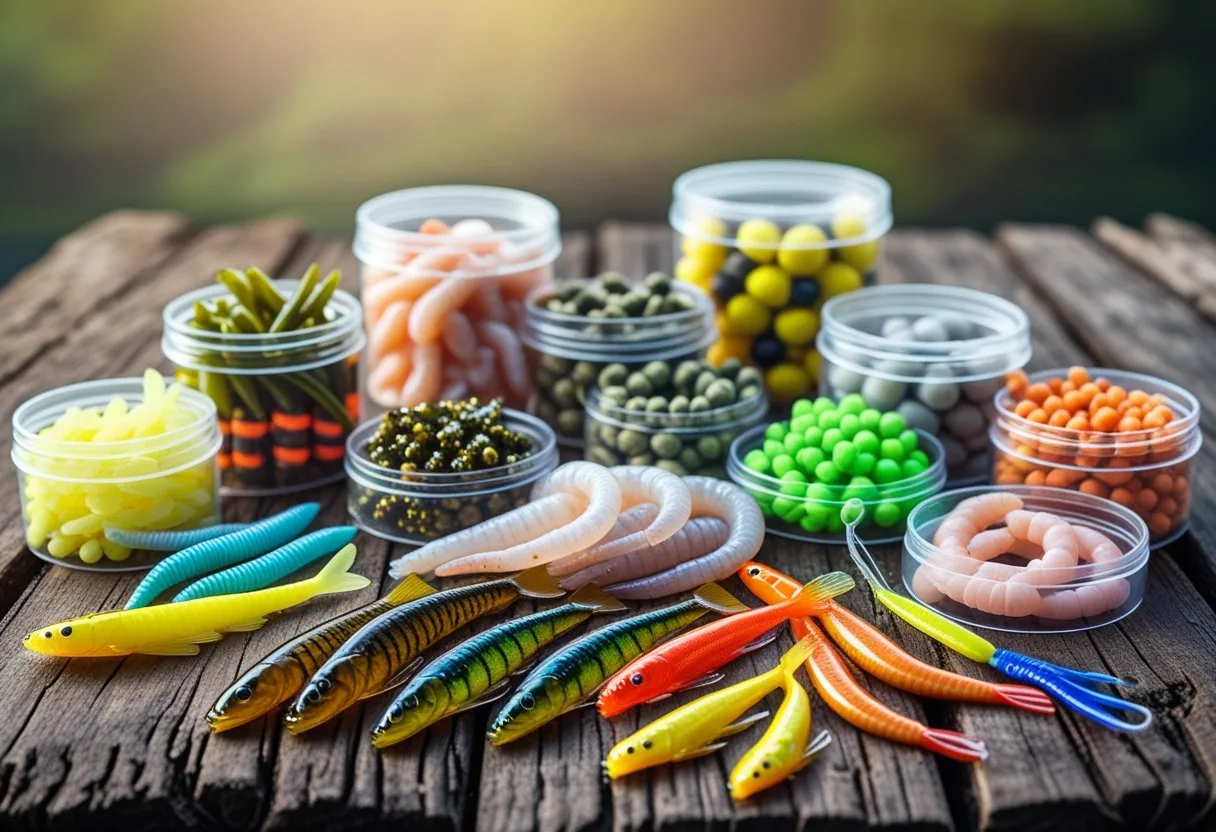
Natural baits include live options like worms, minnows, and insects that fish naturally eat in their environment. These types of freshwater fishing bait appeal to fish through natural scent and movement. They work well for beginners because fish find them familiar and attractive.
Artificial lures mimic the appearance and movement of natural prey without requiring live bait. The seven basic categories of fishing lures include crankbaits, plugs, poppers, spoons, jigs, spinners, and flies. While they require more skill to use effectively, they last longer and offer more control over the fishing experience.
Key Takeaways – Fishing Bait Types
- Natural baits like worms and minnows are easier for beginners to use and attract fish through natural scent and taste
- Artificial lures require more technique but offer durability and allow anglers to target specific fish species
- The best bait choice depends on the target fish species, water conditions, and fishing location
Overview of Fishing Bait Types
Anglers can choose from three main categories of fishing bait, each offering unique advantages for different fishing situations. Live bait options provide natural movement that triggers predatory instincts, while natural baits offer familiar food sources that fish recognize from their environment, and artificial baits deliver durability with customizable presentations.
Live Bait Options – Fishing Bait Types
Live bait consists of living organisms that move naturally in the water to attract fish. Minnows rank among the most popular choices for freshwater fishing, particularly when targeting bass, pike, and walleye.
Worms provide exceptional versatility for multiple species. Nightcrawlers work effectively for trout and bass, while smaller earthworms attract panfish and bottom feeders.
Saltwater fishing often relies on live shrimp, small fish, and crabs. These baits appeal to species like redfish, snook, and flounder that hunt active prey.
Popular Live Bait Types:
- Minnows (shiners, chubs)
- Worms (nightcrawlers, red worms)
- Insects (crickets, grasshoppers)
- Leeches
- Shrimp (saltwater)
Live bait requires careful handling to maintain freshness. Anglers need aerated containers and proper water temperatures to keep bait alive during fishing trips.
The effectiveness of live bait stems from its natural movement and scent. Fish respond instinctively to these characteristics, often resulting in higher catch rates compared to artificial alternatives.
Natural Baits – Fishing Bait Types
Natural baits include dead or prepared organic materials that fish recognize as food sources. Cut bait from fish like herring or sardines works well for catfish, striped bass, and other bottom feeders.
Prepared natural baits offer convenience without sacrificing effectiveness. Chicken livers attract catfish, while corn appeals to carp and some panfish species.
Crustaceans like dead shrimp and crab pieces excel in saltwater fishing. These baits target species that naturally feed on shellfish along coastal waters.
Common Natural Bait Options:
- Cut fish (herring, sardines)
- Chicken liver
- Corn kernels
- Cheese
- Dough balls
Natural bait selection depends on target species and fishing environment. Saltwater fishing typically requires different natural baits than freshwater applications.
Storage presents challenges with natural baits since they spoil quickly. Anglers must keep these baits refrigerated and use them within appropriate timeframes to maintain effectiveness.
Artificial Baits – Fishing Bait Types
Artificial baits mimic natural prey through design, color, and movement patterns. Hard baits like crankbaits and jerkbaits dive and swim to imitate injured baitfish.
Soft plastics provide versatility in presentation methods. Plastic worms can be rigged multiple ways for different fishing techniques and depths.
Jigs combine weight with attractive features to target bottom feeders and suspended fish. These lures work effectively with or without added natural bait like minnow heads or worms.
Artificial Bait Categories:
- Hard lures (crankbaits, spoons)
- Soft plastics (worms, grubs)
- Jigs (lead heads with skirts)
- Spinners and spinnerbaits
- Topwater lures
Artificial baits offer durability and reusability that natural options cannot match. Anglers can experiment with different colors, sizes, and retrieval speeds to determine optimal presentations.
The learning curve for artificial baits requires understanding fish behavior and water conditions. Success depends on proper technique and matching lure characteristics to specific fishing situations.
Types of Artificial Bait and Lures
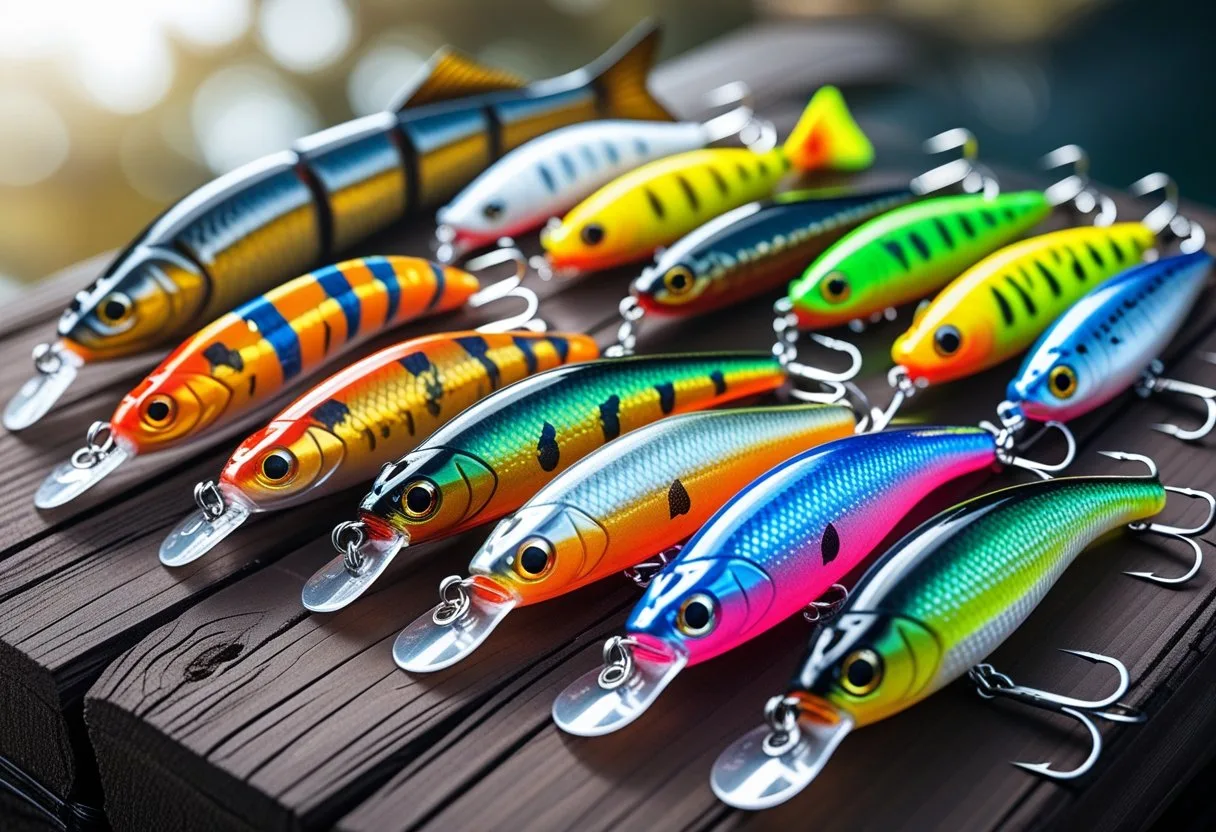
Artificial bait falls into four main categories that cover different fishing situations and techniques. Hard baits like crankbaits and plugs work well for covering water quickly, while soft plastics excel in heavy cover and finesse presentations.
Hard Baits and Plugs – Fishing Bait Types
Hard baits include crankbaits, jerkbaits, and lipless crankbaits made from wood or plastic. These fishing lures feature diving lips that determine how deep they run in the water.
Crankbaits come in shallow, medium, and deep-diving versions. Shallow runners work in 0-4 feet of water. Medium divers reach 5-12 feet. Deep runners go below 12 feet.
Popular Hard Bait Types:
- Crankbaits – Wobbling action mimics injured baitfish
- Jerkbaits – Suspending lures for stop-and-go retrieves
- Lipless crankbaits – Tight vibrating action for bass fishing
- Plugs – Classic wooden or plastic fish imitations
Most hard baits use treble hooks for better hookup rates. The wobbling and vibrating actions trigger reaction strikes from bass, walleye, and pike.
Jerkbaits work best in cooler water when fish suspend. Anglers use a pause-and-twitch retrieve to imitate dying baitfish.
Soft Plastic Lures – Fishing Bait Types
Soft plastics offer the most versatile category of artificial bait. These lures feel natural to fish and work in all water depths and cover types.
Common Soft Plastic Shapes:
- Worms (straight, curly, ribbon tail)
- Crawfish imitations
- Lizards and creatures
- Swimbaits
- Grubs for panfish
Soft plastic lures pair with various jigs and hooks. Texas rigs work well in heavy cover. Carolina rigs cover deep water effectively. Drop shot rigs excel for finesse fishing.
The soft texture allows fish to hold onto the bait longer. This gives anglers more time to set the hook compared to hard baits.
Creature baits with multiple appendages create extra movement in the water. These work especially well for bass fishing around structure and cover.
Swimbaits in larger sizes target trophy fish. The realistic swimming action fools fish in clear water conditions.
Topwater Baits – Fishing Bait Types
Topwater lures create surface disturbance to attract fish feeding near the top. These baits work best during low-light periods like dawn and dusk.
Main Topwater Categories:
- Poppers – Create splash and bubble trails
- Buzzbaits – Metal blade churns water surface
- Frogs – Weedless design for heavy cover
- Walking baits – Side-to-side action
Buzzbaits feature a spinning metal blade that creates noise and commotion. The steady retrieve works well around shallow cover and vegetation.
Frog lures use weedless hooks to fish in thick grass and lily pads. The hollow body collapses when fish bite to expose the hooks.
Walking baits require a rhythmic rod tip action. This creates the zigzag motion that triggers explosive strikes from bass and pike.
Poppers work with short, sharp jerks of the rod tip. Each pop creates bubbles and noise that imitates feeding baitfish.
Metal Lures – Fishing Bait Types
Metal lures include spoons, blade baits, and jigging spoons made from various metals. These dense lures cast far and sink quickly to reach deep fish.
Types of Metal Lures:
- Spoons – Curved design creates wobbling flash
- Blade baits – Compact profile for deep water
- Metal jigs – Heavy weight for bottom fishing
- Jigging spoons – Vertical presentation lures
Spoons work well for trolling and casting to active fish. The wobbling action and flash imitate injured baitfish swimming erratically.
Blade baits excel in deep water during winter months. The tight vibrating action attracts fish in cold conditions when other lures fail.
Metal jigs paired with soft plastic trailers target bottom-dwelling fish. The heavy weight helps maintain contact with structure and cover.
These metal lures work effectively in clear water where the flash and vibration attract fish from long distances.
Frequently Asked Questions – Fishing Bait Types
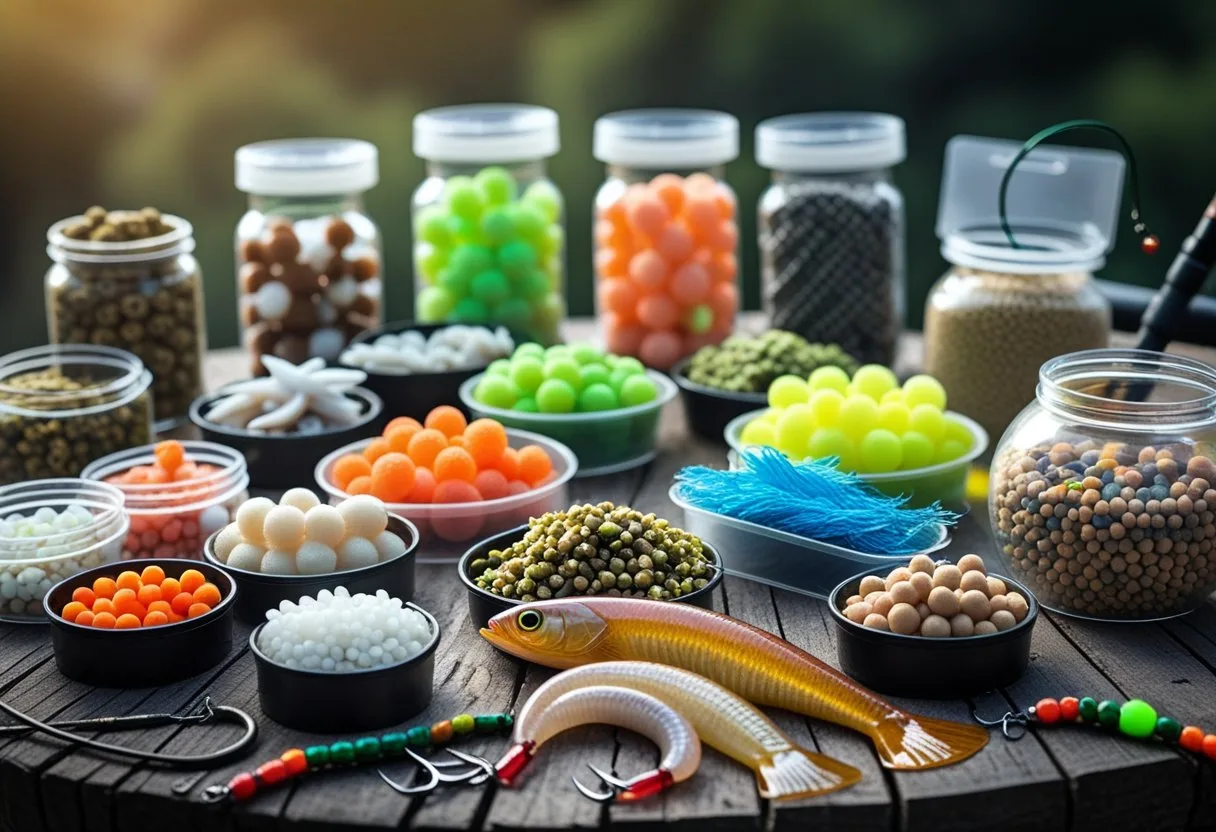
Anglers often wonder about the key differences between natural and artificial baits, and how seasonal changes impact their effectiveness. Understanding proper storage methods and species-specific bait selection can significantly improve fishing success rates.
What are the differences between natural and artificial fishing bait types?
Natural baits include live organisms like worms, minnows, and crickets, along with organic materials such as corn and dough balls. These baits appeal to fish because they mimic their actual food sources in the wild.
Artificial bait types are manufactured lures made from plastic, rubber, or metal materials. They are designed to imitate the appearance and movement of natural prey through bright colors, reflective surfaces, and noise-making components.
Natural baits have limited longevity and can spoil quickly, especially in warm weather. Artificial baits offer greater durability and can be reused multiple times, providing cost savings over extended fishing trips.
Live bait often produces higher catch rates because it triggers natural predatory instincts. However, artificial lures allow for more experimentation with colors, sizes, and actions to match different fishing conditions.
How do I choose the right fishing bait types for different fish species?
Different fish species have distinct feeding habits that determine effective bait choices. Bass typically prefer larger prey like minnows or topwater lures, while panfish respond better to smaller offerings such as worms or tiny jigs.
Bottom-feeding fish like catfish are attracted to natural baits including stink bait or cut fish. Trout in streams and rivers often respond to small spinners or live worms presented near the bottom.
Research shows that using species-appropriate bait can increase catch rates by up to 50%. Understanding the target species’ habitat and behavior patterns helps guide successful bait selection.
Local fishing reports and tackle shop recommendations provide valuable insights into what baits are currently working in specific areas. Water temperature and seasonal spawning patterns also influence which baits will be most effective.
Can you explain the advantages of using live bait over lures? – Fishing Bait Types
Live bait mimics the natural food sources that fish encounter in their environment daily. This familiarity makes fish more likely to strike compared to artificial alternatives that may appear foreign.
Studies show that many anglers report higher catch rates when using live bait compared to artificial lures. Live organisms trigger natural predatory responses through their movement, scent, and appearance.
Live bait works effectively across various water depths and can be presented on different rig types. Minnows, worms, and other live options appeal to multiple fish species simultaneously.
The natural scent trail that live bait creates in the water attracts fish from greater distances. This scent advantage is particularly valuable in murky water conditions where visibility is limited.
Which fishing bait types are most effective in saltwater environments?
Saltwater fishing requires baits that can withstand harsh marine conditions and attract ocean species. Live shrimp, squid, and small baitfish like sardines prove highly effective for most saltwater fishing situations.
Cut bait made from oily fish such as mackerel or herring creates strong scent trails that attract predatory saltwater species. Crabs and other crustaceans work well for bottom-dwelling fish like flounder and red drum.
Artificial saltwater lures must be corrosion-resistant and designed for larger, more aggressive fish. Metal spoons, jigs, and diving plugs can effectively target species like striped bass and bluefish.
Fresh bait performs better than frozen options in saltwater environments. The natural oils and scents in fresh bait disperse more effectively in salt water, creating stronger attraction signals.
What are the best practices for storing and maintaining Fishing Bait Types to ensure its effectiveness?
Live bait requires aerated tanks or bait buckets with adequate oxygen supply to maintain vitality. Keeping water cool and clean prevents stress that can lead to premature death of minnows and other aquatic organisms.
Natural baits need refrigeration to prevent spoilage. Worms should be stored in moist soil or peat moss within plastic containers, while dough baits require airtight storage to minimize air exposure.
Ice packs help maintain proper temperatures during transport, especially in warm weather conditions. Regular checks ensure stored bait remains in optimal condition for fishing trips.
Artificial baits should be kept in organized tackle boxes away from direct sunlight and moisture. Soft plastic baits perform best when stored in original packaging to prevent melting or sticking together.
How do seasonal changes affect the choice of Fishing Bait Types for freshwater fishing?
Spring warming triggers increased fish activity and spawning behavior, making natural baits like worms and small minnows highly effective. As water temperatures rise, fish become more aggressive and willing to chase moving baits.
Fishing Bait Types in the summer heat drives fish to deeper, cooler waters where brightly colored lures can attract species like bass and pike. Fish often seek relief from warm surface temperatures by moving to thermoclines and structure.
Fall feeding patterns intensify as fish prepare for winter, creating Fishing Bait Types opportunity to use larger baits that imitate baitfish. This pre-winter feeding frenzy often produces some of the year’s best fishing action.
Winter’s cold water slows fish metabolism significantly, making live bait like minnows or wax worms more effective than fast-moving artificial lures. Smaller presentations work better when fish are less active and conserving energy.