This feature article documents experience-based ice fishing field observations recorded by North Hunt Fish Club during the 2025 winter season in Ontario. All data reflects aggregated seasonal field logs compiled during real fishing outings across multiple water bodies.
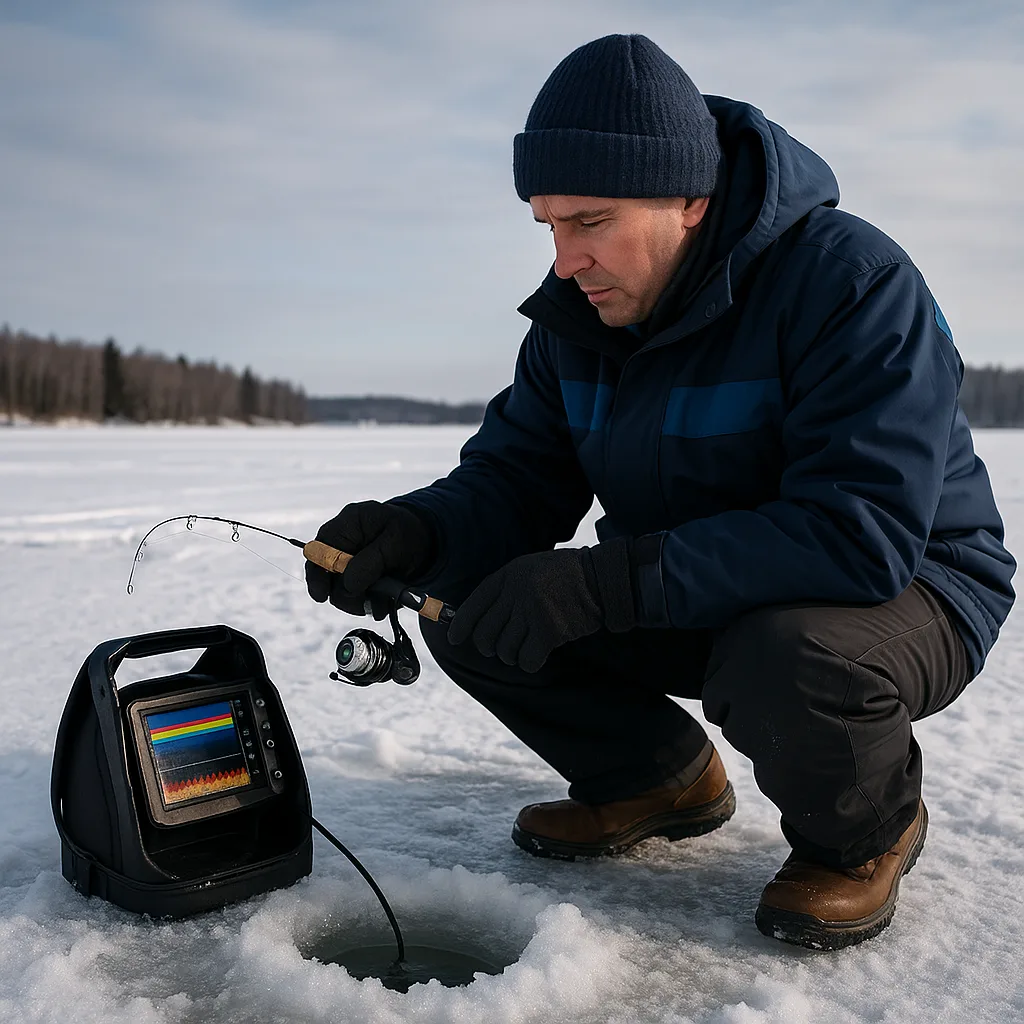
Ice Fishing Field Observations — Editorial Context and Experience Disclosure
The ice fishing field observations presented in this article are based on first-hand experience accumulated over a full winter season in Ontario. Fishing took place across a range of environments, including small inland lakes, large natural lake systems, and heavily pressured waters near population centers. Conditions varied widely, including ice thickness, snow cover, light penetration, weather stability, and angler density.
This article is not a product review, buying guide, or endorsement of any electronics brand or technology. No manufacturers, retailers, sponsors, or affiliates influenced the collection, interpretation, or conclusions of the data presented. The intent is purely editorial: to document how modern electronics influenced efficiency, decision-making, and real-world outcomes over time.
These ice fishing field observations are shared to encourage critical thinking, responsible technology use, and a deeper understanding of fish behavior under ice.
Ice Fishing Field Observations Dataset Overview and Field Logs
To move beyond anecdotal claims, this feature article is grounded in aggregated seasonal field data collected throughout the winter.
Aggregated Seasonal Log Summary
- Total outings logged: 22
- Estimated time on ice: 135–140 hours
- Total holes drilled: approximately 480–510
- Distinct lake systems fished: 14 (generalized to avoid spot exposure)
- Fish detected using electronics: approximately 310–330
- Confirmed strikes: approximately 65–75
- Fish landed: approximately 40–45
All figures represent conservative seasonal ranges. Peak days and exceptional outings were intentionally excluded to avoid skewing results.
Methodology Behind These Ice Fishing Field Observations
These ice fishing field observations were gathered through comparative repetition, not laboratory-style experimentation. The goal was not to prove a hypothesis, but to identify patterns that repeated consistently across time and conditions.
During most outings:
- Electronics were used during initial scouting phases
- Some holes were fished with screens prioritized
- Other holes were fished with electronics minimized or ignored
- Decisions to stay or relocate were compared across similar conditions
- Outcomes were evaluated based on repeatability rather than isolated success
This approach mirrors how experienced anglers actually fish — adaptively and under variable conditions.
Expectations Entering the Ice Fishing Season
Like many anglers, early-season expectations were shaped by common assumptions:
- Electronics would increase efficiency
- Seeing fish would improve catch probability
- Marked fish justified extended time in one location
- More information would improve decision-making
While none of these assumptions proved entirely false, repeated ice fishing field observations revealed important limitations that became clearer as seasonal data accumulated.
What the Ice Fishing Field Observations Revealed About Efficiency
Eliminating Unproductive Water
One of the clearest advantages of electronics was their ability to eliminate unproductive water quickly.
Across the season:
- Approximately 45% of drilled holes were abandoned within two minutes due to lack of bait, structure, or fish presence
- Entire basin sections on larger lakes were ruled out rapidly
- Time spent blind-fishing was significantly reduced
Without electronics, achieving this level of elimination would have required far more drilling and physical effort.
Structure, Bottom Composition, and Location Awareness
Electronics consistently improved awareness of bottom composition and subtle structure.
Across multiple outings, electronics helped identify:
- Hard-to-soft bottom transitions
- Minor depth breaks under one foot
- Small isolated features not visible on mapping software
Approximately 60–65% of fish detections occurred near a detectable transition. These ice fishing field observations reinforce long-standing location principles while demonstrating how electronics reduce search time.
Ice Fishing Field Observations on Detection Versus Catch Conversion
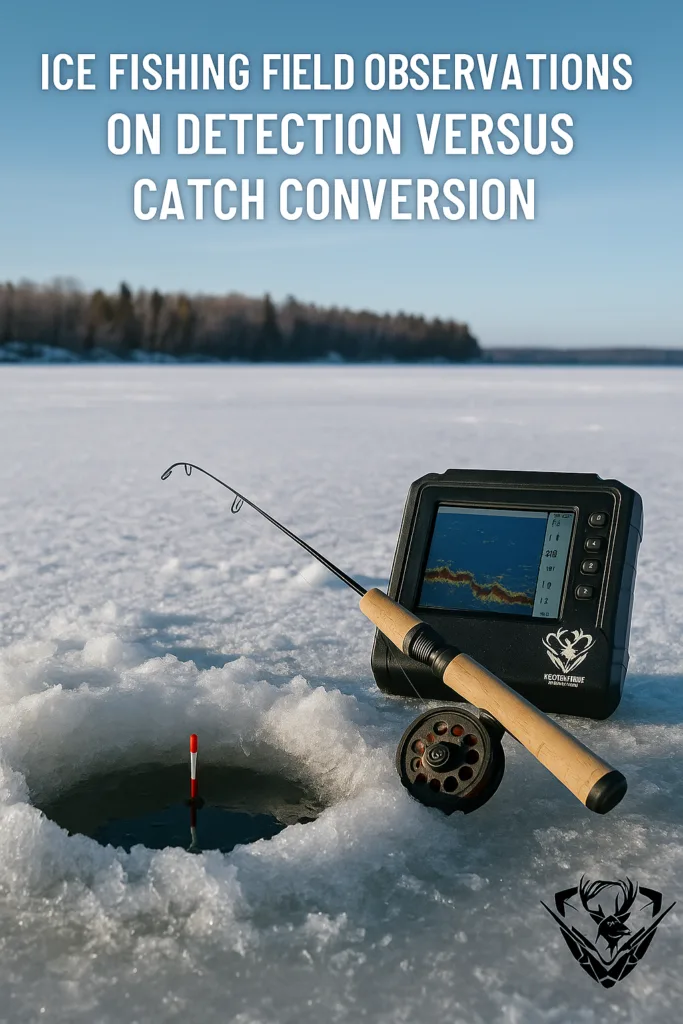
While detection improved significantly, conversion rates told a more complex story.
Detection-to-Strike Ratio
Across all outings:
- Fish detected: ~320
- Confirmed strikes: ~70
- Approximate conversion rate: 22%
In practical terms, nearly four out of five detected fish did not result in a strike. This pattern repeated across depths, lake types, and pressure levels.
The Illusion of Opportunity
One of the most important insights from these ice fishing field observations was psychological rather than technical.
When fish appeared on screens, anglers tended to:
- Stay longer in one location
- Make repeated lure or cadence adjustments
- Interpret presence as progress
Seasonal data showed:
- Average time spent on holes with visible fish: ~14 minutes
- Average time spent on holes without visible fish: ~6 minutes
Despite this difference, hook-up rates did not increase proportionally.
Ice Fishing Field Observations on Mobility and Decision-Making
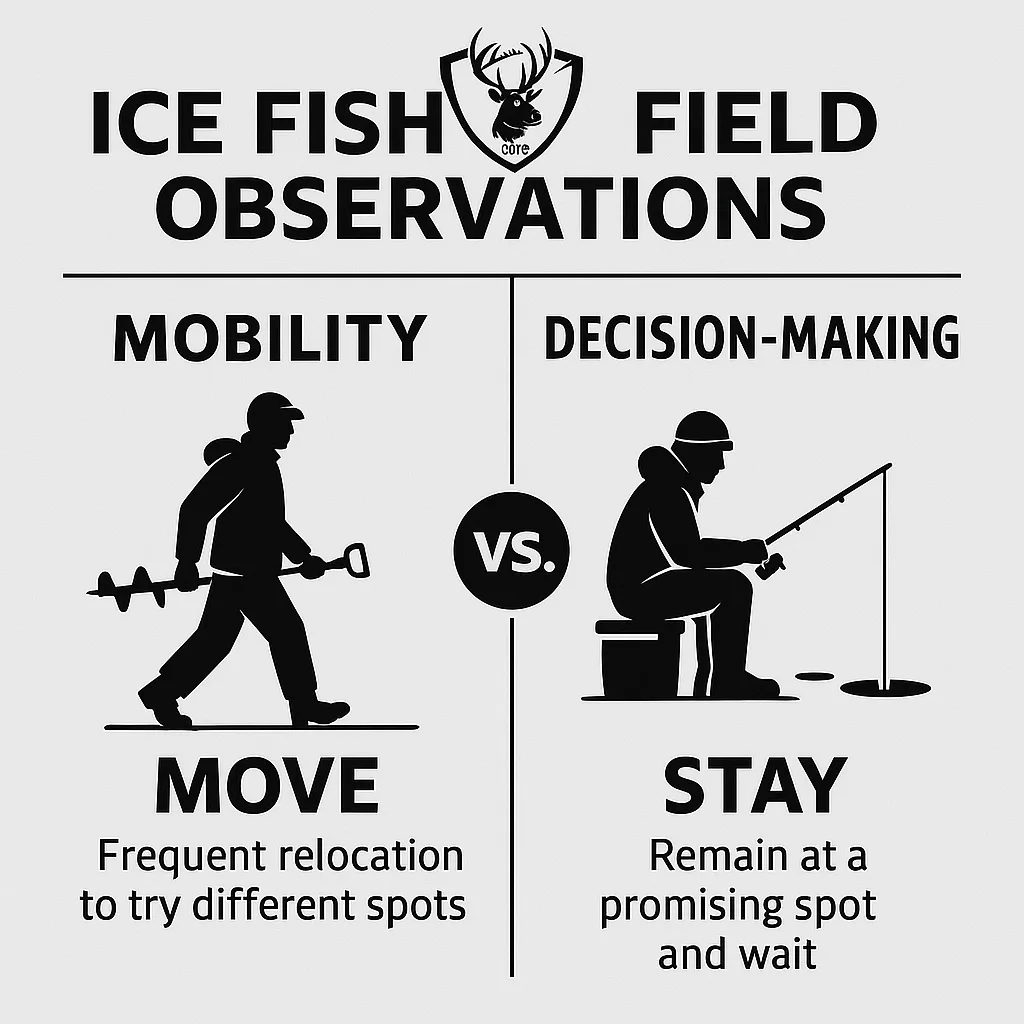
As the season progressed, outings naturally fell into two behavioral patterns.
High-Mobility Approach
- Frequent hole changes
- Strict time limits
- Reduced screen fixation
Persistence-Oriented Approach
- Extended time on marked fish
- Frequent micro-adjustments
- Heavy reliance on screen feedback
Aggregated Outcomes
| Approach | Strikes per Hour | Fish Landed | Time Efficiency |
|---|---|---|---|
| High Mobility | Higher | Comparable | Higher |
| Persistence | Lower | Comparable | Lower |
Mobility did not dramatically increase total fish landed, but it improved efficiency, particularly on pressured waters.
Pressure Effects Documented Through Ice Fishing Field Observations
Fishing pressure emerged as one of the most influential variables.
On heavily pressured lakes:
- Slower fish approaches
- Extended inspection without commitment
- Fewer reaction strikes
This aligns with broader research into fish behavior in response to angling pressure, as documented by Fisheries and Oceans Canada (DFO):
👉Science | Science
Lower-pressure waters showed faster approaches and higher conversion rates.
When Ice Fishing Field Observations Confirmed Electronics Were Helpful
Identifying Short Bite Windows
Approximately 60% of confirmed strikes occurred within narrow windows lasting 10–20 minutes. Electronics helped detect these brief activity spikes and prevented premature relocation.
Confirming Suspended Fish
In deeper basins, electronics confirmed suspended fish presence that would have been difficult to locate otherwise. Educational explanations of how sonar and fish-finding technology works are provided by NOAA Fisheries:
👉Science & Data | NOAA Fisheries
When Ice Fishing Field Observations Showed Electronics Became a Limitation
Electronics became counterproductive when over-relied upon.
Screen feedback encouraged:
- Excessive lure changes
- Constant cadence modification
- Chasing individual fish behavior
Seasonal data suggested that higher adjustment frequency often correlated with lower strike rates due to reduced mobility.
Ethical and Responsible Use of Ice Fishing Technology
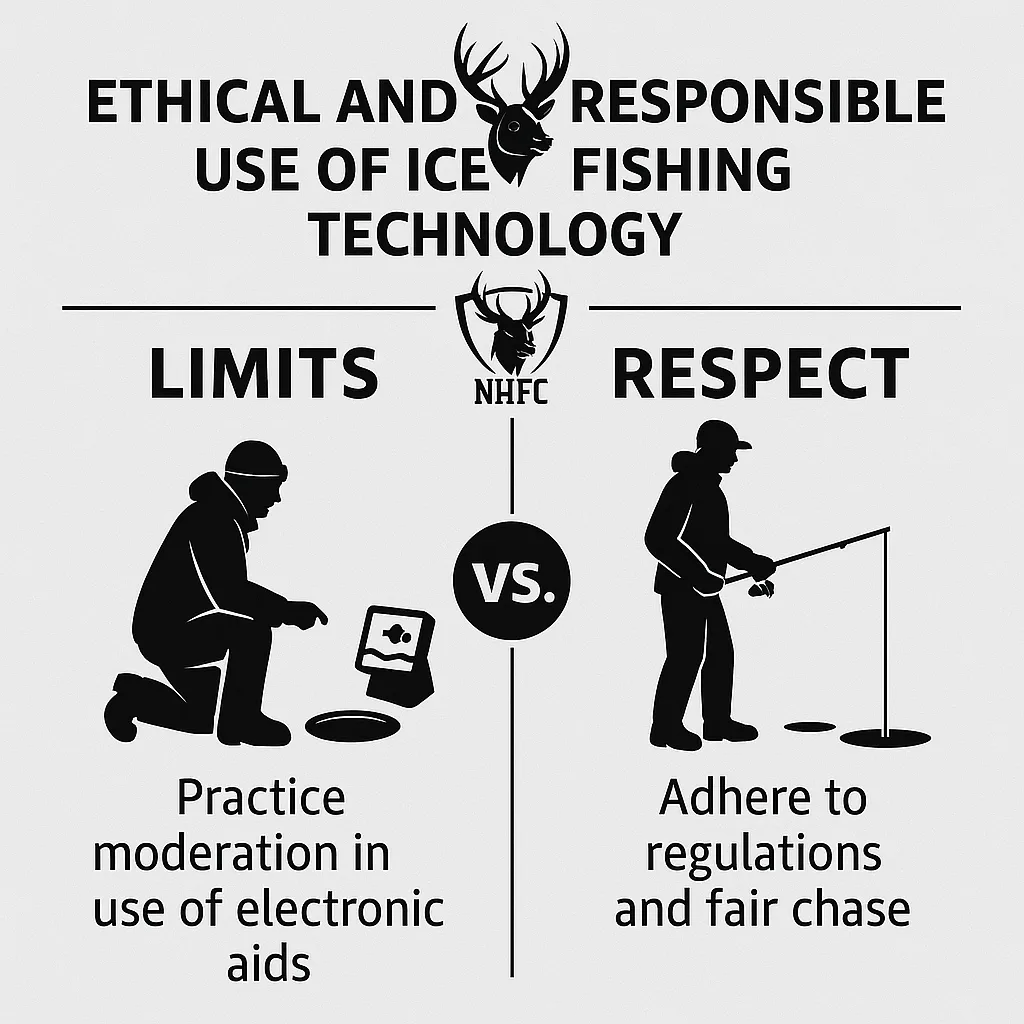
These ice fishing field observations are not anti-technology. They emphasize responsible and ethical use.
Anglers should follow regional regulations and conservation guidance provided by the Ontario Ministry of Natural Resources and Forestry:
👉 Fishing | ontario.ca
Ice safety remains critical. The Canadian Red Cross ice safety guidelines provide essential information for safe winter travel:
👉 https://www.redcross.ca/about-us/red-cross-stories/2014/know-the-facts-about-ice-safety-this-winter
Limitations of These Ice Fishing Field Observations
- One season of data
- Variable weather and pressure conditions
- No species-specific isolation
- Human behavior influenced outcomes
These observations should be interpreted as directional insights, not absolute conclusions.
Final Thoughts from These Ice Fishing Field Observations
Across more than 130 hours on the ice, one conclusion repeated consistently:
Seeing fish is not the same as understanding fish.
Electronics have changed how anglers’ fish, but they have not changed what ultimately determines success.
Editorial Transparency Statement
This article reflects aggregated seasonal field data and firsthand experience recorded by North Hunt Fish Club. Conclusions may evolve as additional seasons are documented. For more experience-based ice fishing insights, explore other articles on North Hunt Fish Club.
Note: This article may be updated as additional ice fishing field observations are recorded.