Load-bearing hunting gear really changes the game for hunters, letting you haul equipment without feeling like you’re dragging an anchor. By spreading weight across your body, it cuts down on fatigue and lets you move more freely, especially on those long, punishing hunts.
The right load-bearing system helps you carry firearms, ammo, chunks of game meat, and essential gear comfortably. You still get quick access to the stuff you need, when you need it.
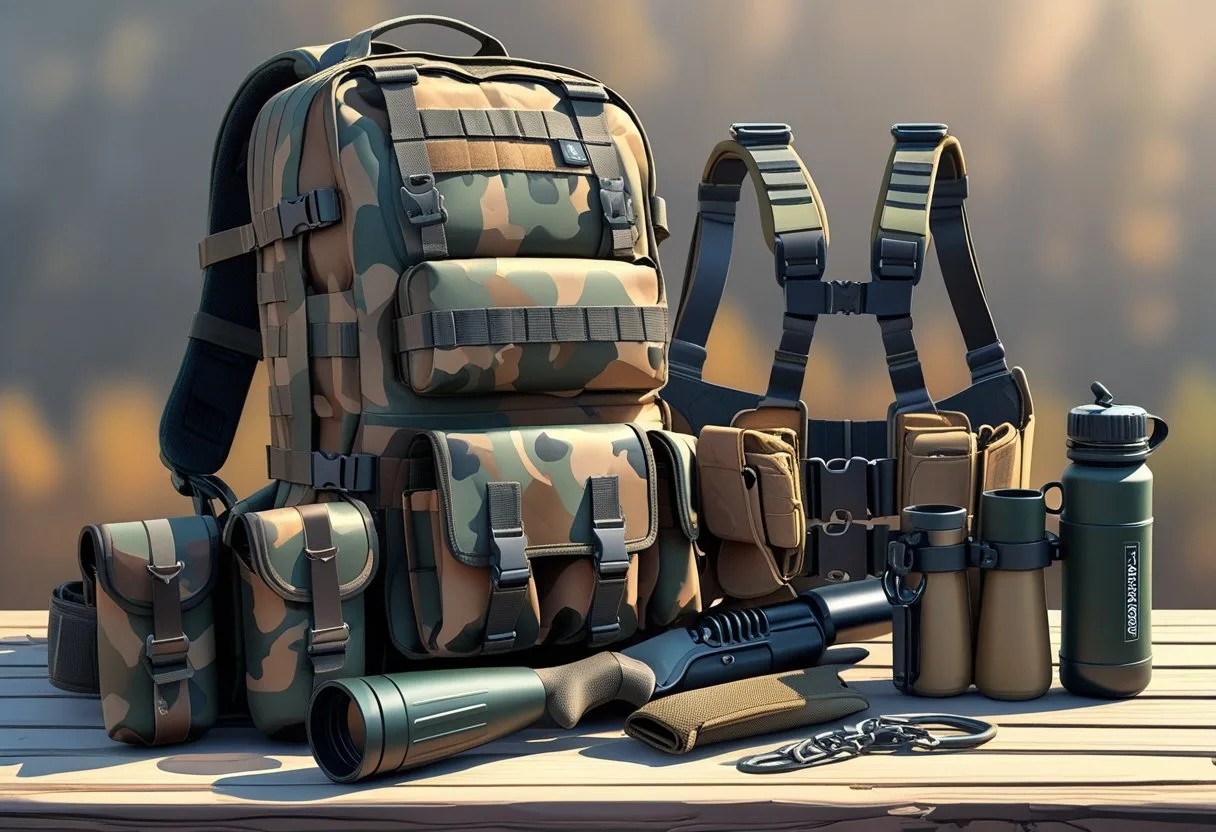
Modern hunters are up against some pretty heavy loads and tough terrain. Load-bearing hunting equipment covers everything from frame backpacks and chest rigs to modular belts and harnesses, all designed to move weight from your shoulders to your hips.
This stuff is crucial, especially if you’re out chasing moose, elk, or caribou in Canada—hauling 100+ pounds of meat for miles is no joke.
Having the right carrying system can be the difference between a hunt you remember and one you regret. Quality load-bearing gear comes with adjustable suspension, weather-resistant materials, and modular attachments, so you can tweak your setup for whatever the day throws at you.
Key Takeaways
- Load-bearing gear shifts weight from your shoulders to your hips, so you’re not wiped out halfway through a long hunt or heavy pack-out.
- Modern systems are modular, weather-resistant, and adjustable—handy for all sorts of hunting scenarios.
- Proper load-bearing equipment keeps you balanced on rough ground and lets you grab your firearm or essentials in a hurry.
What Is Load-Bearing Hunting Gear?
Load-bearing hunting gear is all about distributing weight across your body’s strongest parts—mainly the hips and core. Instead of wrecking your shoulders and back, these systems take a page from military gear and adapt it for hunters who need to carry guns, meat, and gear over tricky ground.
Definition and Key Principles – Load-bearing hunting gear
Load-bearing equipment is usually worn around the waist and uses suspenders to help keep things balanced. In the field, that means up to 80% of the pack’s weight gets shifted to your hips, thanks to frame systems and padded belts.
Key Components:
- External or internal frames for support
- Hip belts that wrap around your pelvis
- Shoulder straps with load-lifter attachments
- Compression systems to keep gear from shifting
The science here is pretty simple—your hips and legs are built to carry weight, way more than your shoulders or neck. Transferring weight to your hips means less strain up top and better balance, especially on sketchy ground.
Most modern hunting load-bearing systems have modular attachment points, so you can tweak your setup for different game, terrain, or trip length.
Load-Bearing vs. Traditional Backpacks
Old-school hunting backpacks mostly rely on shoulder straps and basic padding. They’re fine for short trips, but once you’re hauling real weight or out for days, they just don’t cut it.
Traditional Backpack Limitations:
- All the weight sits on your shoulders and upper back
- Doesn’t really let your bigger muscle groups help out
- Not great for balance on steep or rough ground
- It’s a pain to get to your most important gear
Load-bearing systems fix these headaches with better suspension. Stiff frames and well-placed load lifters make sure the weight goes straight to your hips.
Load-Bearing Advantages:
- Weight Distribution: 70-80% of the load on your hips
- Stability: Lower center of gravity means fewer stumbles
- Endurance: Your arms and shoulders don’t get smoked
- Access: Quick-release features for your weapon and gear
If you’ve ever tried carrying a 60-pound elk quarter in a regular backpack, you know how brutal it is. A good load-bearing system spreads that weight out, so your whole body can help instead of just your shoulders.
Historical Evolution in Hunting – Load-bearing hunting gear
Military gear designers started building load-bearing equipment back in World War I, mostly to help soldiers carry ammo and supplies. The history of load-bearing equipment is basically a story of trying to make things more comfortable and efficient.
Timeline of Hunting Adaptation:
- 1960s-70s: Aluminum frames borrowed from mountaineering
- 1980s-90s: Internal frames and better hip belts
- 2000s-10s: Modular systems with hunter-friendly features
- 2020s: Ultralight materials, bigger load capacity
Hunters used to just grab military surplus or mountaineering packs. They got the job done, but weren’t really set up for carrying weapons, processing game, or grabbing gear in a hurry.
Now, you get hunting load-bearing gear with specialized pockets and tough fabrics. Hunting-specific details make a huge difference when you’re tracking, field dressing, or hauling meat.
Contemporary Innovations:
- Carbon fiber frames that cut weight by 30-40%
- Modular meat shelves for hauling game
- Built-in weapon carry systems
- Weather-resistant materials and coatings
Manufacturers keep tweaking these systems, listening to feedback from guides and hardcore backcountry hunters. There’s always something new coming out.
Types of Load-Bearing Hunting Gear
There are four main ways hunters carry gear out there, and each one has its own strengths. Some are better for certain hunts or personal preferences.
Load-Bearing Vests
Load-bearing vests spread weight across your chest and shoulders, keeping key items handy for active hunts. They’re loaded with pockets for ammo, calls, and whatever else you need in a hurry.
You don’t have to take the vest off to get to your stuff, which is a real plus. Most hunting vests include:
- Front pockets for shells/cartridges
- Interior pockets for licenses and maps
- Side pockets for calls
- Back game pouch for your birds
Upland bird hunters love these because you can shoot without ditching the vest. They’re best for day hunts where you want to move fast, not carry a ton of stuff.
Modular Harness Systems – Load-bearing hunting gear
Modular harnesses use adjustable straps and pouches you can swap out. Hunters set them up however they want, depending on the hunt.
These systems let you attach pouches to a chest or shoulder harness. Tactical gear ideas definitely influence the hunting versions.
Key features include:
- Removable pouches for flexibility
- Adjustable straps for fit
- Accessory compatibility across brands
- Weight spread across your torso
Bow hunters often go for harness systems since they don’t get in the way when drawing. The modular setup means you can put rangefinders, calls, or scent bottles exactly where you want them.
Frame Packs – Load-bearing hunting gear
Frame packs are built for hauling heavy loads over distance, shifting weight to your hips with a solid frame. External frames are great for packing out big game, sitting away from your back so you stay cooler.
Internal frames hug your body, which helps with balance on rough trails. Here are some perks:
- Heavy load capacity (50+ lbs)
- Hip belt moves weight off your shoulders
- Stable for awkward loads
- Plenty of attachment points
Big game hunters swear by frame packs for multi-day trips. The design lets you strap a quartered deer or elk right to the pack—no problem.
Fanny Packs – Load-bearing hunting gear
Fanny packs ride around your waist and carry the bare essentials, minus the bulk. They’re perfect for short hunts or as an add-on to bigger systems.
Modern hunting fanny packs come with specialized compartments, sometimes even hydration sleeves and gear loops.
Common uses:
- Day hunts when you’re packing light
- Extra storage with a chest rig
- Quick access to calls and scents
- Backup stash for tree stand hunts
Turkey hunters like fanny packs because you can sit comfortably while calling, and your gear stays handy even when you’re parked for hours.
Critical Features to Consider – Load-bearing hunting gear
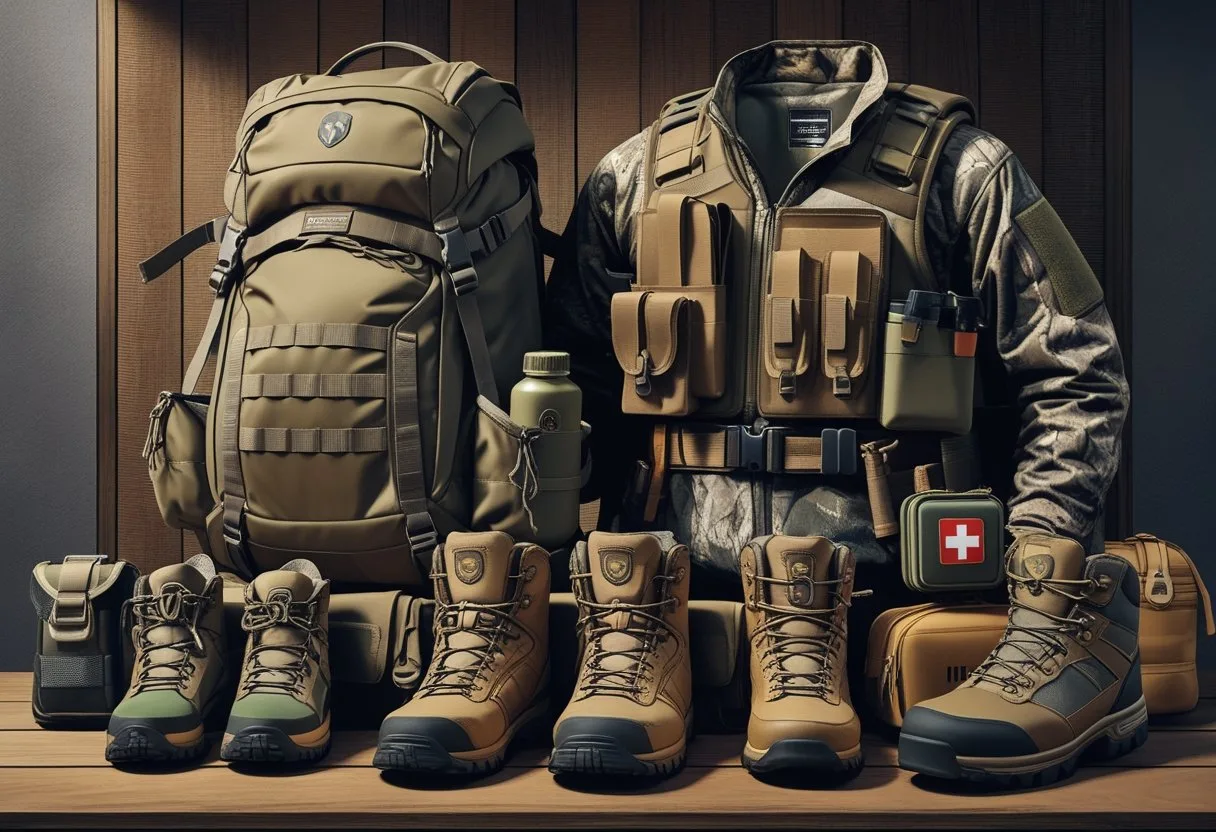
Modern load-bearing hunting gear has to strike a balance—efficient weight transfer, tough construction, and enough flexibility to adapt to different hunts. Hip belt design, frame materials, and modular attachments all play a part in whether your gear holds up or lets you down out there.
Weight Distribution and Comfort
Proper weight distribution starts with the hip belt system. The belt should transfer 80% of the pack’s weight from shoulders to hips.
This setup reduces fatigue and makes things a lot more stable, especially on rough ground. Ever tried carrying everything on your shoulders? Not fun.
Frame stiffness becomes a big deal if you’re hauling over 30 pounds. Aluminum frames are the go-to for heavy game meat.
Carbon fiber frames are lighter, but let’s be honest—they’re pricey, and you might flinch at the cost.
Key comfort features include:
- Padded hip belts that sit on hip bones, not waist
- Load lifter straps that pull weight closer to the back
- Adjustable torso length for proper fit
- Breathable back panels to reduce heat buildup
The proper suspension and hip-belt transfer take most of the strain off your shoulders. Poor weight distribution can create hot spots and muscle fatigue before you’ve even covered a few miles.
Pack capacity matters, too. Day hunts usually need 1,500-2,500 cubic inches.
If you’re heading out for several days, you’ll want 3,000-4,000 cubic inches to fit all your gear—and maybe some meat if things go well.
Durability and Materials – Load-bearing hunting gear
Load-bearing gear takes a beating from rocks, thorns, and heavy stuff. You want at least 500-denier nylon for the pack fabric if you care about abrasion resistance.
Cordura and Dyneema fabrics? They’re tough as nails and resist tearing like champs.
Critical durability points:
- Reinforced seams at high-stress areas
- YKK zippers rated for heavy use
- Metal hardware over plastic buckles
- Double-layer fabric on wear points
Frame material affects how long your pack survives. Aluminum frames will bend before they break, which is oddly reassuring.
Carbon fiber frames are feather-light, but if you push them too far, they can snap. Not ideal if you’re miles from the truck.
Weather resistance isn’t just a buzzword—it protects your gear and your hard-earned meat. Look for water-resistant coatings on the main fabric.
Waterproof inner pockets are a lifesaver for keeping game meat separate from everything else.
Warranty coverage can tell you a lot about a pack. The good ones offer 3-5 year warranties that actually mean something.
Customization and Modularity – Load-bearing hunting gear
Modular systems are a game changer for different hunting scenarios. External attachment points let you add meat shelves, weapon carriers, or pouches whenever you need them.
MOLLE webbing is the standard for adding tactical belt systems and extra storage. It’s like LEGO for hunters, honestly.
Essential modular features:
- Removable lids that convert to day packs
- External meat shelf capability
- Side compression straps for varying loads
- Multiple access points to main compartment
Compression systems help shrink your pack down when you’re carrying less. That means fewer snags and easier movement through thick brush.
Quick-access pockets are a must. Separate compartments for optics, calls, and emergency gear keep things organized and easy to grab in a pinch.
Choosing the Right Load-Bearing Gear for Your Hunt
The right load-bearing gear? That depends on your hunting style, the terrain, and how the pack fits your body. Weather and pack weight play a big role in how comfortable you’ll be out there.
Matching Gear to Hunting Style – Load-bearing hunting gear
Day hunters have different needs than folks who disappear into the backcountry for a week. Hunting packs with robust frames are best for carrying heavy loads and meat.
Day Hunt Requirements:
- 2000-3000 cubic inch capacity
- Lightweight frame systems
- Quick access pockets for calls and tools
- Minimal sleeping gear space needed
Multi-Day Hunt Requirements:
- 3500+ cubic inch capacity
- Heavy-duty frame construction
- Modular attachment points
- Space for sleeping bags and cooking gear
Bow hunters need different features than rifle hunters. Bow hunters want side quiver attachments and quiet fabric, while rifle hunters benefit from external rifle carry systems and scope protection.
Big game hunters packing out meat? They need the toughest frame systems they can find. The Mystery Ranch Metcalf 75 is a beast for those kinds of loads.
Climate and Terrain Considerations – Load-bearing hunting gear
Weather and terrain can totally change what you need. If you’re hunting in the rain, waterproof fabrics and sealed seams are non-negotiable and should be included in your Load-bearing hunting gear.
Mountain Terrain Needs:
- Stiff frames for balance on steep slopes
- Low center of gravity when loaded
- Compression straps to secure shifting loads
- Durable materials for rock contact
Flat Ground Hunting:
- Lighter weight frames work well
- Comfort matters more than load stability
- Breathable back panels prevent overheating
Cold weather means you’ll want insulated hydration systems and extra gear attachment points. When it’s hot, you’ll be grateful for packs with good ventilation and fabrics that wick away sweat.
Rain and snow can make a mess of things fast. Weather-resistant materials and ventilation really help keep things dry and manageable.
Thick brush? Go for snag-resistant fabrics and a slim profile. If you’re in open country, wider packs with more external attachments make sense.
Fitting and Adjustability – Load-bearing hunting gear
Getting the right fit can save your back and shoulders with your Load-bearing hunting gear. Hip belt transfer is key for shifting weight off your shoulders.
Key Fit Points:
- Torso length matching
- Hip belt positioning at hip crest
- Shoulder strap adjustment
- Load lifter angle
Finding your hip crest is the first step. The belt should rest on that bony ridge, not up on your waist.
Torso length is more important than your overall height for pack fit. Measure from the C7 vertebra to your hip crest—most packs offer small, medium, and large torso sizes.
Adjustable frames are great for different body types and layering up in cold weather. Packs with moveable shoulder harness points make life easier.
Those load lifter straps? They should angle forward at about 45 degrees when set up right. That pulls the pack in closer and keeps your balance in check.
Testing with your actual hunting gear beats loading up with gym weights or empty packs. Real gear changes how everything sits and feels.
Top Accessories and Attachments – Load-bearing hunting gear
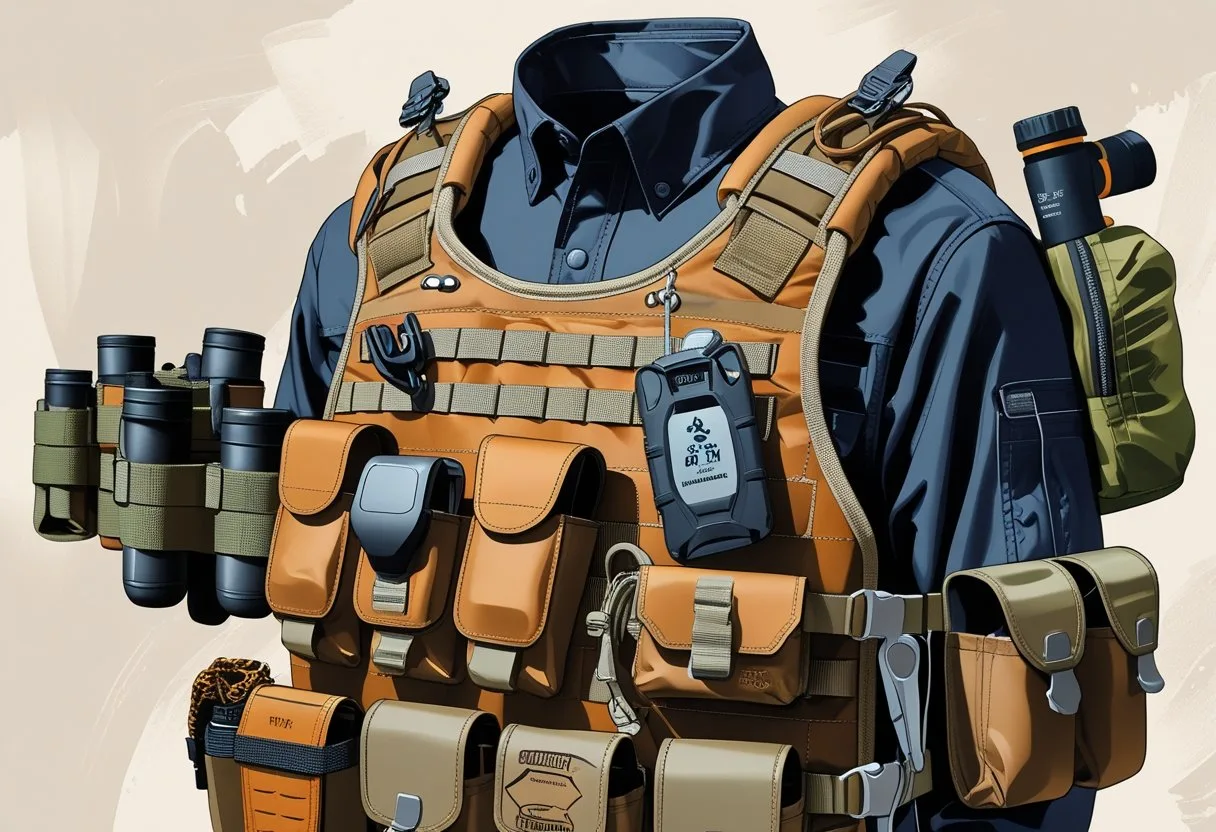
Modern hunting systems really shine with the right attachments. Add storage pouches, hydration systems, and modular mounting options to turn a basic pack into a full-blown Load-bearing hunting gear.
Pouches and Storage Solutions – Load-bearing hunting gear
Magazine pouches attach to chest rigs and belts for fast ammo access. Most hunters like ambidextrous designs that hold a couple rifle mags or a handful of shotgun shells.
Utility pouches keep things like GPS units, rangefinders, and first aid gear organized. Typical sizes break down like this:
- Small: 4″ x 3″ x 2″ for batteries and tools
- Medium: 6″ x 4″ x 3″ for calls and snacks
- Large: 8″ x 6″ x 4″ for emergency gear
Game bags compress down small until you need them. Good ones have mesh panels for airflow and tough stitching where it counts.
Knife sheaths attach to chest rigs or belts with snap-lok or velcro. If you use a fixed-blade knife, look for sheaths with retention straps so you don’t lose it crawling under brush.
Hydration Systems Integration – Load-bearing hunting gear
Bladder compatibility lets you fit a 2-3 liter reservoir inside your pack. Most setups have clips to keep the drink tube in place along your shoulder strap.
Insulated hoses are a life-saver below 20°F. Covered bite valves keep the drinking end clean, which is huge in dusty conditions.
Quick-disconnect fittings make it easy to pull out the bladder for cleaning without wrestling the hose through your whole pack. If you’ve ever tried it the old way, you know why this matters.
Backup bottle holders give you a Plan B if your bladder fails or freezes. Side holsters for 32-ounce bottles are super handy and don’t mess with your pack’s balance.
MOLLE Compatibility – Load-bearing hunting gear
Modular webbing systems use rows of nylon straps so you can attach pouches and gear wherever you want. Tactical gear usually puts MOLLE panels on the chest and belt for easy access.
PAL webbing spaces out the attachment points at 1-inch intervals. That way, stuff from different brands actually fits together.
Weave-through mounting is a bit fiddly—thread the straps through the webbing in an over-under pattern, then snap them closed. It’s worth taking your time so nothing comes loose.
Weight distribution gets better when you keep heavy stuff close to your body’s center of gravity. Ammo, for example, rides better on your belt than on your chest.
Maintenance and Longevity Tips – Load-bearing hunting gear
Taking care of your hunting gear is the best way to make it last. Regular cleaning your Load-bearing hunting gear gets rid of grit that can wear things down, and storing your gear right keeps moisture and heat from wrecking it.
Cleaning and Care Best Practices – Load-bearing hunting gear
Load-bearing hunting gear Packs and belts pick up dirt, sweat, and who knows what else. Clean your gear after every hunt—don’t wait until next season or you’ll regret it.
Fabric Components:
- Wash in cold water with mild detergent
- Let it air dry all the way before you stash it
- Skip the fabric softeners—they kill water resistance
Metal Hardware:
- Wipe buckles and zippers with a damp cloth
- Hit moving parts with a bit of oil once a month
- Check for rust or corrosion, especially where things flex
Inspect gear for wear—look for frayed stitching, worn webbing, or busted buckles. Replace anything that looks sketchy before it fails on you mid-hunt.
It’s worth testing your pack’s weight limit now and then by loading it up. Better to find a weak spot at home than in the field.
Safe Storage Techniques – Load-bearing hunting gear
Store electronic hunting gear in a cool, dry spot, and always yank the batteries out first—corrosion’s no joke. Moisture doesn’t just cause rust on metal; it’s a magnet for mold on fabric, which nobody wants to deal with.
Storage Environment:
- Temperature: 60-70°F
- Humidity: Below 50%
- Away from direct sunlight
Hang packs and vests on wide hangers so they actually keep their shape. Sleeping bags? Stuff them loosely into breathable sacks—skip the compression bags for long-term stashing.
Toss a few moisture-absorbing packets in your storage bins. Cedar blocks are a solid pick for repelling bugs, and they won’t mess with synthetic fabrics like some chemicals might.
Once a month, take a peek at your gear for any signs of pests or dampness creeping in. Rotating items now and then helps keep fabric from getting those annoying permanent creases.
Frequently Asked Questions – Load-bearing hunting gear
Maintenance, sizing, and picking the right materials all play a big part in how long your load-bearing hunting gear will last. Safety and knowing when to swap out old gear are what keep your Load-bearing hunting gear from letting you down when it matters most.
What are the essentials for maintaining the durability of load-bearing gear hunting vests?
Clean vests regularly—dirt, salt, and moisture love to break down fabric and hardware. Rinse with clean water after every trip, then let them air dry completely before tossing them into storage.
Keep an eye on buckles, zippers, and all those little attachment points. If something’s busted, swap it out right away to avoid a disaster in the field.
Stashing your vest in a cool, dry place—far from sunlight—will help keep the fabric strong. Sunlight, especially UV rays, can quietly eat away at synthetic materials over time.
Stick to the manufacturer’s weight limits when loading up. Overdoing it puts too much stress on seams and webbing, and that’s how gear fails before its time.
How does one correctly size and adjust a Load-bearing hunting gear hunting backpack for optimal weight distribution?
The hip belt should sit smack on the crest of your hips, that little bump above your pelvis. This way, most of the load shifts from your shoulders down to your hips, which honestly feels a lot better on long hikes.
Shoulder straps need to be snug—no gaps between your pack and shoulders, or you’ll feel it later. Try fitting your pack with actual hunting gear inside instead of gym weights; it just makes more sense.
Adjust those load-lifter straps until the weight feels balanced across your back. It’s a bit of trial and error, but it’s worth dialing in for comfort.
Make sure your pack’s torso length matches your own. Adjustable packs give you options, but if it’s fixed-size, double-check before you buy—returns are a pain.
What materials are considered best practice for waterproof and wear-resistant for Load-bearing hunting gear ?
Ripstop nylon is a favorite for resisting tears and keeping things light. It’s tough enough to handle thorns and rough ground without weighing you down.
Cordura fabric is what you want for high-wear areas, like the bottoms of packs or belt zones. It’s heavier, sure, but when conditions get rough, it’s worth it.
Waterproof coatings—think polyurethane or DWR—keep your stuff dry, but you’ll have to reapply them now and then. Nothing lasts forever, right?
If you can, go for YKK zippers and military-grade hardware. They’re built to take a beating and won’t leave you stranded with a busted zipper in the middle of nowhere.
Can you recommend strategies for efficiently packing to maximize Load-bearing hunting gear capabilities?
Put heavy stuff in the lower third of your pack, close to your lumbar spine. Dense items like tents, water, and food should hug your back to keep things balanced.
Stash items you’ll need often—rain gear, water, navigation tools—right where you can grab them, like outer pockets or on top. Digging around for essentials is the worst.
Soft stuff like extra clothes can fill in spaces around hard gear, so nothing shifts around while you’re moving. Makes everything feel more stable, honestly.
Try to balance weight between both sides of your pack. Lopsided loads mess with your joints and muscles, and that’s just asking for trouble.
What safety considerations should be taken into account when selecting load-bearing gear for hunting?
Never exceed the weight limits the manufacturer lists. Pushing it too far risks breaking your gear when you really can’t afford a failure.
First aid kits should always be in a pocket you can reach fast. In remote spots, those seconds matter more than you’d think.
Reflective strips or bright pack covers help other hunters spot you—kind of a no-brainer for avoiding accidents.
Backup straps or clips are smart, just in case your main fasteners snap. Redundancy might sound boring, but it keeps your gear from disappearing mid-hunt.
How often should load-bearing hunting gear be replaced to ensure reliability in the field?
Load-bearing hunting gear, depends way more on how and where you use your gear than how old it is. If you’re out in rough weather or dragging your pack through thick brush every weekend, that’s going to take a toll much quicker than the occasional gentle hike.
Keep an eye out for frayed webbing, cracked buckles, or fabric starting to peel apart on your Load-bearing hunting gear. These kinds of failures can pop up out of nowhere, especially when your packs fully loaded.
It’s worth doing a thorough check every year your Load-bearing hunting gear —sometimes damage hides in places you wouldn’t notice during normal use. If you’re not sure, a professional inspection can catch issues before they turn into a problem in the field.
And let’s be honest, newer Load-bearing hunting gear keeps getting better. Sometimes it just makes sense to upgrade for the comfort or reliability, even if your old stuff technically isn’t falling apart yet.