📅 Updated: March 2026📂 Category: Hunting⏱ 10 min read
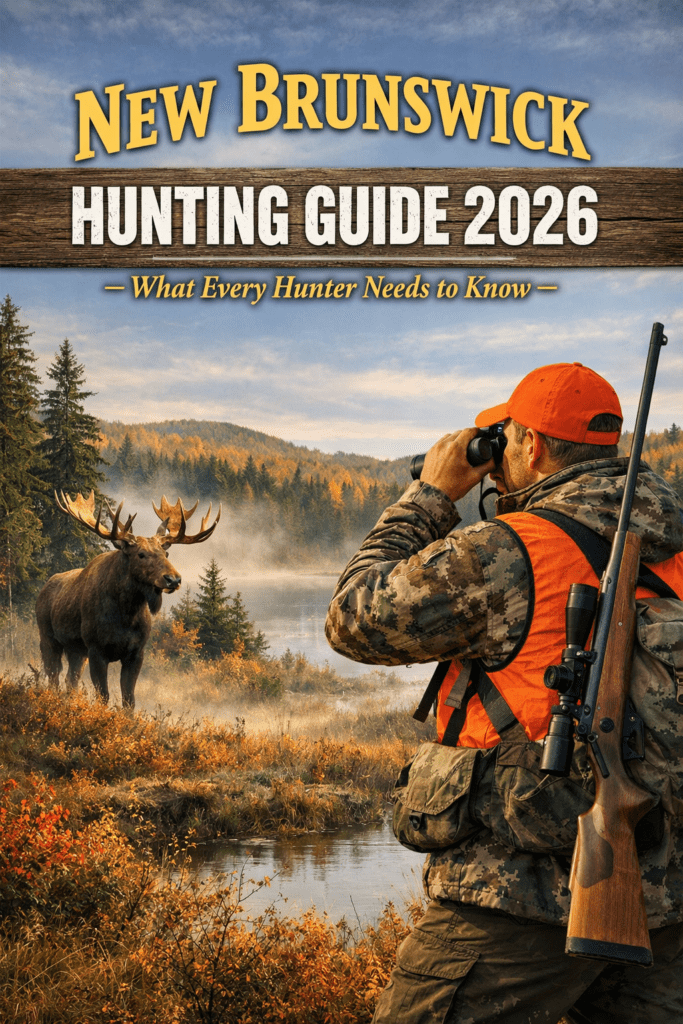
Every year, hunters across New Brunswick wait for the provincial government to release the official hunting season dates and regulation updates. For 2026, the Department of Natural Resources and Energy Development (DNRED) has issued its tentative season calendar — and there are key changes every hunter needs to understand before heading into the field.
From adjusted moose season windows to new bear licensing requirements, the 2026 New Brunswick hunting regulations reflect the province’s ongoing commitment to sustainable wildlife management. Whether you’re a lifelong resident hunting whitetails in the Miramichi or a non-resident looking to draw a moose tag, this New Brunswick Hunting Guide for 2026 breaks everything down in plain language.
📋 In This Guide – New Brunswick Hunting Guide for 2026
- Why the 2026 Regulations Matter
- Key Changes for the 2026 Season
- Official 2026 Tentative Season Dates
- Licensing, Tags & the Outdoors Card
- Wildlife Management Zones (WMZ) Breakdown
- Bag Limits & Quotas
- Non-Resident Hunter Requirements
- Conservation Focus in 2026
- Penalties for Non-Compliance
- Pro Tips for the 2026 Season
- Frequently Asked Questions
- Conclusion
Why the 2026 New Brunswick Hunting Regulations Matter – New Brunswick Hunting Guide for 2026
New Brunswick is one of Canada’s premier hunting destinations. Its 14 Wildlife Management Zones (WMZs) span everything from the dense Acadian forests of the Miramichi Highlands to the coastal marshes lining the Bay of Fundy — a landscape that supports thriving populations of whitetail deer, moose, black bear, wild turkey, ruffed grouse, and abundant migratory waterfowl.
But hunting in “Canada’s Picture Province” comes with real responsibility. The DNRED manages these populations carefully through zone-specific quotas, draw systems, and annual regulation adjustments. Ignoring those rules — even accidentally — can cost you your licence, your gear, and potentially far more.
That’s why this guide exists: to give you a clear, up-to-date breakdown of the 2026 New Brunswick hunting regulations so you can plan your season with confidence.
Key Changes for the 2026 Season – New Brunswick Hunting Guide for 2026
Here are the most important updates hunters need to know heading into 2026:
1. New Bear Licence Requirement for Spring Season – New Brunswick Hunting Guide for 2026
Hunters who want to participate in the 2026 spring black bear season (April 20 – June 30) must now possess a 2026 Bear Licence specifically. This is an important procedural change — your previous year’s licence will not be valid for the spring season. Pick up your 2026 licence before you head into the field.
2. Non-Resident Hunters Restricted to One WMZ
A significant update for out-of-province visitors: non-resident licences are now restricted to hunting in only one Wildlife Management Zone. When you purchase your licence, you will be required to select which zone you intend to hunt. Plan your trip accordingly before you apply — you won’t be able to switch zones after the fact.
3. Moose Season Window Confirmed for Late September 2026 – New Brunswick Hunting Guide for 2026
The 2026 moose season is set for September 22–26, consistent with the province’s standing regulation that places the moose hunt during the last full week of September. The draw-only allocation by WMZ remains in place. Non-resident moose licence applications must be submitted through a licensed outfitter and closed at the end of April.
4. Wild Turkey Season Adjusted to May 11–23
The spring wild turkey season has been confirmed for May 11–23, 2026. Turkey remains a draw species in New Brunswick, and applications should be submitted well in advance through the DNRED licensing portal at Service NB.
5. Varmint and Small Game Season Dates Updated
The varmint season (coyote, cormorant, crow, groundhog) now opens on March 2, providing hunters with more early-season opportunity. Small game seasons for varying hare, squirrel, and crow run through to February 27, offering a solid winter hunting window.
🔔 Pro Reminder: These are tentative 2026 season dates released by the New Brunswick Department of Natural Resources and Energy Development. Always confirm final dates at gnb.ca/fishwildlife before heading out.
Official 2026 Tentative Season Dates – New Brunswick Hunting Guide for 2026
The following dates come directly from the official New Brunswick Department of Natural Resources and Energy Development release. Bookmark this table and cross-reference it with your WMZ-specific regulations before your hunt.
| Licence / Species | Season Dates | Notes |
|---|---|---|
| Varmint Coyote, Cormorant, Crow, Groundhog | March 2 – September 19 | Open season; no tag required |
| Bear – Spring Black Bear, Coyote | April 20 – June 30 | 2026 Bear Licence required; new requirement this year |
| Bear – Fall Black Bear | September 1 – November 22 | Cub harvest prohibited |
| Bear – Bow/Crossbow Only | September 21–26 | Archery equipment only during this window |
| Wild Turkey | May 11–23 | Draw species; apply early through DNRED |
| Moose | September 22–26 | Draw only; allocated by WMZ. Non-resident applications via licensed outfitter |
| Bird & Small Game Raccoon, Ruffed Grouse, Skunk, Spruce Grouse | October 1 – December 31 | WMZ-specific bag limits apply |
| Ring-Necked Pheasant | October 26 – November 8 | Check local stocking areas |
| Small Game Coyote, Crow, Groundhog, Squirrel, Varying Hare | October 1 – February 27 | Extended winter window for hare hunters |
| Migratory Birds Ducks, Geese, Woodcock, Dove | Federal regulations apply | Federal Migratory Game Bird Permit + Wildlife Habitat Conservation Stamp required |
📥 Download the Official 2026 Regulation Summary: The full Hunt & Trap summary is available as a PDF from the GNB Wildlife website. Download it to your phone for offline use in the field.
Licensing, Tags & the Outdoors Card – New Brunswick Hunting Guide for 2026
To hunt legally in New Brunswick in 2026, every hunter must have the appropriate licences and provincial identification in place. Here’s what you need:
Outdoors Card
All hunters must first obtain a free provincial Outdoors Card — this is a one-time registration requirement and is the foundation for purchasing any licence in the province. If you already have one from a previous year, it remains valid.
Hunter Education / Firearms Safety
Any person born on or after January 1, 1981, and all first-time hunters must complete an approved Firearms Safety / Hunter Education course before purchasing a hunting licence. This course is offered online through providers approved by the DNRED, including HUNTERcourse.com.
Species-Specific Licences
The resident hunting licence (approximately $34/year) includes one deer tag. Additional tags and species licences are purchased separately. Key licences include:
- Resident Deer (Class III) Licence – includes one tag; antlerless deer authorization requires a separate application by mid-August
- Resident Moose Licence – draw only; applications close the second Friday of June
- Bear Licence (2026) – now required specifically for the 2026 spring bear season
- Wild Turkey Licence – draw species; apply through the DNRED portal
- Federal Migratory Game Bird Hunting Permit – required for all waterfowl hunting; issued federally
- Canadian Wildlife Habitat Conservation Stamp – required alongside your federal waterfowl permit
💡 Pro Tip: Apply early for draw species. Moose and spring turkey draws are highly competitive — missing the deadline means sitting out the season. Moose resident applications close at midnight of the second Friday of June.
Wildlife Management Zones (WMZ) Breakdown- New Brunswick Hunting Guide for 2026
New Brunswick is divided into 14 Wildlife Management Zones, each with its own quotas, antler restrictions, access rules, and season dates. Here’s a quick overview of what to expect across the major zones:
WMZ 1–2 (Southern NB / Bay of Fundy Coast) Good whitetail deer density. Excellent waterfowl along the Bay of Fundy. Bear hunting open; limited moose draw tags.
WMZ 3–7 (Central NB / Miramichi)Spike-only antler restriction during the early rifle deer season. Strong moose population. WMZ 12 near Boiestown requires JD Irving access permits for moose.
WMZ 8–10 (North Shore / Chaleur Bay) Prime waterfowl territory. Black bear season popular. Some zones include Acadian forest moose habitat.
WMZ 11–12 (Taxis River / Boiestown Area) Classic moose country. WMZ 12 has an additional private land access draw through JD Irving Woodlands — apply by August 15 via email.
WMZ 13–14 (Northwestern NB / St. John River Valley) Mixed Acadian forest with strong deer and bear populations. Good access to Crown lands for licensed hunters.
⚠️ Non-Residents in 2026: You are now restricted to hunting in one WMZ only per licence period. Choose carefully. Review moose draw zone allocations and consult your licensed outfitter before selecting your zone, as outfitter operations are tied to specific WMZs.
Bag Limits & Quotas – New Brunswick Hunting Guide for 2026
Bag limits in New Brunswick are designed to balance hunting opportunity with responsible population management. For 2026, the standard limits are as follows:
| Species | Season Limit | Daily Limit |
|---|---|---|
| Whitetail Deer | 1 per season | — |
| Moose | 1 per draw tag | — |
| Black Bear | 1 per season (no cubs) | — |
| Wild Turkey | 1 per licence period | — |
| Ruffed/Spruce Grouse | Possession limit: 10 | 5 |
| Snowshoe Hare | Possession limit: 6 | 3 |
| Ducks | Possession limit: 15 | 5 |
| Geese | Possession limit: 15 | 5 |
| Mourning Dove | Possession limit: 45 | 15 |
| Coyote / Fox (private land) | No limit | — |
Note that antler-less deer authorizations are subject to a random draw system by WMZ. Applications must be submitted by the third Friday of August. Antler-less deer are not permitted in all WMZs — confirm your zone before applying.
Non-Resident Hunter Requirements – New Brunswick Hunting Guide for 2026
New Brunswick welcomes hunters from across North America, but out-of-province and international visitors face additional requirements in 2026:
- Single WMZ restriction – Your licence is now valid in only one Wildlife Management Zone. Declare your zone at time of purchase.
- Non-resident moose licence – Must be obtained through a licensed NB outfitter. Outfitter must hold approval from the Minister and operate a registered accommodation business. Non-resident moose applications close at the end of April.
- Non-resident bear licence – No hound hunting in WMZ 1–4. Baiting regulations apply.
- Bringing firearms into NB – Must comply with the Canadian Firearms Act (PAL required). Declare your firearm at the border. Contact a Service NB office for specific requirements.
- Hunter Education – Certification from U.S. states is generally valid in New Brunswick. Confirm with the DNRED if you are unsure.
- Federal waterfowl permits – Non-residents hunting migratory birds must obtain a federal Migratory Game Bird Hunting Permit.
💡 Book Your Outfitter Early: Non-resident moose hunts in New Brunswick are some of the most sought-after in Atlantic Canada. Outfitters like Big Paw Outfitters and Taxis River Outfitters book up quickly — the 2026 moose season (September 22–26) fills fast. A non-resident moose licence runs approximately $630 CAD including taxes and conservation fees.
Conservation Focus in 2026 – New Brunswick Hunting Guide for 2026
New Brunswick’s hunting guide for 2026 regulations reflect a broader provincial strategy of sustainable wildlife management. Key conservation priorities this season include:
- Moose population monitoring – Draw allocations by WMZ are based on science from provincial wildlife biologists. Private land access draws (such as the JD Irving WMZ 12 draw) help control harvest pressure in sensitive management areas.
- Cub protection – Harvesting black bear cubs is strictly prohibited. Hound hunting is closed in WMZ 1–4 to protect bear populations in those regions.
- Antler restrictions for deer – WMZ 3–7 continue spike-only antler restrictions during the early rifle deer season to protect young bucks and support healthier age-class structure in the herd.
- Female moose protection – Female moose remain protected in certain WMZs to maintain sustainable population growth.
- Non-toxic shot for waterfowl – The use of lead shot while hunting migratory game birds (other than woodcock) is prohibited province-wide. Only non-toxic shot is permitted.
- CWD monitoring – The DNRED does not currently authorize new captive wildlife facilities for exotic ungulates. All captive cervids are monitored by the Canadian Food Inspection Agency. Hunters transporting cervid carcasses across provincial or state lines should verify current CWD transport rules.
- Harvest reporting – Big game harvest reports are required after the season. This data directly informs next year’s quotas and draw allocations. Submit your report through the DNRED portal or your local Natural Resources office.
Penalties for Non-Compliance – New Brunswick Hunting Guide for 2026
New Brunswick takes wildlife law enforcement seriously. Under the Fish and Wildlife Act, penalties for major violations include:
- Substantial fines – Major violations carry significant monetary penalties.
- Mandatory jail terms – For serious offences, incarceration is mandatory, not optional.
- Automatic five-year licence cancellation – A first major conviction results in the automatic cancellation of all licence and permit privileges under the Fish and Wildlife Act for five years.
- Lifetime cancellation – A second major violation conviction within five years triggers a lifetime ban on all hunting and fishing licences in New Brunswick.
- Firearm and equipment confiscation – Firearms, vehicles, and other hunting-related equipment can be seized upon conviction.
⚠️ Bottom Line: The rules exist to protect New Brunswick’s wildlife for future generations. Know them before you go out. If you have questions, contact your local Natural Resources office or Environmental Management at 506-453-4501.
Pro Tips for the 2026 Season – New Brunswick Hunting Guide for 2026
- Download the Hunt & Trap PDF to your phone — Cell service is unreliable in NB’s Crown lands. Have the official regulation summary saved offline.
- Apply for draws early and know your deadlines — Moose resident draw applications close the second Friday of June; antler less deer authorizations close the third Friday of August.
- Scout your WMZ before season — Regulations vary significantly between zones. What’s permitted in WMZ 14 may be restricted in WMZ 4. Never assume rules carry over.
- Get written permission for private land — Crown land in NB is generally open to licensed hunters, but private land requires landowner permission. Always get it in writing and respect posted signage.
- Wear Hunter Orange during firearms seasons — Blaze orange clothing is required during all firearms seasons. This isn’t optional.
- File your harvest report — Even if your hunt was unsuccessful, submit your harvest report. It’s required and it directly shapes future season allocations.
- Book your outfitter now if you’re a non-resident moose hunter — 2026 moose season is September 22–26. The best outfitters fill up months in advance.
- Hunt ethically — Respect fair chase principles, practice safe firearm handling, and leave the land better than you found it. NB’s hunting heritage depends on it.
Frequently Asked Questions – New Brunswick Hunting Guide for 2026
Q: Where can I get the official New Brunswick Hunting Guide for 2026 regulations?
The official Hunt & Trap regulation summary is available as a PDF on the GNB Fish and Wildlife website or at any Service NB centre. You can also call DNRED at 506-453-3826.
Q: When do moose draw applications open for 2026?
Resident moose draw applications are accepted up to the second Friday of June 2026. Non-resident applications through a licensed outfitter must be submitted by the end of April 2026. Results are announced before the season opens (September 22–26).
Q: Can I hunt in multiple Wildlife Management Zones with one licence?
Residents may hunt in multiple WMZs as long as each zone’s specific rules are followed. However, non-residents are restricted to one WMZ per licence in 2026 — this is a key change from previous seasons. Select your zone carefully at the time of purchase use the New Brunswick Hunting Guide for 2026
Q: Is lead shot allowed for waterfowl hunting in New Brunswick?
No. The use and possession of lead shot while hunting migratory game birds (except woodcock) is prohibited in New Brunswick. Only non-toxic shot is permitted. Violations of the Migratory Birds Convention Act carry fines starting at $5,000 for a first offence.
Q: Do I need a Hunter Education certificate to hunt in NB?
Yes — if you were born on or after January 1, 1981, or are a first-time hunter anywhere, you must complete an approved Firearms Safety / Hunter Education course before purchasing a licence. U.S. state Hunter Education certifications are generally accepted; confirm with DNRED if in doubt.
Q: Can I bring a crossbow for deer hunting in New Brunswick? – New Brunswick Hunting Guide for 2026
Yes, crossbows are legal in New Brunswick for hunting. Crossbow-specific seasons and restrictions apply by WMZ and species. Check your zone’s regulations before you go. A separate bow/crossbow-only season for bear runs September 21–26, 2026.
Q: Do I need to report my harvest even if I didn’t take an animal? – New Brunswick Hunting Guide for 2026
Yes. Big game harvest reports are required after the season regardless of whether you were successful. This data is critical for wildlife managers setting next year’s quotas. Failure to report can affect your future draw eligibility.
Q: What is the 2026 moose season cost for non-residents?
Non-resident moose licences run approximately $630 CAD including all taxes and conservation fees, though this figure is subject to change. A typical 5-day guided moose hunt with an outfitter runs around $4,600 USD (guide, lodging, meals, and hunting transport included). The licence cost is typically separate from outfitter packages.
Conclusion: Plan Early, Hunt Responsibly- New Brunswick Hunting Guide for 2026
New Brunswick is one of Atlantic Canada’s finest hunting destinations — but only for hunters who do their homework. The 2026 season brings meaningful changes, from the new bear licence requirement to the single-WMZ restriction for non-residents. Understanding these updates before you purchase your licence isn’t just smart — it’s required.
Review the official season dates, know your Wildlife Management Zone’s specific rules, apply for moose and turkey draws before the deadlines close, and always file your harvest report at season’s end. Whether you’re chasing a bull moose through the Miramichi or setting up for whitetails along the Bay of Fundy, New Brunswick’s wild places are worth protecting — and that starts with every hunter following the rules.
🦌 Ready to Plan Your 2026 NB Hunt? Download your New Brunswick Hunting Guide for 2026
Download the official Hunt & Trap regulation PDF, confirm your WMZ rules, and get your applications in before the deadlines close.→ Visit GNB Official Hunting Page