🎣 Complete Guide to Ontario Fishing Regulations 2026
🔥 2026 Ontario Fishing At A Glance
Introduction
Whether you’re planning a family walleye trip to Lake Erie, chasing trophy muskies in the Kawarthas, or exploring remote northern lakes, staying current with the latest fishing regulations isn’t just about compliance—it’s about protecting Ontario’s incredible fisheries for generations to come.
What’s New in the 2026 Ontario Fishing Regulations
The 2026 regulations summary brings several zone-specific changes highlighted in red, bold font throughout the official document. Here are the most significant updates anglers need to know:
🆕 Major 2026 Regulatory Changes
🐟 Muskellunge Size Limit Increased to 137 CM
What Changed: The minimum size limit for muskellunge in Fisheries Management Zone 9 (Lake Superior region) has been increased to 137 centimeters (54 inches) zone-wide.
Impact: This is now Ontario’s highest muskie size limit, protecting trophy-sized fish and ensuring sustainable breeding populations. Most anglers will practice catch-and-release as fish of this size are extremely rare.
🌊 Black Bay Waterbody Updates
What Changed: New waterbody-specific exceptions for walleye, sauger, and northern pike in Lake Superior’s Black Bay area.
Impact: Anglers fishing Black Bay must check the zone 9 waterbody exceptions table for specific regulations that differ from general zone rules.
🎣 Aurora Trout Rotational Opening
What Changed: Carol Lake, Lake 21, and Sorley Lake are now OPEN for Aurora trout fishing as part of the three-year conservation rotation cycle.
Impact: Rare opportunity to target one of Ontario’s most endangered native fish species. Aurora trout are found in fewer than 10 lakes globally.
🪱 Continued Bait Management Zone Enforcement
What Changed: Strict enforcement continues across all four Bait Management Zones to prevent invasive species spread.
Impact: Live bait CANNOT cross BMZ boundaries. Dead/preserved bait movement is allowed. Violations can result in fines up to $25,000.
📸 Fish Photography Clarification
What’s Happening: Ministry working with federal partners to clarify rules around photographing, measuring, and weighing fish during open seasons.
Action Required: Check ontario.ca/FishingUpdates before season for final ruling.
Understanding Ontario’s Fisheries Management Zone System
Ontario divides its vast territory into 20 Fisheries Management Zones (FMZs), each with customized regulations based on local fish populations, ecosystem health, and angling pressure.
🗺️ Ontario’s 20 Fisheries Management Zones
Before fishing, identify your zone and review specific rules in the official 2026 Ontario Fishing Regulations Summary. Zone boundaries may follow geographic features like watersheds, lakes, or municipal borders. Download the interactive map tool at ontario.ca/FMZmap.
This zone-based approach allows the province to:
- Tailor catch limits to sustainable population levels
- Protect spawning areas with zone-specific closures
- Respond quickly to emerging conservation needs
- Balance recreational fishing with ecosystem preservation
Popular Fishing Zones at a Glance
FMZ 15 (Haliburton Highlands & Kawarthas): Part of Central Bait Management Zone with multiple lake trout sanctuaries. Special regulations on popular lakes like Adams, Burleigh, and Halls Lake. Bass season opens fourth Saturday in June.
FMZ 9 (Northwestern Ontario): Great Lakes zone including Lake Superior. NEW 137 cm minimum for muskie in 2026. Exceptional walleye and northern pike fishing opportunities.
2026 Ontario Fishing License Requirements & Costs
Who Needs a License?
License Required:
- Ontario residents aged 18-64
- All Canadian non-residents aged 18+
- All non-Canadian residents aged 18+
Free Fishing (No License Required):
- Ontario residents under 18 or 65+
- Canadian Armed Forces veterans and active members
- RCMP members and civilian employees
- Specific Family Fishing Week dates
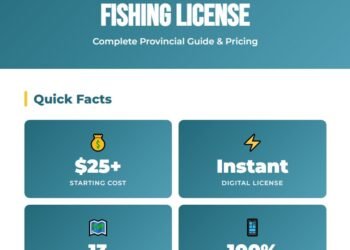
2026 License Types & Pricing
- ✓ Full catch limits
- ✓ Valid 1 year
- ✓ All 20 FMZ zones
- ✓ Requires Outdoors Card
- ✓ Full catch limits
- ✓ Valid 1 year
- ✓ Province-wide access
- ✓ Great for cottage trips
- ✓ Perfect for vacations
- ✓ No Outdoors Card needed
- ✓ Full sport limits
- ✓ Instant start date
- ✓ Multiple trips per year
- ✓ Best for frequent visitors
- ✓ Full catch privileges
- ✓ Premium value
Sport vs. Conservation License Comparison
| Species | Sport License Limit | Conservation Limit |
|---|---|---|
| Walleye/Sauger (combined) | 6 fish | 2 fish |
| Northern Pike | 6 fish | 2 fish |
| Bass (Largemouth/Smallmouth) | 6 fish | 2 fish |
| Trout & Salmon (combined) | 5 fish | 2 fish |
| Muskellunge | 1 fish | 0 fish (catch & release only) |
| Panfish (Crappie, Perch) | 50 fish | 25 fish |
- HST applies to all license fees listed above
- Outdoors Card required for annual licenses (approx. $9.68 including HST, valid 3 years)
- 3-year licenses available for Ontario residents at discounted rates
- Purchase online at ontario.ca or authorized vendors
Critical Fishing Rules Every Angler Must Follow
Catch & Possession Limits
Understanding the difference between catch limits and possession limits prevents unintentional violations:
- Catch Limit: Maximum number you can catch and keep in ONE day (includes fish eaten or given away)
- Possession Limit: Maximum you can have in your possession anywhere (at camp, in transit, in freezer)
Even if you give fish to a fishing partner, those fish still count toward your daily catch limit.
Aggregate (Combined) Limits
Many popular species have combined limits to simplify regulations:
- Trout & Salmon: 5 fish total combined (all species)
- Walleye & Sauger: Combined limits vary by zone
- Largemouth & Smallmouth Bass: Combined limits apply
- Black & White Crappie: Combined limits apply
Size & Catch Limits by Popular Species
137 cm (54 inches)
Conservation license: Catch & release only. FMZ 9 now has Ontario’s highest minimum size limit.
40-50 cm (varies by FMZ)
30-35 cm (varies by FMZ)
40-61 cm (varies by FMZ)
Conservation: 2 fish. Some zones have slot limits protecting mid-size spawners.
40-63 cm (varies by FMZ)
None (most zones)
Conservation: 25 fish. Excellent table fare – popular with families and ice anglers.
Invasive Species Protocol
Ontario takes invasive species seriously. If you catch regulated invasive species like round goby:
- ✅ DO: Destroy immediately – do NOT release
- ❌ DON’T: Return to water (required by law to destroy invasive species)
For all legal catch that’s undersized, over-limit, or caught during closed season: Release immediately at point of capture. This applies even if the fish is fatally injured.
Bait Management Zones: Critical Compliance Information
🪱 The 4 Bait Management Zones (BMZ)
Invasive species like viral hemorrhagic septicemia (VHS), round goby, and spiny water flea can devastate Ontario’s fisheries. Moving live bait between Bait Management Zones is the #1 vector for spreading these threats. Violations can result in fines up to $25,000.
Coverage: Northwestern Ontario including Lake of the Woods, Rainy Lake, and English River system
Includes FMZ: 5, 7, parts of 1 & 6
Coverage: Northeastern Ontario including Lake Nipissing, James Bay watershed, and French River
Includes FMZ: 10, 11, parts of 1, 2, 3, 4, 6
Coverage: Central Ontario including Muskoka, Haliburton, Kawarthas, and Trent-Severn waterway
Includes FMZ: 15, parts of 13, 14, 16, 17, 20
Coverage: Lake Superior, Lake Huron, Lake Erie, Lake Ontario and all connecting waters
Includes FMZ: 9, 12, parts of 13, 16, 17, 18, 19, 20
What You CAN and CANNOT Do
✅ ALLOWED
- ✓ Use live bait WITHIN the same BMZ
- ✓ Transport DEAD or PRESERVED bait between BMZs
- ✓ Move artificial lures between zones
- ✓ Catch and use bait in same BMZ
❌ FORBIDDEN
- ✗ Transport LIVE bait across BMZ boundaries
- ✗ Use leftover live bait in different zone
- ✗ Release unused live bait into waters
- ✗ Mix bait from different zones
- Buy local: Purchase live bait in the BMZ where you’ll be fishing
- Check before you travel: Verify BMZ boundaries on official maps
- Dispose properly: Never release unused live bait—freeze or dispose in garbage
- Keep receipts: Retain bait purchase receipts showing location and date
- Switch to frozen: Consider using dead/preserved bait for multi-zone trips
Where to Access the Official 2026 Regulations
Digital Access
Download the complete 2026 Ontario Fishing Regulations Summary PDF free from the official Ontario government website. The digital version is searchable, making it easy to find zone-specific regulations quickly.
Print Copies
Physical copies available at:
- Select ServiceOntario locations
- Licensed fishing outfitters and tackle shops
- Ministry of Natural Resources field offices
Download the PDF to your phone before heading to remote areas where internet access may be limited. This ensures you always have access to regulations even without cell service.
Top Fishing Destinations by Species in Ontario
Walleye Hotspots
Lake Erie continues to produce exceptional walleye fishing, with the 2026 regulations highlighting family charter fishing opportunities. Other top walleye waters include Lake Nipissing, Rainy Lake, Lake of the Woods, and the Quinte system.
Muskie (Muskellunge) Waters
With the new 137 cm minimum in FMZ 9, trophy muskie hunters should target Georgian Bay, the Kawartha Lakes system, St. Lawrence River, and Lake St. Clair. For detailed muskie fishing strategies, check out In-Fisherman’s muskie techniques guide.
Bass Fishing Excellence
Ontario’s bass fishing ranks among North America’s best. Top destinations include Lake Simcoe (smallmouth), Lake Erie (both species), Thousand Islands (trophy smallmouth), and Rice Lake (largemouth).
Northern Pike & Lake Trout
Remote northern lakes offer pristine pike and trout fishing with lower pressure. Consider booking with licensed outfitters who specialize in fly-in fishing adventures.
Frequently Asked Questions
Expert Tips for Staying Regulation-Compliant
1. Know Before You Go
Spend 10 minutes reviewing your target zone’s regulations before each trip. Regulations can vary significantly even between neighboring zones.
2. Invest in a Fish Ruler
Portable measuring boards ensure accurate size measurements, especially important with new size limits like the 137 cm muskie minimum.
3. Use a Fishing Log
Track your daily catch to avoid accidentally exceeding limits. This is especially important when fishing multiple days in a row.
4. Ethical Catch-and-Release
Use barbless hooks, minimize fight time, wet hands before handling, keep fish in water during unhooking, and revive before release.
5. Report Violations
If you witness poaching or violations, contact the Report a Natural Resources Violation hotline: 1-877-847-7667
The Future of Ontario Fisheries Management
New Licensing System Coming
The Ministry is developing an upgraded Fish and Wildlife Licensing Service (FAWLS) expected to launch in December 2026. This modernization will streamline license purchases, improve user experience, and enhance data collection for better fisheries management.
Ongoing Conservation Initiatives
Ontario stocks approximately 8 million fish annually across 1,200 lakes to rehabilitate degraded populations, create new fishing opportunities, and support economically vital rural and northern communities. Recreational fishing generates over $2.5 billion annually for Ontario’s economy while supporting sustainable use of natural resources.
Conclusion: Fish Responsibly, Fish Legally
The 2026 Ontario Fishing Regulations represent the culmination of extensive scientific research, stakeholder input, and decades of fisheries management experience. These aren’t arbitrary rules—they’re carefully designed strategies to ensure your grandchildren can enjoy the same incredible fishing you’re experiencing today.
- Download the official 2026 regulations PDF before every trip
- Verify you’re fishing in the correct FMZ with proper licenses
- Stay updated on in-season changes at ontario.ca/FishingUpdates
- Practice ethical angling and conservation
- Support local communities and licensed outfitters
Ontario’s world-class fisheries are a shared treasure. By following regulations and practicing sustainable fishing, you’re not just obeying the law—you’re actively participating in conservation that protects these incredible resources for future generations.
🎣 Tight lines and safe fishing!
Additional Resources
Ready to Fish Ontario in 2026?
Download the official regulations and get your license today
Download Official 2026 Regulations PDF →Disclaimer: This guide provides general information based on the 2026 Ontario Fishing Regulations Summary. Always consult the official regulations document for complete, legally binding information. Regulations can change through Variation Orders. For questions, contact the Ministry of Natural Resources and Forestry.
Key Highlights of Ontario Fishing Regulations 2026