By [North Hunt Fish Club] | Updated: March 2025 | Category: Freshwater Fishing
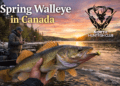
If you’re planning a spring walleye fishing trip in Canada, you’ve chosen the right time and the right country. As ice melts from thousands of pristine Canadian lakes and rivers, walleye become intensely active — feeding aggressively in the shallows and making spring one of the most productive and exciting seasons for anglers of all skill levels.
In this comprehensive guide, we cover everything you need to know about spring walleye fishing in Canada — from the best provinces and lakes to visit, to the top techniques, gear recommendations, and regulations you need to be aware of before you hit the water.
Why Spring Is the Best Season for Walleye Fishing in Canada
Walleye (Sander vitreus) are one of Canada’s most popular sport fish, and spring is widely regarded as their peak season. Here’s why:
- Post-spawn feeding frenzy: After spawning in late March through May (depending on latitude), walleye feed voraciously to rebuild energy reserves.
- Shallow water access: Walleye move into shallower water during spawning and early post-spawn — making them far easier to locate and target.
- Cooler, clearer water: Spring water temperatures between 8°C and 15°C are ideal for walleye activity, especially in morning and evening windows.
- Less boat traffic: Spring fishing typically means quieter lakes, less pressure on fish, and a more peaceful experience on the water.
The spring season typically runs from late April through June across most of Canada, though northern provinces may see peak activity as late as July.
Top Provinces for Spring Walleye Fishing in Canada
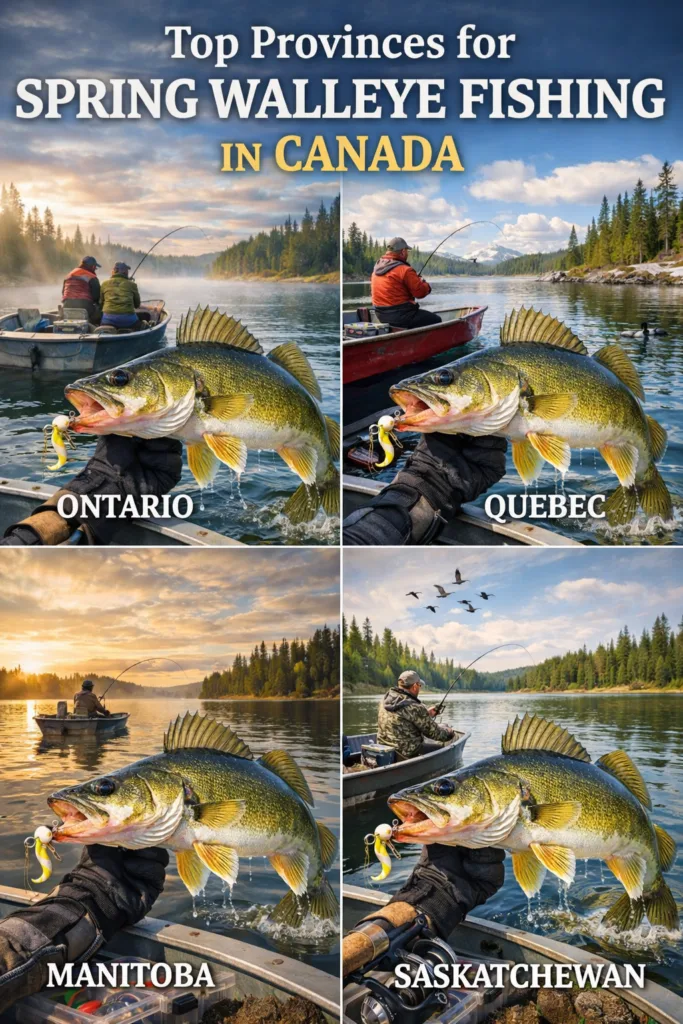
1. Ontario — The Walleye Capital of Canada – Spring Walleye Fishing
Ontario is home to some of the most celebrated walleye fisheries in the world. Lakes like Lake Erie, Lake Simcoe, Lake Nipissing, and the French River corridor are legendary among walleye anglers.
- Lake Nipissing: Arguably Canada’s most famous walleye destination, offering consistent trophy-sized catches every spring.
- Lake Erie (Ontario side): World-class walleye numbers, especially from April through early June.
- Lake of the Woods: Straddles Ontario and Manitoba — a massive, remote fishery with exceptional spring walleye action.
- Georgian Bay: Productive rocky structure and clear water make for ideal spring walleye habitat.
2. Manitoba — Big Water, Big Walleye – Spring Walleye Fishing
Manitoba is an underrated walleye destination with vast, remote lakes that receive far less pressure than their Ontario counterparts.
- Lake Winnipeg: One of the largest walleye-producing lakes on Earth, with outstanding spring fishing from May through June.
- Lake Manitoba: Shallower and warmer, it sees walleye moving through the shallows earlier in the season.
- Lac du Bonnet area: Excellent access and guided outfitter services make this a great spring destination.
3. Saskatchewan — Remote Wilderness Fishing
Saskatchewan’s Shield country and its interconnected lake systems offer remote, fly-in walleye experiences that are hard to beat.
- Reindeer Lake: A massive, remote fishery known for trophy walleye in the 6–10 lb range.
- Tobin Lake: One of Saskatchewan’s most accessible trophy walleye lakes, with impressive spring activity near the spillway.
- Narrow Hills Provincial Park lakes: Ideal for canoe-accessible spring walleye with minimal fishing pressure.
4. Alberta & Quebec — Hidden Gems
While less publicized, both Alberta (Cold Lake, Lac La Biche) and Quebec (Réservoir Gouin, Lake Champlain watershed) offer impressive spring walleye opportunities for adventurous anglers willing to do their homework.
Spring Walleye Fishing Techniques That Actually Work
Jigging — The #1 Method
Jigging is the most versatile and effective spring walleye technique in Canada. A 1/8 to 3/8 oz jig head tipped with a live minnow or soft plastic paddle tail is the classic setup. Work it slowly along rock transitions, gravel shoals, and points in 3–10 feet of water.
Slip Bobber Rigs
In early spring when water is still cold and walleye are lethargic, a slip bobber rig with a live leech or minnow suspended 12–18 inches off the bottom can be deadly. This rig is especially effective in 6–12 feet of water near spawning areas.
Trolling Crank-baits
As water warms past 10°C, trolling shallow-diving crank-baits (like the Rapala Shad Rap or Berkeley Flicker Shad) along weed edges, rock shelves, and main basin flats produces big fish. Target depths of 8–18 feet at speeds between 1.2 and 2.0 mph.
Lindy Rigs (Live Bait Rigs)
A time-tested classic for Canadian walleye, the Lindy Rig presents a live leech or crawler naturally along the bottom. Drag it slowly behind a slow-trolling electric motor or let it drift with the wind across productive flats.
Time of Day Tips
- Early morning (5–9 AM): Walleye push into the shallows and feed actively as light levels are low.
- Evening/night: The single best window — walleye are visual predators that become most aggressive in low-light conditions.
- Overcast days: Walleye feed more throughout the day when cloud cover reduces light penetration.
Essential Gear for Spring Walleye Fishing in Canada
You don’t need a massive tackle arsenal, but a few key pieces of gear make a significant difference:
- Rod: A medium-light to medium spinning rod, 6’6″ to 7’2″, with a sensitive fast-action tip for jigging.
- Reel: A 2500–3000 size spinning reel with a smooth drag system.
- Line: 8–10 lb fluorocarbon mainline or 10 lb braid with a 10 lb fluorocarbon leader.
- Lures: 1/8–3/8 oz jig heads, Berkeley PowerBait Ripple Shad, Rapala Jigging Shads, and shallow crank-baits.
- Live bait: Fathead minnows and leeches are the top producers in spring. Night-crawlers work once water temps exceed 12°C.
- Electronics: A quality fish finder/GPS combo unit (Humminbird or Lowrance) is a game-changer for locating walleye on unfamiliar water.
Fishing Licences & Regulations: What You Need to Know
Before you cast a line for spring walleye anywhere in Canada, you must hold a valid provincial fishing licence. Each province manages its own regulations, including season dates, size limits, and possession limits.
- Ontario: Purchase a Outdoors Card and sport or conservation fishing licence online at ontario.ca/fishinglicence.
- Manitoba: Annual and conservation licences available through Manitoba.ca; non-residents pay higher fees.
- Saskatchewan: Available at most sporting goods retailers or online at sask.ca.
- Season dates: Most Ontario and Manitoba walleye seasons open in mid to late May — always check province-specific regulations before booking your trip.
Tip: Catch-and-release is strongly encouraged for large breeding females (30″+ fish) during the spring spawn period.
Planning Your Spring Walleye Fishing Trip to Canada
Best Time to Book
Peak spring walleye season in Ontario and Manitoba runs from mid-May through late June. Book your outfitter or lodge at least 3–6 months in advance, as the best camps fill up quickly.
Outfitters vs. Self-Guided Trips
Hiring a licensed Canadian fishing outfitter provides local knowledge, boats, and equipment — ideal for first-time visitors. Self-guided trips offer more flexibility and significant cost savings if you’re comfortable navigating unfamiliar water.
What to Pack
- Layered clothing: Spring mornings on Canadian lakes can be frigid, even in late May.
- Rain gear: Be prepared for all weather conditions.
- Sun protection: Long days on open water demand quality sunscreen and polarized sunglasses.
- Bug spray: Black flies and mosquitoes emerge in spring — a quality DEET-based repellent is essential.
Frequently Asked Questions: Spring Walleye Fishing in Canada
When does walleye season open in Canada?
Season opening dates vary by province and water body. In Ontario, most inland lakes open in the third Saturday of May. Manitoba typically opens mid-May. Always verify with your provincial fisheries authority.
What size walleye can I keep?
Size and possession limits vary by province and region. A common regulation in Ontario is a minimum size of 18″ (45 cm), with a daily limit of 6 fish (conservation licence: 2). Always check the specific regulations for the water-body you are fishing.
Do I need a guide for walleye fishing in Canada?
A guide is not legally required but is highly recommended for first-time visitors unfamiliar with Canadian waters. A good guide dramatically increases your success rate and helps you navigate regulations confidently.
What depth do walleye hold in spring?
In early spring, walleye are found in very shallow water (2–8 feet) near spawning areas. As the season progresses and water warms, they gradually move to deeper transitions — 8–20 feet by late May/early June on most lakes.
Final Thoughts: Spring Walleye Fishing in Canada Is Unforgettable
Spring walleye fishing in Canada represents one of freshwater fishing’s greatest experiences. With some of the most productive walleye habitat on the planet, pristine wilderness settings, and peak feeding activity following the ice-out, there is no better time — or place — to chase these remarkable fish.
Whether you’re planning your first Canadian fishing adventure or returning to a favourite lodge, spring walleye season delivers. Choose your province, do your research, respect local regulations, and prepare for some of the best fishing of your life.