Wild pigs in Saskatchewan are no longer a fringe ecological concern — they’re one of the fastest‑spreading invasive species in the province. Over the past decade, wild pigs Saskatchewan reports have surged as populations expand across farmland, wetlands, and forest edges. For hunters, farmers, and outdoor enthusiasts, understanding how these animals behave and where they’re spreading is essential.
This guide breaks down the current situation, why wild pigs Saskatchewan is becoming a major search topic, and what residents should do when they encounter these invasive animals.
🧭 What Are Wild Pigs and Why Are They in Saskatchewan?
The term wild pigs Saskatchewan refers to a mix of escaped domestic pigs, Eurasian wild boar, and hybridized populations. These animals were originally introduced for meat production and game ranching. Over time, escapes and intentional releases allowed them to establish free‑ranging populations.
Wild pigs are highly adaptable. They reproduce quickly, thrive in harsh winters, and can survive on crops, roots, carrion, and even small animals. This adaptability is a major reason wild pigs Saskatchewan populations have grown faster than expected.
📍 Where Are Wild Pigs Found in Saskatchewan?
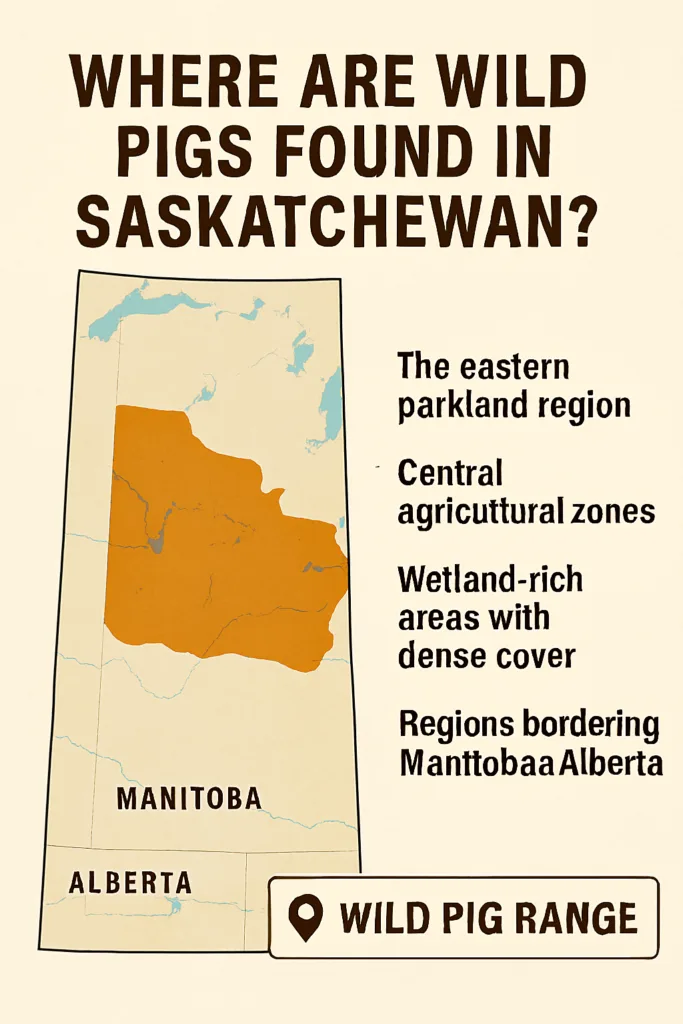
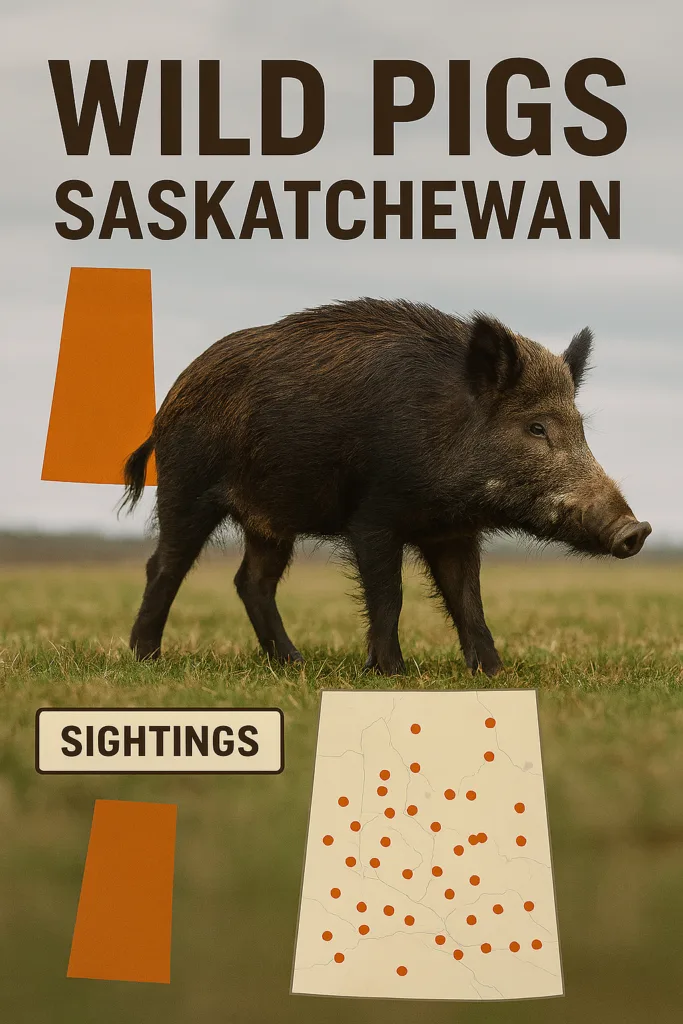
Recent mapping shows that wild pigs Saskatchewan populations are concentrated in:
- The eastern parkland region
- Central agricultural zones
- Wetland‑rich areas with dense cover
- Regions bordering Manitoba and Alberta
These animals prefer areas with food, water, and shelter — making Saskatchewan’s farmland and mixed‑forest landscapes ideal habitat. Sightings of wild pigs Saskatchewan have increased near grain fields, cattle operations, and riparian zones.
🌾 Why Wild Pigs Are a Serious Problem in Saskatchewan
The rise of wild pigs Saskatchewan is not just a wildlife curiosity — it’s a growing ecological and agricultural threat.
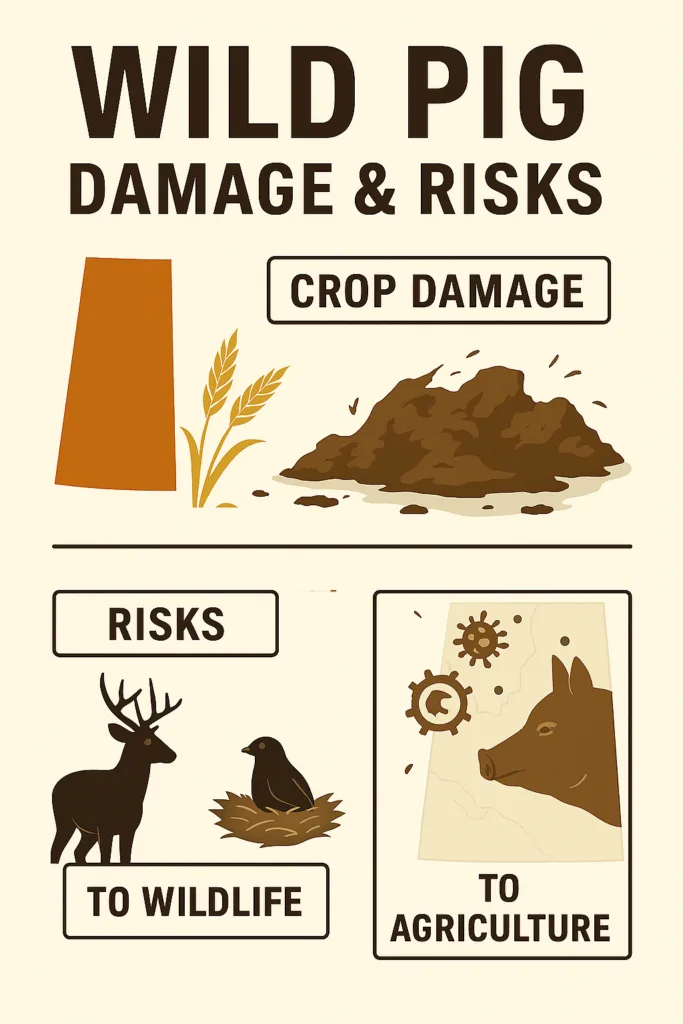
1. Crop Damage
Wild pigs root through fields, destroying:
- Canola
- Barley
- Wheat
- Corn
- Hay and pasture
A single sounder (group) can cause thousands of dollars in damage overnight.
2. Disease Risk
Wild pigs Saskatchewan populations can carry:
- African Swine Fever (ASF)
- Swine brucellosis
- Pseudorabies
- Parasites harmful to livestock and wildlife
An ASF outbreak would devastate Canada’s pork industry.
3. Wildlife Competition
Wild pigs outcompete native species like deer, elk, and bears for food. They also prey on ground‑nesting birds, amphibians, and small mammals.
4. Water Contamination
Their wallowing behavior muddies wetlands and spreads pathogens.
🐾 How to Identify Wild Pigs in Saskatchewan
Residents searching for wild pigs Saskatchewan often want to confirm sightings. Key identifiers include:
- Coarse black, brown, or mottled fur
- Long snout and straight tail
- Tracks similar to deer but rounder
- Rooting damage resembling overturned soil
- Groups of 5–20 animals (sounders)
If you see these signs, you may be looking at wild pigs Saskatchewan populations expanding into new territory.
🎯 Can You Hunt Wild Pigs in Saskatchewan?
This is one of the most common questions tied to wild pigs Saskatchewan searches.
Current Rule:
Hunting wild pigs in Saskatchewan is NOT recommended and often discouraged.
Why?
Because hunting scatters sounders, making eradication harder. Instead, the province uses coordinated trapping programs that remove entire groups at once.
If you encounter wild pigs Saskatchewan while hunting other species, you should report the sighting rather than pursue the animals.
📞 How to Report Wild Pig Sightings in Saskatchewan
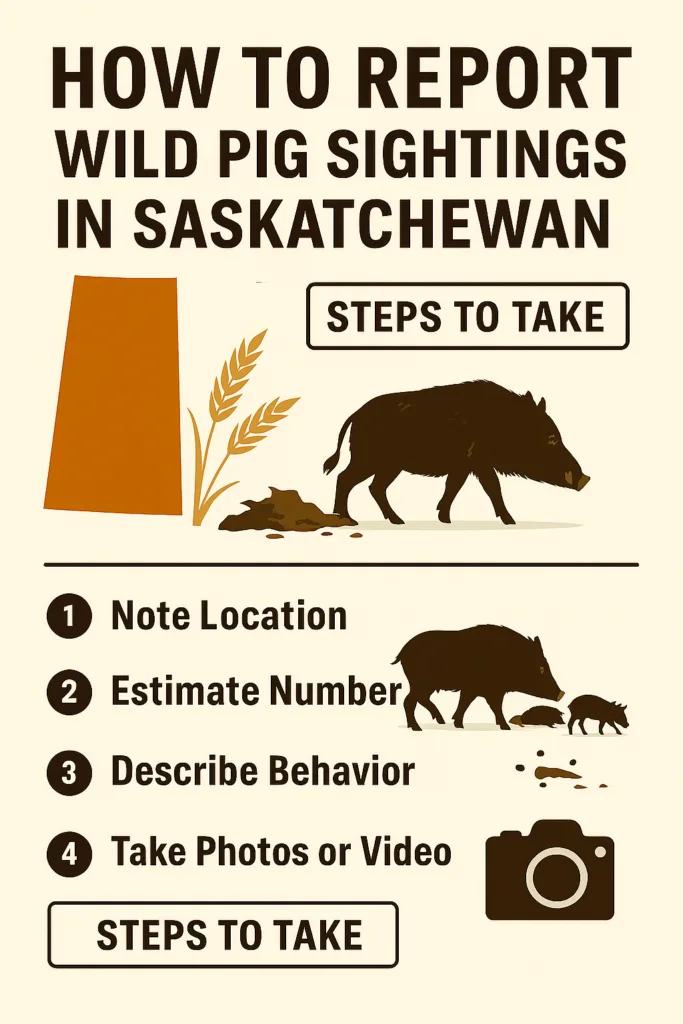
If you spot wild pigs Saskatchewan, report it immediately to:
- Saskatchewan Crop Insurance Corporation (SCIC)
- Local conservation officers
- Provincial invasive species hotlines
Provide:
- Location (GPS if possible)
- Number of animals
- Behavior (feeding, moving, damaging crops)
- Photos or video if safe to capture
Accurate reporting helps track wild pigs Saskatchewan populations and supports eradication efforts.
🧠 Why Wild Pigs Are So Hard to Control
The rapid spread of wild pigs Saskatchewan is driven by:
1. High Reproductive Rate
Females can produce 2 litters per year with 4–6 piglets each time.
2. Intelligence
Wild pigs quickly learn to avoid traps, hunters, and human activity.
3. Hybrid Vigor
Crossbreeding between domestic pigs and wild boar creates hardy, cold‑tolerant animals.
4. Landscape Advantage
Saskatchewan’s mix of farmland, bush, and wetlands gives wild pigs Saskatchewan ideal cover.
🗺️ The Future of Wild Pigs in Saskatchewan
Experts warn that without aggressive management; wild pigs Saskatchewan populations could double every 3–5 years. The province is investing in:
- Aerial surveillance
- GPS‑based tracking
- Whole‑sounder trapping
- Public reporting systems
- Research partnerships with universities
The goal is complete eradication — but the window is closing.
🏹 What Hunters and Outdoor Enthusiasts Should Do
If you spend time in the field, you’re part of the solution. When you encounter wild pigs Saskatchewan:
- Do not pursue or shoot them
- Document the sighting
- Report it immediately
- Note habitat features and group size
- Avoid approaching sounders — they can be aggressive
Your information helps wildlife managers locate and remove entire groups.
🧭 Final Thoughts
The rise of wild pigs Saskatchewan is one of the most significant wildlife challenges facing the province. These animals threaten crops, livestock, native species, and water systems. With coordinated reporting, science‑based management, and public awareness, Saskatchewan still has a chance to control the spread.
🧠 Top 10 Most Searched Questions About Wild Pigs in Saskatchewan
1. Are wild pigs native to Saskatchewan?
No. Wild pigs were introduced in the 1980s–1990s for meat production and game farming. Escapes and releases led to feral populations.
2. Where are wild pigs currently found in Saskatchewan?
They’re concentrated in central and eastern agricultural zones, wetlands, and forest edges. Sightings are increasing near the Manitoba and Alberta borders.
3. What damage do wild pigs cause in Saskatchewan?
They destroy crops (canola, barley, wheat), contaminate water, compete with native wildlife, and spread diseases like African Swine Fever.
4. Can you hunt wild pigs in Saskatchewan?
No. Hunting is discouraged because it scatters groups and makes eradication harder. The province uses coordinated trapping instead.
5. How do wild pigs survive Saskatchewan winters?
They build nests from cattails and shelter in sloughs. Their hybrid genetics make them cold-hardy and highly adaptable.
6. What should I do if I see wild pigs in Saskatchewan?
Report sightings to SCIC or conservation officers. Include location, number of animals, behavior, and photos if safe.
7. What is a “super pig”?
It’s a hybrid of Eurasian wild boar and domestic pig. These animals are larger, more fertile, and harder to eradicate.
8. How fast are wild pigs spreading in Saskatchewan?
Experts describe it as a “tsunami” moving northward. Populations are doubling every few years without aggressive control.
9. Are wild pigs dangerous to humans?
They can be aggressive if cornered, especially in groups. They also pose indirect risks through disease and ecosystem disruption.
10. Who is leading wild pig eradication in Saskatchewan?
The Saskatchewan Crop Insurance Corporation (SCIC) coordinates mapping, trapping, and public reporting efforts.