I have fished this province from Lake Erie to the remote Far North. Here is everything I know about fishing Ontario — and why I believe it is the greatest freshwater fishing destination on the planet.

📋 Table of Contents
- Why I fell in love with fishing Ontario
- The best species for fishing Ontario
- My favourite lakes across the province
- A full year on the water — season by season
- The hard-water season — ice fishing Ontario
- Licences and regulations you need to know
- The gear I trust on Ontario lakes
- My top tips for consistent success
- Frequently asked questions
Why I Fell in Love With Fishing Ontario
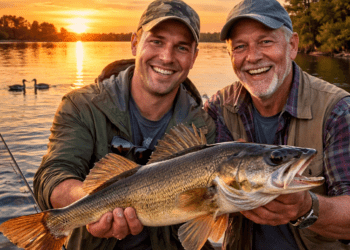
I caught my first walleye while fishing Ontario at the age of nine. My dad borrowed a fourteen-foot aluminum boat, loaded it onto his pickup, and drove us three hours north of Toronto to a lake whose name I could barely pronounce. By seven in the morning we were drifting across a rocky reef in the half-light. By nine, I had a two-pound walleye in the bottom of the boat — and I was hooked for life.
That was more than twenty years ago. Since then I have spent hundreds of days each year exploring this province’s water — from the walleye factories of Lake Nipissing and Lake Erie to the world-class muskie grounds of Georgian Bay, from steel head rivers on the north shore to remote fly-in lakes where the pike have never seen a plastic lure. I have guided clients, competed in tournaments, and argued about jig colours around more campfires than I can count. Through all of it, my conviction has never wavered: fishing Ontario is the most diverse, most productive, and most beautiful freshwater angling experience anywhere in the world.
I wrote this guide because I keep getting the same questions from readers and first-timers: Where do I start? What licence do I need? When should I go? Whether you are completely new to fishing Ontario or a seasoned angler looking to expand into fresh territory, this is the comprehensive resource I wish I had when I was starting out.
“I have fished Minnesota, Montana, and Manitoba. None of them match the sheer variety and productivity of fishing Ontario. This province is the freshwater capital of North America — and most of the world still has not figured that out.” — Jake Morrow, North Hunt Fish Club
The Best Species for Fishing Ontario
One of the things that makes fishing Ontario extraordinary is the sheer number of game-fish available. The province has over 250,000 lakes and 100,000 kilometres of rivers and streams — a geography that supports a staggering diversity of species. Building your target list and working through it, season by season, year by year, is one of the real joys of this pursuit.
Walleye — The Fish That Defines This Province
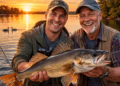
If I had to choose one species that defines my experience here, it would be walleye without hesitation. Lakes like Nipissing, Erie, Lake of the Woods, and Simcoe consistently produce trophy fish while delivering incredible numbers — and that combination of quality and quantity is what makes fishing Ontario for walleye the signature experience of this province. I have caught walleye up to nine pounds on Lake Nipissing and had fifty-fish days on Lake Erie. Both memories live in exactly the same part of my brain.
Northern Pike and Muskellunge
For sheer Adrenalin, nothing I have encountered matches a large northern pike or muskie exploding on a topwater bait in a weed bay. Ontario’s shield lakes grow pike to enormous sizes — forty-inch fish are common in the north, and I have personally landed pike over forty-five inches on remote lakes north of Sudbury. Muskie angling here is equally legendary. Georgian Bay holds what many experts consider the most consistent trophy muskellunge fishery in the world, and I have spent enough September evenings throwing glide baits along its rocky shores to believe every word of that claim.
Smallmouth and Largemouth Bass
Bass fishing Ontario is a revelation to anglers who associate the species only with southern American fisheries. The province’s cold, clear shield lakes grow small-mouth that are pound-for-pound among the hardest-fighting fish I have ever handled. A three-pound small-mouth on six-pound fluorocarbon in fifteen feet of crystal water will test everything you know about drag settings and composure. Large-mouth action is concentrated in the warmer, weedier lakes of the south — the Kawartha Lakes, the Rideau System, and the St. Lawrence River all produce outstanding bass fishing that I return to every June.
Lake Trout, Brook Trout, and Steel-head
Trout angling here is a completely different experience — slower, more meditative, more intimate with the landscape. I have spent cold April mornings wading for steel-head in rivers that pour into Georgian Bay, and I have trolled for lake trout in one hundred feet of water in remote northern lakes where you could drink straight from the surface. Brook trout are perhaps the most beautiful fish in the province, and chasing them in the small, gin-clear streams of Algonquin Park and the Algoma Region is fishing at its most elemental.
Yellow Perch, Crappie, and Pan-fish
I want to make a case for pan-fish because they are criminally underrated in any honest conversation about what this province has to offer. A cooler full of yellow perch from Lake Simcoe or Lake Erie is one of the finest meals you can produce from the water. Perch and crappie are also the perfect introduction for kids and beginners — aggressive, forgiving, and constant. Some of my most treasured days on the water involved nothing more than a dock, a float, a tiny jig, and a bucket filling with fat yellow perch.
| Species | Best Ontario Lakes | Peak Season | Typical Size |
|---|---|---|---|
| Walleye | Lake Nipissing, Lake of the Woods, Lake Erie, Lake Simcoe | May–June & Sept–Oct | 2–5 lbs (trophy 8–12 lbs) |
| Northern Pike | Lake Nipissing, Lac Seul, remote northern lakes | May–June & Sept–Oct | 5–12 lbs (trophy 20+ lbs) |
| Muskellunge | Georgian Bay, Lake of the Woods, St. Lawrence | Aug–Oct | 15–25 lbs (trophy 40+ lbs) |
| Smallmouth Bass | Georgian Bay, Lake Erie, Kawartha Lakes | June–Aug | 2–3.5 lbs (trophy 5+ lbs) |
| Lake Trout | Lake Simcoe, remote northern lakes | April–May & Nov | 3–8 lbs (trophy 15+ lbs) |
| Steelhead | Saugeen, Nottawasaga, Ganaraska rivers | March–April | 5–10 lbs (trophy 15+ lbs) |
| Yellow Perch | Lake Simcoe, Lake Erie, Lake Nipissing | Year-round | 0.5–1 lb (trophy 1.5+ lbs) |
My Favourite Lakes for Fishing Ontario
After two decades on the water, I have developed strong opinions about where to spend limited days. The destinations below are the ones I return to again and again — each for different reasons, each delivering experiences that stay with me long after I get home.
Lake Nipissing — My Home Water
I am unabashedly biased about Nipissing because it is where I learned to be a real angler. At 873 square kilometres, it holds what I consider the finest walleye population in the province — better numbers than Erie, bigger average fish than Simcoe, and far less pressure than either. My personal best walleye — a fish I will never forget — came from a rocky reef on the south shore at six-thirty in the morning on a Tuesday in late May. If you are serious about fishing Ontario for walleye, this lake must be on your list. We have a dedicated Lake Nipissing fishing guide on this site for everything you need to plan your trip.
Lake of the Woods — The Northern Giant
Lake of the Woods is the wilderness experience that reminds you just how vast and wild this province truly is. Straddling the Ontario-Manitoba border with over 14,000 islands, it offers walleye, pike, muskie, small-mouth, and lake trout in the kind of abundance that feels almost unreal after years on more pressured southern lakes. I spent a week fly-in on Lake of the Woods three summers ago and caught walleye until my arm genuinely ached. Planning my return already.
Georgian Bay — Trophy Muskie Country
Georgian Bay is the crown jewel of muskellunge angling in this province. The Canadian Shield geology creates thousands of rocky points, shoals, and weed edges that perfectly suit the muskie’s ambush lifestyle. I have guided muskie clients here for years and still feel genuine excitement every time a big fish follows to the boat. The fall transition — September into October — is the best window of the year for this experience, and it is some of the most charged angling I know anywhere.
Lake Erie — Walleye Volume Unmatched Anywhere
No discussion of fishing Ontario is complete without Lake Erie. The province’s share of the lake — particularly around Long Point Bay and Port Dover — is among the most productive walleye water on earth. Trolling plugs and spinners across the sandy bottom can produce fifty-fish days with ease in peak season. It is the most accessible quality walleye experience for anglers from the GTA and southern Ontario, and it delivers season after season.
Remote Fly-In Lakes — The Best Kept Secret
I saved the best for last. The single greatest day I have ever had fishing Ontario was not on a famous named lake. It was on an unnamed shield lake forty minutes north of Timmins that I reached by float-plane with three friends and a week’s worth of food. We caught pike until we lost count, found walleye stacked on every rock point, and didn’t see another human being for seven days. That is the ultimate promise of this province — genuine wilderness, untouched fish populations, and the feeling of having the whole country to yourself.
A Full Year on the Water — Fishing Ontario Season by Season
This is a genuine four-season pursuit, and each part of the calendar offers something distinct. Here is how I approach the year when fishing Ontario:
Spring — The Season Opener
The moment the fishing Ontario season opens in mid-May is, without question, my favourite day of the year. Post-spawn walleye and pike are aggressive, shallow, and hungry. I always take the third Saturday of May off work — no exceptions — and I have done so for fifteen straight years. Jig-fishing rocky reefs barely eight feet down with fish stacked so tight you can practically hear them is as good as this sport gets. If you only ever do this once, go in late May.
Summer — Bass, Perch, and Deep Structure
As June stretches into July and the water warms, my strategy shifts completely. Walleye move to deeper structure — mid-lake humps, basin edges, thermoclines. Bass peak in July as both small-mouth and large-mouth settle into their summer patterns and respond to soft plastics and top-water presentations with ferocious enthusiasm. Summer evenings anchored over a productive shoal with a light rod and a bucket filling with yellow perch are among the simplest, most satisfying moments I know.
Fall — The Best All-Round Season
If I am being completely honest, fall is my favourite season for fishing Ontario overall. September and October see water temperatures drop back into the walleye and pike’s comfort zone, triggering feeding aggression that has to be seen to be believed. I have had October days where I could do almost nothing wrong — walleye smashing every presentation, pike ambushing from open water, and the occasional muskie showing up uninvited to steal a fish I was fighting. Fall is where this province reveals its full capability.
The Hard-Water Season — Ice Fishing Ontario
I know anglers from warmer climates who genuinely cannot understand why anyone would sit over a hole in the ice in minus-twenty-degree weather. I feel genuine pity for them, because ice fishing Ontario is one of the great under-appreciated pleasures in all of angling.
The hard-water season typically runs from late December through early March, depending on the lake and the year. Lake Simcoe is the most famous ice fishing Ontario destination — its lake trout, whitefish, and perch fishery draws thousands of anglers to a remarkable, temporary city of ice huts every January. Lake Nipissing is equally productive and significantly less crowded. I have had January days on Nipissing where the walleye bit as well as any open-water day in May — which says everything about the quality of the experience waiting under that ice.
⚠️ Ice Safety — Non-Negotiable Before Any Ice Fishing Ontario Trip
- 4 inches of clear blue ice is the minimum to walk safely — always check before stepping out
- 8–12 inches required to support a snowmobile or ATV — never assume previous thickness holds
- Carry ice picks (rescue awls) around your neck at all times and tell someone your exact location and return time
- Ice near river inflows and pressure cracks can be half the surrounding thickness — check across the entire route
- Consult current ice condition resources at ontario.ca before every outing
Licences and Regulations for Fishing Ontario
I will be direct: knowing and following the regulations is not optional. The Ministry of Natural Resources and Forestry manages this fishery for the long term, and everyone who cares about fishing Ontario has a responsibility to protect what we have for the next generation.
Every angler eighteen and over requires an Ontario Outdoors Card and a valid fishing licence. Residents and non-residents pay different rates. Licences are available at ontario.ca, at Service Ontario locations, and at most tackle shops near any major lake or river. I renew mine every April before the season opener — do not leave it to the last minute.
📋 Ontario Fishing Licence Quick Reference (2025–2026 — verify at ontario.ca)
- Ontario Outdoors Card: $8.57 — required before purchasing any licence for fishing Ontario
- Resident Sport Fishing Licence: $26.93 annually
- Non-Resident Sport Fishing Licence: $53.62 annually; 8-day option also available
- Conservation Licence: Reduced daily limits — lower cost for anglers who practise strict catch-and-release
- Walleye season opener: Third Saturday of May on most Ontario waters
- Muskie season opener: Third Saturday of June — minimum size 97 cm, daily limit 1
- Always verify current size limits and seasons at ontario.ca/fishing before every trip — regulations change annually
The Gear I Trust on Ontario Lakes
I get asked constantly about equipment, and my honest answer is that you do not need to spend a fortune to catch fish. That said, there are categories where quality genuinely matters for the conditions you will encounter across this province.
Rods and Reels
For general walleye and pike work, I fish a medium-power fast-action spinning rod in the six-and-a-half to seven-foot range paired with a quality 2500-series reel. For jigging — the most versatile single presentation in my angling toolkit — I prefer a slightly stiffer rod that telegraphs subtle bottom contact. For muskie, I move to a heavy-power eight-foot casting rod and a high-retrieve bait-caster loaded with 80-pound braid.
Line and Leader
Braid has transformed my walleye game on big Ontario lakes. Ten-pound braid with a six-foot fluorocarbon leader gives me sensitivity I never had with mono-filament, which matters enormously when you are jigging in the consistent wind that any large open lake dishes out. For clear-water situations — common on shield lakes across the north — I drop to eight-pound fluorocarbon straight through.
Essential Lures for the Ontario Angler
The three presentations that have put the most fish in my net across every scenario I have encountered on this province’s water are: a 3/8 oz jig head with a live leech (walleye and bass), a five-inch white paddle-tail swimbait on a half-ounce jig (pike and walleye), and a size 5 Original Floating Minnow (virtually everything). If I could only bring three lure types for the rest of my angling life, those would be the ones.
My Top Tips for Consistent Success When Fishing Ontario
Twenty years on the water has taught me more lessons than I can count, most learned the hard way. Here are the ones I share most often:
- Fish early and stay late. The best action I have ever had on Ontario water has happened in the first two hours after sunrise and the last ninety minutes before dark. If you are sleeping in, you are missing the fish.
- Watch the wind, not just the calendar. A south or southwest wind pushes warm water and baitfish onto productive structure, triggering feeding across multiple species. Wind direction tells me more about where to position the boat than the date does.
- Downsize in clear water. Ontario’s clearest shield lakes demand lighter line, smaller lures, and more patient presentations. Big baits catch big fish in stained water — but they spook fish in six feet of crystal-clear northern lake.
- Learn to read sonar. Structure is where fish live, and you cannot find structure without electronics. Any serious angler who plans to spend serious time on Ontario lakes needs to understand how to interpret a fish finder.
- Hire a local guide for one trip. A single day with an experienced guide on your target water compresses years of learning into eight hours. It is the single best investment any developing angler can make.
- Practise catch and release for trophy fish. The big fish in any Ontario lake are irreplaceable. I photograph every trophy, hold it briefly, and return it to the water immediately. The long-term future of this province’s fishery depends on every angler making this choice.
- Check regulations every year without fail. What was legal last season may not be this year. Fifteen minutes reading the current regulation summary before every outing is completely non-negotiable.
Frequently Asked Questions — Fishing Ontario
When is the best time to fish Ontario?
Late May through June is the peak open-water season for walleye and pike. September and October deliver the best all-round experience across all species. For ice fishing Ontario, January and February are prime — particularly on Lake Simcoe and Lake Nipissing.
Do I need a licence for fishing Ontario?
Yes. Any angler 18 or over requires an Ontario Outdoors Card and a valid fishing licence. Licences are available online at ontario.ca, at Service Ontario locations, and at major tackle retailers near any major lake or angling destination in the province.
What is the best lake for fishing Ontario?
For walleye, I recommend Lake Nipissing and Lake Erie. For muskie, Georgian Bay is unmatched. For a true wilderness experience, remote fly-in lakes in northern Ontario deliver fishing that you simply cannot find anywhere else in the world.
Can visitors from outside Canada go fishing Ontario?
Absolutely. Non-resident licences are available with daily, 8-day, and annual options. Ontario warmly welcomes international anglers, and many fishing Ontario lodges and charters specialize in hosting American and overseas visitors.
What species are available across Ontario’s lakes?
Depending on the lake and region, the province gives you access to walleye, northern pike, muskellunge, small-mouth and large-mouth bass, lake trout, brook trout, rainbow trout (steel-head), yellow perch, crappie, whitefish, and more.
Is winter ice fishing worth trying for a beginner in Ontario?
Yes — it is one of the most beginner-friendly experiences the province offers. Perch and crappie bite readily through the ice, equipment costs are low, and the ice fishing community here is welcoming and generous with knowledge. Lake Simcoe and Lake Nipissing are excellent first destinations.
Fishing Ontario has given me more than I could ever adequately describe. Twenty years of mornings on the water, fish that made my hands shake, friendships forged in cold aluminum boats at five in the morning, and a deep, genuine respect for what this province holds. I hope this guide helps you find your own version of what this province means to me as an angler — and I hope to see you on the water.
Drop your questions about fishing Ontario in the comments below. Our team reads every one and is always glad to point a fellow angler in the right direction. Tight lines.